
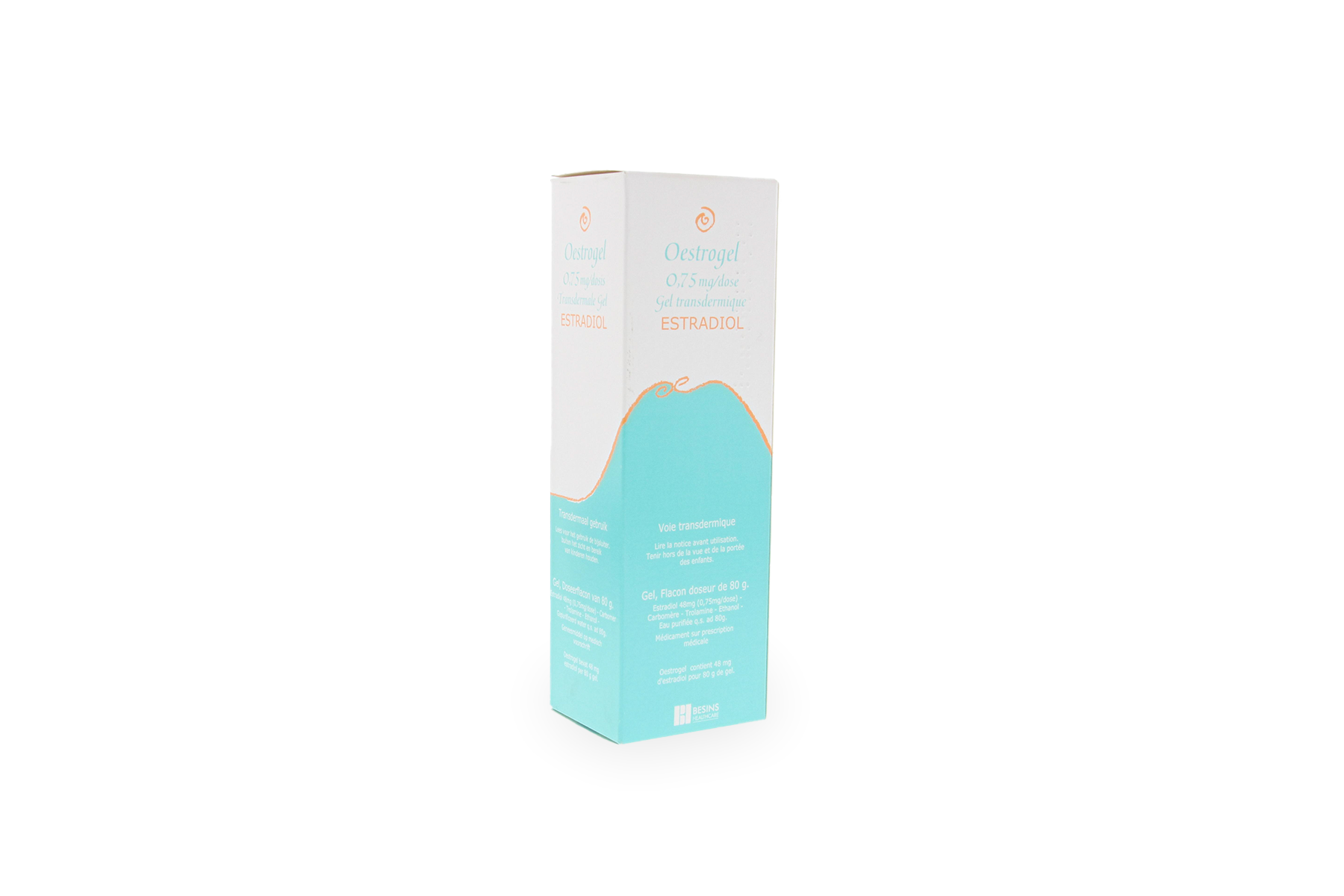
Oestrogel
View Options
This website provides general information about medicines for educational purposes only. Always consult your doctor or pharmacist before taking any medication.
Choose Your Medicine
Select dosage and quantity
Online Consultation
Reviewed by a qualified physician
Fast, Discreet Delivery
Delivered to your door
Medical Information
About This Medicine
Oestrogel is a transdermal oestrogen gel containing 0.06% estradiol, used as hormone replacement therapy (HRT) to relieve the symptoms of the menopause. It belongs to the category of bioidentical oestrogens, meaning the estradiol it contains is chemically identical to the oestrogen produced naturally by the ovaries. Oestrogel is one of the most widely prescribed forms of HRT in the United Kingdom and is recommended as a first-line option by clinical guidelines including those from the British Menopause Society.
How Oestrogel Works
When applied to the skin, estradiol is absorbed through the dermal layers and passes directly into the bloodstream, bypassing the liver. This transdermal route avoids hepatic first-pass metabolism, which is a significant clinical advantage over oral oestrogen tablets. Because the liver does not process the hormone, transdermal oestradiol has a substantially lower risk of stimulating the production of clotting factors and does not increase the risk of venous thromboembolism (VTE) to the same degree as oral HRT. This makes Oestrogel a preferable option for women with risk factors for blood clots or cardiovascular disease.
Estradiol binds to oestrogen receptors throughout the body, in the brain, cardiovascular system, bones, urogenital tissues, and skin, correcting the hormonal deficiency that causes menopausal symptoms.
Indications and Benefits
Oestrogel is indicated for the treatment of moderate to severe vasomotor symptoms (hot flushes, night sweats), urogenital symptoms (vaginal dryness, urinary urgency), sleep disturbance, and mood changes associated with oestrogen deficiency. It also plays a role in preventing osteoporosis in women who cannot tolerate other osteoporosis treatments.
Women with an intact uterus must combine Oestrogel with a progestogen to protect the endometrial lining. Those who have had a hysterectomy may use Oestrogel as oestrogen-only therapy. The flexible dosing system allows practitioners to tailor the oestrogen dose to the individual woman's symptom burden and tolerability.
Usage & Dosage
How to Apply Oestrogel
Apply Oestrogel once daily to clean, dry, unbroken skin. Suitable sites include the outer arms, shoulders, inner thighs, or abdomen. Do not apply to the breasts or near the face. Rotate application sites to reduce skin irritation. Wash your hands thoroughly after application, and allow the gel to dry for a few minutes before dressing or making skin contact with others, particularly children.
Dose is measured in pump actuations: one pump delivers 0.75 mg of estradiol, and the standard dose is one to two pumps (0.75 to 1.5 mg) daily. Your doctor may adjust the dose based on symptom control and hormone levels.
Using with a Progestogen
If you have an intact uterus, Oestrogel must be used alongside a progestogen to protect the uterine lining. Using oestrogen alone without progestogen significantly increases the risk of endometrial hyperplasia and endometrial cancer. Your doctor will prescribe a suitable progestogen to take alongside it.
Oestrogel is available as a pump dispenser. Each pump actuation delivers approximately 1.25g of gel containing 0.75mg estradiol (equivalent to 0.5mg estradiol absorbed).
- Starting dose: 1-2 pump actuations (0.5-1.0mg estradiol) applied once daily
- Maintenance dose: Adjusted according to symptomatic response after 2-3 months -- range 1-3 actuations (0.5-1.5mg)
- Minimum effective dose: Use the lowest dose that effectively controls symptoms
Review the need for continued HRT at least annually. The duration of treatment depends on the individual woman's indication, risk factors, and ongoing symptoms. No dose adjustment is required for mild to moderate hepatic impairment, but Oestrogel is not recommended in women with active liver disease.
Side Effects
Common Side Effects
The following effects are commonly reported during Oestrogel use and often diminish after the first few months:
- Breast tenderness or swelling
- Headache
- Nausea or stomach discomfort
- Breakthrough bleeding or spotting (particularly in the first few months)
- Skin reactions at the application site (redness, itching)
- Bloating
Serious Risks to Be Aware Of
All forms of HRT carry a small increased risk of blood clots (deep vein thrombosis and pulmonary embolism), stroke, and breast cancer with prolonged use. The absolute risk for any individual woman is generally low and depends on age, health history, and duration of use. Discuss your personal risk with your doctor, who will help you weigh the benefits against these risks. Tell your doctor promptly if you notice new breast lumps, persistent leg pain, sudden shortness of breath, or chest pain.
Warnings & Precautions
Cancer Risk and Screening
Women using Oestrogel must attend regular breast screening (NHS Breast Screening Programme) and report any new breast lump, nipple discharge, or skin change without delay. Long-term use of combined HRT (oestrogen plus progestogen) is associated with a modest increase in breast cancer risk that returns to baseline within a few years of stopping. Women with a personal history of breast cancer should not use systemic HRT.
Oestrogen-only therapy (in hysterectomised women) does not significantly increase breast cancer risk, but regular screening remains essential. Oestrogen without progestogen in women with a uterus carries a markedly elevated risk of endometrial cancer; this must never be overlooked.
Monitoring and Review
Blood pressure, weight, and symptom assessment should be reviewed at least annually. Any unexplained vaginal bleeding in women on continuous combined HRT or post-menopausal women requires gynaecological investigation to exclude endometrial pathology.
Oestrogel may not be appropriate for women who have experienced hormone-sensitive conditions, including oestrogen receptor-positive breast cancer, endometriosis, or uterine fibroids. A shared-decision discussion with a healthcare professional is essential before starting treatment.
Contraindications
Oestrogel must not be used in women with:
- Known, suspected, or history of breast cancer
- Known, suspected, or history of oestrogen-dependent malignant tumours (e.g. endometrial cancer)
- Active or recent arterial thromboembolic disease (angina, myocardial infarction, stroke)
- Active or history of venous thromboembolism (DVT, pulmonary embolism) unless on established anticoagulation therapy and after specialist advice
- Undiagnosed vaginal bleeding
- Untreated endometrial hyperplasia
- Severe active liver disease or hepatic impairment with abnormal liver function
- Known hypersensitivity to estradiol or any excipient in the formulation
- Porphyria cutanea tarda (or history thereof)
- Pregnancy or breastfeeding
Frequently Asked Questions
How long does it take for Oestrogel to relieve menopausal symptoms?
Is Oestrogel safer than oral HRT tablets?
Do I need to take a progestogen alongside Oestrogel?
Can Oestrogel transfer to my partner or children through skin contact?
How long can I continue using Oestrogel?
Dr. Ross Elledge
General Practitioner · General & Family Medicine
Verified Healthcare Professional
TopDoctors Profile