
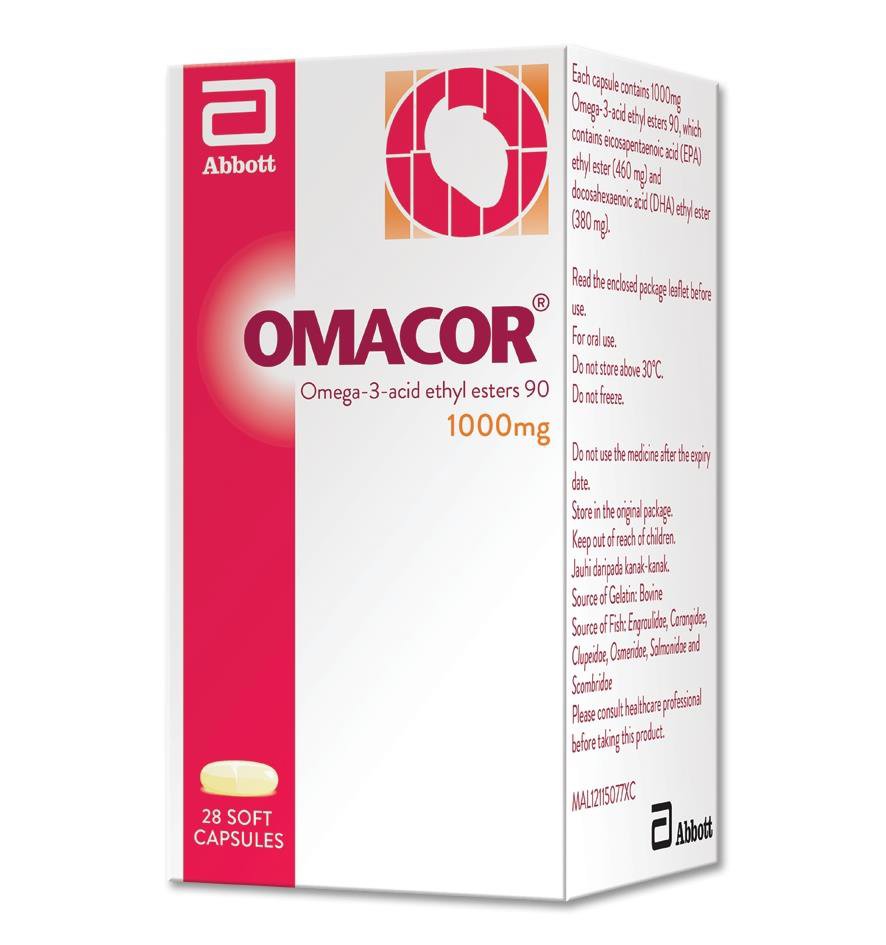
Omacor
View Options
This website provides general information about medicines for educational purposes only. Always consult your doctor or pharmacist before taking any medication.
Choose Your Medicine
Select dosage and quantity
Online Consultation
Reviewed by a qualified physician
Fast, Discreet Delivery
Delivered to your door
Medical Information
About This Medicine
Omacor is a prescription-only medicine containing a concentrated preparation of omega-3 fatty acid ethyl esters, specifically eicosapentaenoic acid (EPA) and docosahexaenoic acid (DHA). Each 1g soft capsule provides a minimum of 840mg of omega-3 fatty acids in the ethyl ester form. Omacor is used clinically to reduce elevated plasma triglyceride levels (hypertriglyceridaemia) and as an adjunct therapy in patients who have survived a myocardial infarction (heart attack).
Mechanism of Action
EPA and DHA modulate lipid metabolism through multiple pathways. They suppress hepatic synthesis of very-low-density lipoprotein (VLDL) triglycerides, increase the clearance of triglyceride-rich lipoproteins via enhanced lipoprotein lipase activity, and promote beta-oxidation of fatty acids in the liver rather than their re-esterification into VLDL. The net result is a meaningful reduction in fasting and post-prandial plasma triglyceride concentrations.
Beyond lipid effects, omega-3 fatty acids exert anti-inflammatory actions by competing with arachidonic acid in the production of eicosanoids, producing less pro-inflammatory prostaglandins and leukotrienes. They also have modest antithrombotic effects, influencing platelet aggregation and prolonging bleeding time slightly.
Clinical Use and Context
Hypertriglyceridaemia is an independent cardiovascular risk factor, and very high triglyceride levels (above 10 mmol/l) also carry a risk of pancreatitis. Omacor is used alongside dietary modification and statin therapy when triglycerides remain elevated despite other measures. As a post-MI adjunct, it has been shown to reduce the risk of cardiovascular events in specific patient populations when used as part of a comprehensive management plan including antiplatelet agents, statins, and ACE inhibitors.
Usage & Dosage
How to Take Omacor
Take Omacor (omega-3 acid ethyl esters) capsules with food. Taking them without food significantly increases the risk of a fishy aftertaste and stomach discomfort. Swallow capsules whole with water.
For high triglycerides as monotherapy or added to a statin, the recommended dose is 2 capsules twice daily (4 capsules total per day). After a heart attack, the dose used in clinical trials was 1 capsule daily.
Diet Matters Too
Omacor works best alongside, not instead of, dietary changes. Reducing refined carbohydrates, sugars, and alcohol is particularly important for lowering triglycerides, as these are major dietary drivers. Have your triglyceride levels rechecked after 2 to 3 months to assess the response to treatment.
- Hypertriglyceridaemia: 2 capsules twice daily with food (total 4g/day of omega-3 fatty acid ethyl esters)
- Post-MI adjunct: 1 capsule once daily with food (1g/day)
Capsules should always be taken with food to reduce nausea and improve absorption. No dose adjustment is required in renal impairment. Use with caution in hepatic impairment, as the liver is central to fatty acid metabolism; monitor liver function tests in patients with known hepatic disease.
Anticoagulant therapy: Because omega-3 fatty acids may prolong bleeding time, patients taking warfarin or other anticoagulants should have their INR (or equivalent) monitored more frequently when Omacor is started, adjusted in dose, or discontinued. Dose adjustment of the anticoagulant may be necessary.
Side Effects
Common Side Effects
Gastrointestinal effects are the most commonly reported side effects with Omacor, and are significantly reduced by taking the capsules with food:
- Nausea and belching
- Fishy aftertaste or breath odour
- Diarrhoea or loose stools
- Abdominal discomfort or bloating
Effect on Bleeding
Omacor has a mild antiplatelet effect and may slightly increase bleeding time at higher doses. This is usually not clinically significant, but if you are taking warfarin or other anticoagulants, your doctor may wish to monitor your INR more closely when starting or changing the dose of Omacor.
Warnings & Precautions
Anticoagulant Interactions
Patients taking warfarin, heparin, or other anticoagulants must inform their prescriber before starting Omacor. Omega-3 fatty acids have antiplatelet and mild anticoagulant effects that may augment those of prescribed anticoagulants, potentially increasing the risk of bleeding. INR should be monitored closely when Omacor is initiated, adjusted in dose, or stopped, and anticoagulant doses adjusted accordingly.
Similarly, concomitant use with antiplatelet agents such as aspirin or clopidogrel requires awareness of the additive antiplatelet effect, particularly in patients undergoing surgery or invasive procedures.
Dietary and Lifestyle Context
Omacor is not a substitute for dietary modification in the management of hypertriglyceridaemia. Elevated triglycerides are strongly influenced by excess dietary carbohydrate, alcohol intake, obesity, poorly controlled diabetes, and hypothyroidism. These factors should be addressed concurrently, as Omacor's triglyceride-lowering effect is significantly attenuated if dietary and lifestyle factors are not optimised.
Patients with type 2 diabetes should have blood glucose monitored during Omacor use, as mild increases in fasting glucose have been reported in some studies, though clinical significance is variable.
Contraindications
Omacor must not be used in patients with:
- Known hypersensitivity to omega-3 fatty acid ethyl esters, EPA, DHA, fish, or any excipient in the formulation
- Known fish or seafood allergy (the product is derived from fish oil)
- Hypersensitivity to soya or arachis (peanut) oil (excipients in the capsule formulation -- check the specific product SmPC)
Use with caution in:
- Patients on warfarin or other anticoagulants (bleeding risk -- requires monitoring)
- Patients on antiplatelet therapy (additive antiplatelet effect)
- Severe hepatic impairment (monitor liver function)
- Patients scheduled for surgery (consider temporary dose reduction or cessation)
- Children under 18 years (not licensed in this population)
Frequently Asked Questions
Is Omacor the same as fish oil supplements I can buy in a health food shop?
How long does it take for Omacor to lower triglycerides?
Can I take Omacor if I am also on a statin?
Will Omacor cause a fishy taste or smell?
Is Omacor safe to use in pregnancy?
Dr. Ross Elledge
General Practitioner · General & Family Medicine
Verified Healthcare Professional
TopDoctors Profile