
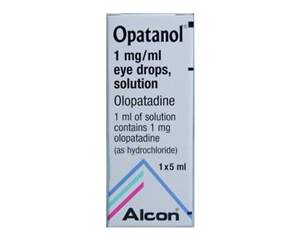
Opatanol
View Options
This website provides general information about medicines for educational purposes only. Always consult your doctor or pharmacist before taking any medication.
Choose Your Medicine
Select dosage and quantity
Online Consultation
Reviewed by a qualified physician
Fast, Discreet Delivery
Delivered to your door
Medical Information
About This Medicine
Opatanol eye drops contain olopatadine hydrochloride at a concentration of 1mg/ml (0.1%) and are used for the treatment of signs and symptoms of seasonal and perennial allergic conjunctivitis. Allergic conjunctivitis is a common inflammatory condition of the conjunctiva triggered by exposure to allergens such as pollen, house dust mites, pet dander, and mould spores. It causes itching, redness, tearing, and a sensation of grittiness in the eyes that can significantly impair quality of life.
Dual Mechanism of Action
Olopatadine is distinctive among ophthalmic antiallergic agents because it operates through two complementary mechanisms. First, it is a potent, selective histamine H1-receptor antagonist, blocking the action of histamine on conjunctival mast cells and sensory nerves, thereby rapidly reducing itching and vasodilatation that cause redness. Second, olopatadine acts as a mast cell stabiliser, inhibiting the degranulation of mast cells and preventing the release of histamine and other inflammatory mediators (such as leukotrienes and prostaglandins) in response to allergen challenge.
This dual action sets Opatanol apart from earlier-generation antihistamine drops that lacked mast cell stabilising activity, or from cromoglicate drops that stabilise mast cells but do not directly block histamine. Clinical studies have demonstrated that olopatadine produces faster itch relief and more sustained symptom suppression than either mechanism alone.
Suitable Patients
Opatanol is suitable for adults and children aged three years and over. It provides both rapid symptomatic relief and ongoing preventive benefit when used regularly throughout the allergy season. Contact lens wearers can use Opatanol but should remove their lenses before instillation and wait at least 15 minutes before reinserting them, as the preservative benzalkonium chloride in the formulation can discolour or damage soft contact lens material.
Usage & Dosage
Instillation Technique
Wash your hands before handling the Opatanol bottle and before touching your eyes. Tilt your head back slightly or lie down. Gently pull down the lower eyelid to create a small pocket. Hold the bottle tip downward above the eye and instil one drop into the conjunctival sac, then gently close your eye. Apply light pressure with one finger to the inner corner of the eye (nasolacrimal punctum) for one to two minutes immediately after instillation, this reduces systemic absorption of the preservative and active ingredient and improves local efficacy.
Frequency and Timing
One drop is instilled into each affected eye twice daily (morning and evening), approximately eight hours apart. This spacing maintains effective drug concentrations throughout the day and into the allergy-prone afternoon and evening periods. If only one eye is affected, treatment of both eyes is often recommended to prevent allergen-driven bilateral inflammation.
Contact Lens Use
Remove soft contact lenses before instilling Opatanol drops. Do not reinsert lenses for at least 15 minutes after application, as the preservative benzalkonium chloride can be absorbed by soft lens material and cause local ocular irritation. If wearing lenses is troublesome during the allergy season, consider wearing glasses during periods of high allergen exposure.
- Adults and children aged 3 years and over: 1 drop into each affected eye, twice daily (morning and evening)
- Treatment should continue throughout the period of allergen exposure, or for as long as symptoms persist during the allergy season
Opatanol eye drops are not currently licensed for use in children under three years of age. No dose adjustment is needed for elderly patients. Data on use in patients with renal or hepatic impairment are limited, but systemic exposure is low and clinical significance is unlikely.
The bottle should be stored upright and at room temperature (below 25°C). Discard 28 days after opening, even if liquid remains. Each 5ml bottle typically provides approximately 100 drops, suitable for one month's treatment in one eye with twice-daily use.
Side Effects
Common Side Effects
Side effects from Opatanol are predominantly mild and local to the eye:
- Transient stinging or burning sensation immediately after instillation (usually subsides within a minute)
- Dry eye sensation
- Eye discomfort or foreign body sensation
- Mild blurring of vision immediately after instillation, avoid driving or operating machinery until vision clears
- Follicular conjunctivitis with prolonged use (benign lymphoid follicles on the tarsal conjunctiva)
- Rhinitis or nasal discomfort (from some systemic absorption via the nasolacrimal duct)
Serious Side Effects
Serious adverse reactions to Opatanol are rare:
- Hypersensitivity reactions: Localised or generalised allergic reactions including periorbital oedema, urticaria, or rash, discontinue use and seek medical review
- Increased intraocular pressure: Rare; patients with known glaucoma should have intraocular pressure monitored periodically during use
- Corneal complications: Very rare; report any new significant visual change, pain, or photophobia to a clinician promptly
Warnings & Precautions
Preservative Concerns
Opatanol contains benzalkonium chloride as a preservative. This compound can cause ocular surface toxicity with prolonged use, particularly in patients who already have dry eye disease, ocular surface disorders, or who use multiple eye drop preparations daily. Benzalkonium chloride can also be absorbed by soft contact lens material and cause corneal irritation if lenses are worn before the recommended 15-minute waiting period has elapsed.
Patients requiring multiple eye drops for different conditions should space instillation of different preparations by at least five minutes and apply the least viscous preparation first. If ocular surface irritation worsens during use, consider a preservative-free alternative if available.
Diagnosis and Duration of Use
Confirm the diagnosis of allergic conjunctivitis before initiating Opatanol. Red, irritated eyes may have numerous causes including bacterial or viral infection, dry eye syndrome, blepharitis, or a corneal foreign body, which require different treatments. If symptoms do not improve after a week of use or worsen at any point, seek ophthalmic assessment.
Opatanol may be used throughout the allergy season or for as long as allergen exposure continues. Seasonal allergic conjunctivitis sufferers may find benefit from starting treatment a few days before peak pollen season to pre-emptively stabilise mast cells.
Contraindications
Opatanol is contraindicated in:
- Patients with known hypersensitivity to olopatadine hydrochloride or benzalkonium chloride
- Hypersensitivity to any other excipient in the formulation
Use with caution in:
- Patients with dry eye syndrome or ocular surface disease (benzalkonium chloride may exacerbate these conditions)
- Patients wearing soft contact lenses (remove before instillation, wait 15 minutes before reinserting)
- Children under 3 years of age (not licensed; safety and efficacy not established)
- Patients with known angle-closure glaucoma or elevated intraocular pressure (monitor IOP)
- Pregnant or breastfeeding women (use only if clearly necessary -- limited clinical data)
Frequently Asked Questions
How quickly do Opatanol drops work for itchy eyes?
Can I use Opatanol eye drops with contact lenses?
How does Opatanol differ from antihistamine tablets for treating eye allergy?
Can children use Opatanol for hay fever eye symptoms?
Is it safe to use Opatanol drops every day throughout the hay fever season?
Dr. Ross Elledge
General Practitioner · General & Family Medicine
Verified Healthcare Professional
TopDoctors Profile