
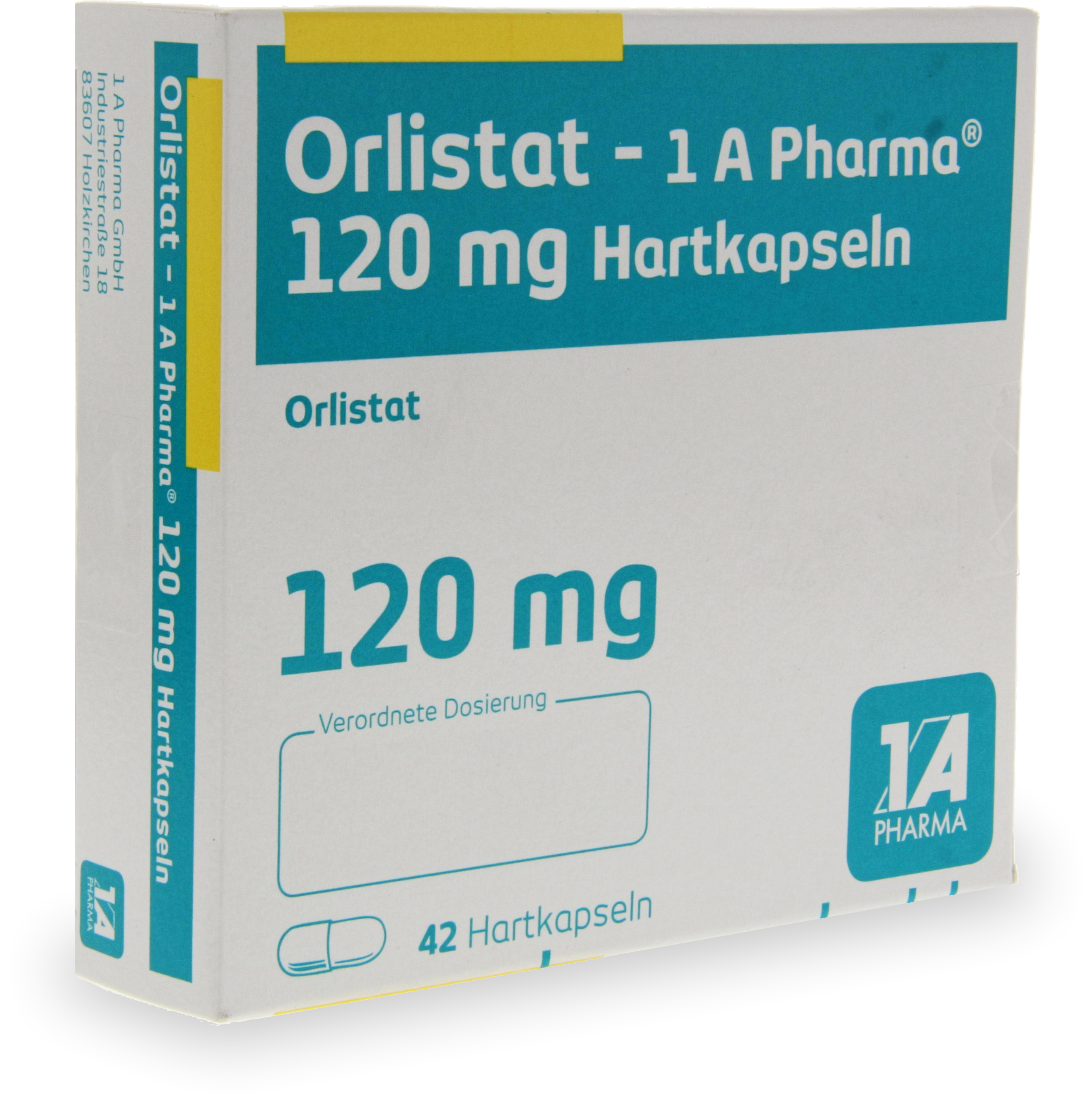
Orlistat
View Options
This website provides general information about medicines for educational purposes only. Always consult your doctor or pharmacist before taking any medication.
Choose Your Medicine
Select dosage and quantity
Online Consultation
Reviewed by a qualified physician
Fast, Discreet Delivery
Delivered to your door
Medical Information
About This Medicine
Orlistat is the only clinically licensed weight-loss medicine available in the United Kingdom that works locally within the gastrointestinal tract without entering the systemic circulation. It is prescribed as Xenical (120mg) for patients meeting clinical criteria, and a lower-dose formulation (Alli, 60mg) is available over the counter in pharmacies. Orlistat is used as an adjunct to a calorie-restricted diet and increased physical activity in adults with obesity or overweight with weight-related comorbidities.
Mechanism of Action
Orlistat works by inhibiting pancreatic and gastric lipase enzymes in the gastrointestinal tract. These enzymes are responsible for breaking down dietary triglycerides (fats) into absorbable free fatty acids and monoglycerides. By binding covalently and irreversibly to the active serine site of these lipases, orlistat prevents approximately one-third of dietary fat from being hydrolysed and absorbed. The undigested fat passes through the gut and is excreted in the faeces.
This mechanism means that orlistat's efficacy, and its gastrointestinal side effects, are directly related to the fat content of meals. High-fat meals result in more unabsorbed fat in the bowel, producing more pronounced gastrointestinal effects. Patients are strongly motivated to maintain a low-fat diet to avoid unpleasant symptoms.
Clinical Efficacy and Eligibility
Orlistat produces clinically meaningful weight loss when combined with dietary and lifestyle modification. In clinical trials, patients using Xenical lost significantly more weight than placebo-treated patients over one to two years. Weight loss with orlistat has been associated with improvements in blood pressure, blood glucose, lipid profiles, and a reduced risk of progression from impaired glucose tolerance to type 2 diabetes.
In the UK, prescription orlistat (120mg) is indicated for adults with a BMI of 30 kg/m or greater, or with a BMI of 28 kg/m or greater with obesity-related risk factors such as type 2 diabetes, hypertension, or dyslipidaemia.
Usage & Dosage
Dietary Requirements
Orlistat works by blocking the absorption of dietary fat, so what you eat matters enormously for how well it works and how comfortable you feel. Follow a nutritionally balanced, calorie-reduced diet where roughly 30% of calories come from fat. Spread fat intake evenly across three meals — no single meal should contain more than about 20 g of fat. The less fat you eat, the fewer gastrointestinal side effects you will experience.
One orlistat 120 mg capsule (Xenical) or 60 mg capsule (Alli) is taken with each main meal containing fat, or up to one hour after the meal. If a meal is skipped or contains no fat, skip that dose.
Vitamins and Supplements
Orlistat reduces the absorption of fat-soluble vitamins (A, D, E, and K). Take a daily multivitamin supplement containing these vitamins, but take it at bedtime or at least two hours before or after an orlistat dose to avoid it being blocked along with dietary fat.
- Prescription (Xenical): 120mg capsule with each main meal containing fat, up to three times daily (total 360mg/day)
- Over the counter (Alli): 60mg capsule with each main meal containing fat, up to three times daily
- If a meal is omitted or fat-free, omit that dose
- Take immediately before, during, or within one hour of each meal
No dose adjustment is required for renal impairment (minimal systemic absorption). Orlistat is not studied in severe hepatic impairment but is unlikely to require dose adjustment given negligible systemic levels.
Orlistat is not licensed for use in children under 12 years. Use in adolescents (12-17 years) requires specialist oversight. Treatment should be continued only if 5% or more of initial body weight has been lost after 12 weeks; if not, discontinue and reassess the management plan.
Side Effects
Common Side Effects
Gastrointestinal side effects are very common, especially in the early weeks and whenever fat intake is high. They are in effect a feedback mechanism — the worse the side effects, the more fat was in the meal:
- Oily or fatty stools (steatorrhoea)
- Urgent or difficult-to-control bowel movements
- Oily spotting or discharge from the rectum
- Increased frequency of bowel movements
- Flatulence with oily discharge
- Abdominal cramps or discomfort
Managing Side Effects
These effects almost always improve once you have adjusted to a consistently low-fat diet. Keeping a food diary and identifying high-fat meals is the most effective way to reduce them. Rare but serious side effects include liver injury — tell your doctor if you develop yellowing of the skin or eyes, dark urine, or abdominal pain. Orlistat can also reduce the absorption of some medicines, including ciclosporin and levothyroxine — take these at least two hours apart.
Warnings & Precautions
Vitamin and Drug Interactions
Orlistat reduces the absorption of fat-soluble vitamins (A, D, E, and K) and beta-carotene. All patients should take a daily multivitamin supplement containing these vitamins, timed at least two hours after the final orlistat dose of the day (bedtime is ideal). This is particularly important for patients with an already marginal nutritional status and for pregnant or breastfeeding women, in whom orlistat is not indicated.
Clinically important drug interactions include: reduced absorption of amiodarone, ciclosporin, antiretroviral drugs, antiepileptics (particularly valproate and lamotrigine), levothyroxine, and warfarin. Orlistat should be taken at least four hours away from ciclosporin. Patients on warfarin should have their INR monitored more frequently. Thyroid function should be rechecked in patients on levothyroxine.
Renal Risk in Susceptible Patients
Orlistat increases urinary and intestinal oxalate excretion, raising the risk of calcium oxalate kidney stones and, in susceptible patients, oxalate nephropathy. This risk is highest in patients with pre-existing kidney disease, hyperoxaluria, or a history of kidney stones. Adequate hydration and dietary calcium intake to bind intestinal oxalate are important preventive measures.
Contraindications
Orlistat must not be used in patients with:
- Chronic malabsorption syndrome (e.g. Crohn's disease with small bowel resection, short bowel syndrome)
- Cholestasis or known liver disease that could be worsened by fat malabsorption
- Known hypersensitivity to orlistat or any excipient in the formulation
- Pregnancy or breastfeeding
- Organ transplant patients on ciclosporin (unless specialist advice is obtained and ciclosporin is closely monitored)
Use with caution in:
- Patients with a history of kidney stones or hyperoxaluria
- Patients with type 1 or type 2 diabetes (monitor glucose closely; antidiabetic medication may need adjustment)
- Patients on warfarin, thyroid hormones, or antiepileptic drugs (monitor drug levels or effects)
- Patients with eating disorders (anorexia nervosa or bulimia) -- not suitable
Frequently Asked Questions
How much weight can I expect to lose with orlistat?
What foods should I avoid while taking orlistat to prevent side effects?
Can I take orlistat if I have type 2 diabetes?
Does Alli (60mg) work as well as Xenical (120mg)?
Do I need to take vitamins while using orlistat?
Dr. Ross Elledge
General Practitioner · General & Family Medicine
Verified Healthcare Professional
TopDoctors Profile