
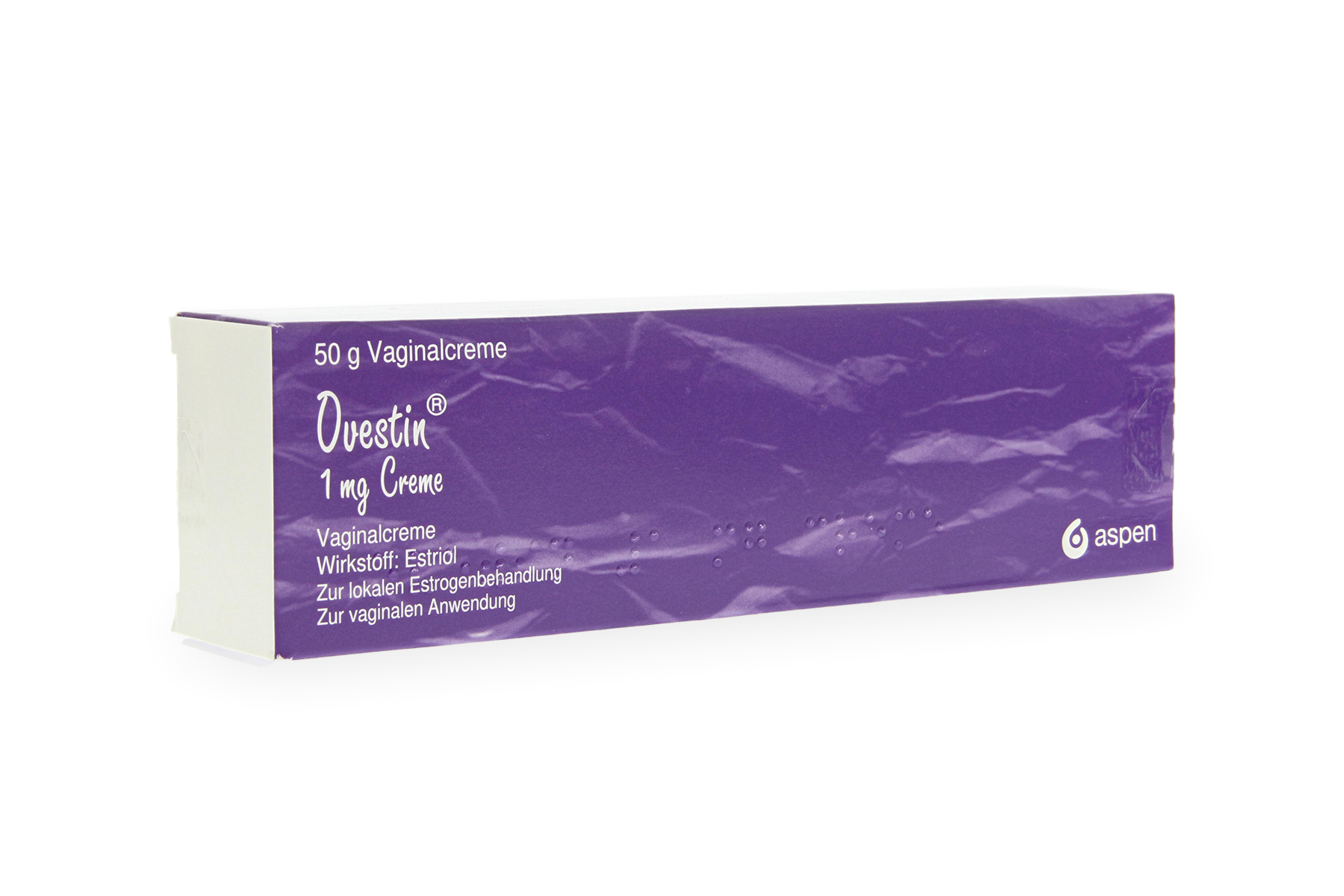
Ovestin
View Options
This website provides general information about medicines for educational purposes only. Always consult your doctor or pharmacist before taking any medication.
Choose Your Medicine
Select dosage and quantity
Online Consultation
Reviewed by a qualified physician
Fast, Discreet Delivery
Delivered to your door
Medical Information
About This Medicine
Ovestin is a topical oestrogen product containing oestriol (estriol) and is used to treat the urogenital symptoms of menopause, a condition clinically referred to as genitourinary syndrome of menopause (GSM) or atrophic vaginitis. It is available as both a vaginal cream (0.1% oestriol) and as pessaries (0.5mg oestriol), both applied directly to the vaginal mucosa. Ovestin delivers oestriol locally to the tissues of the vulva, vagina, and lower urinary tract, which are highly oestrogen-sensitive and undergo significant structural and functional changes after menopause.
The Problem: Genitourinary Syndrome of Menopause
Following menopause, the decline in circulating oestrogen leads to progressive thinning, dryness, and fragility of the vaginal epithelium. The vaginal pH rises, altering the microbial environment and increasing susceptibility to infection. These changes cause symptoms including vaginal dryness, soreness, burning, painful intercourse (dyspareunia), urinary urgency, frequency, and recurrent urinary tract infections. Unlike vasomotor symptoms such as hot flushes that often improve over time, GSM typically worsens progressively without treatment and does not resolve spontaneously.
Why Oestriol and Why Local Delivery?
Oestriol is a relatively weak oestrogen compared with oestradiol, it has a shorter receptor binding time and lower oestrogenic potency systemically. When delivered vaginally at the doses used in Ovestin, it produces robust local tissue effects, restoring vaginal epithelial thickness, reducing pH, and improving lubrication, while achieving negligible systemic absorption. This means Ovestin can be used in women who cannot or prefer not to use systemic HRT, including those with a history of certain hormone-sensitive cancers, after oncological review.
Because systemic absorption is minimal, women using Ovestin alone (without systemic HRT) do not routinely need to add a progestogen to protect the uterine lining, as endometrial stimulation is not clinically significant at the doses used.
Usage & Dosage
Initial Treatment Phase
Apply Ovestin cream using the calibrated applicator provided, or insert one pessary using the applicator, once daily at bedtime for the first two to three weeks. This intensive phase promotes rapid restoration of the vaginal lining and provides faster relief of dryness, soreness, and pain during intercourse.
To use the cream: fill the applicator to the calibrated line (equivalent to 0.5 mg oestriol per application), lie on your back with knees bent, gently insert the applicator into the vagina as far as is comfortable, and press the plunger to release the cream. Wash the applicator with warm water after each use.
Maintenance Phase
After the initial phase, reduce to twice weekly (for example, every three to four days) as a maintenance dose. Use the lowest dose that maintains symptom relief. Regular reviews with your doctor are recommended to assess ongoing need, as Ovestin delivers local oestrogen and long-term use requires periodic reassessment.
- Initial phase: 1 application of cream (0.5mg oestriol) or 1 pessary (0.5mg oestriol) vaginally once daily at bedtime for 2-3 weeks
- Maintenance phase: 1 application or 1 pessary twice weekly (ongoing)
Women should use the lowest effective dose that controls symptoms. No dose adjustment is required in renal impairment. Caution is advised in severe hepatic disease.
For women receiving systemic HRT, additional vaginal oestriol is generally not required for well-controlled urogenital symptoms, though low-dose topical oestriol is sometimes added even in women on systemic HRT when urogenital symptoms persist. Progestogen co-administration is not necessary for vaginal Ovestin alone (without systemic HRT) as systemic absorption is too low to stimulate the endometrium at licensed maintenance doses.
Side Effects
Common Side Effects
Side effects from Ovestin are predominantly local and mild, particularly in the first week as the atrophic vaginal tissue adjusts:
- Vaginal discomfort, burning, or itching on initial application
- Increased vaginal discharge (a sign of restored secretory activity — usually settles)
- Mild local irritation
Systemic Absorption Considerations
Although Ovestin is a local treatment, some oestriol is absorbed into the bloodstream, particularly in the early weeks when the vaginal lining is thin. This systemic exposure is generally very low at maintenance doses. Women with a history of hormone-sensitive cancer should discuss with their specialist whether local oestrogen therapy is appropriate for them. Ovestin does not provide contraception.
Warnings & Precautions
Unexplained Vaginal Bleeding
Any new or unexplained vaginal bleeding during Ovestin use must be investigated promptly. While local oestriol at standard maintenance doses is considered to have negligible endometrial effects, higher doses or more frequent applications than prescribed may stimulate the endometrium. Any vaginal bleeding in a postmenopausal woman requires gynaecological assessment to exclude endometrial pathology.
Women should not exceed the recommended dose or frequency of application. If the cream or pessary is used more often than prescribed, systemic oestriol exposure increases proportionally.
Use After Hormone-Sensitive Cancer
The use of vaginal oestrogen in women with a history of breast cancer or endometrial cancer is a complex clinical decision. Current guidance from UK oncology bodies suggests that, following specialist review, low-dose local oestriol may be considered in women with severe GSM symptoms where non-hormonal alternatives have been inadequate. This decision should be made on an individual basis in consultation with the patient's oncologist.
Women with uterine fibroids, endometriosis, or a history of endometrial hyperplasia should inform their prescriber before using Ovestin, as low-level oestrogen stimulation may cause reactivation or growth of these conditions in some cases.
Contraindications
Ovestin is contraindicated in women with:
- Known, suspected, or history of breast cancer (unless after specialist oncological review)
- Known or suspected oestrogen-dependent malignant tumours (e.g. endometrial carcinoma)
- Undiagnosed vaginal bleeding
- Untreated endometrial hyperplasia
- Active venous thromboembolic disease (DVT, pulmonary embolism) -- although risk with vaginal route is very low, systemic contraindications still apply
- Active liver disease or severe hepatic impairment
- Known hypersensitivity to oestriol or any excipient in the formulation
- Porphyria cutanea tarda (or history thereof)
Frequently Asked Questions
How long does it take for Ovestin to relieve vaginal dryness and soreness?
Is Ovestin safe for women who have had breast cancer?
Do I need to take a progestogen alongside Ovestin cream?
Can I use Ovestin if I am also on systemic HRT?
Is Ovestin the same as systemic HRT for the menopause?
Dr. Ross Elledge
General Practitioner · General & Family Medicine
Verified Healthcare Professional
TopDoctors Profile