
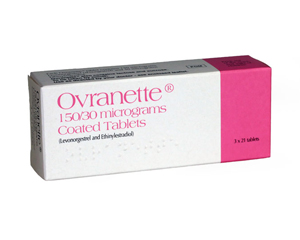
Ovranette
View Options
This website provides general information about medicines for educational purposes only. Always consult your doctor or pharmacist before taking any medication.
Choose Your Medicine
Select dosage and quantity
Online Consultation
Reviewed by a qualified physician
Fast, Discreet Delivery
Delivered to your door
Medical Information
About This Medicine
Ovranette is a combined oral contraceptive pill (COC) containing two synthetic hormones: levonorgestrel (150 micrograms) and ethinylestradiol (30 micrograms). It belongs to the second-generation class of combined pills and is therapeutically equivalent to the well-known brand Microgynon 30, of which it is a generic formulation. Ovranette is one of the most widely used and clinically established oral contraceptive pills in the UK, with decades of safety and efficacy data.
Mechanism of Action
Ovranette prevents pregnancy through three complementary mechanisms. Primarily, the combination of levonorgestrel and ethinylestradiol suppresses the hypothalamic-pituitary axis, inhibiting the release of FSH (follicle-stimulating hormone) and LH (luteinising hormone), thereby preventing ovulation. Secondly, levonorgestrel thickens cervical mucus, creating a barrier that impedes sperm penetration into the uterine cavity. Thirdly, the hormonal environment alters the endometrial lining, reducing its receptivity to implantation in the unlikely event that ovulation and fertilisation occur.
When taken correctly, one tablet daily without missing doses, the combined pill is over 99% effective at preventing pregnancy. In typical use (accounting for occasional missed or late pills), effectiveness is around 91-93%.
Non-Contraceptive Benefits
Beyond contraception, Ovranette offers a range of therapeutic benefits that make it a multi-purpose choice. It typically produces lighter, more regular, and less painful periods, making it a useful treatment for heavy menstrual bleeding, dysmenorrhoea, and premenstrual syndrome. It may also reduce the risk of ovarian cysts, endometriosis-related pain, and benign breast disease. Long-term COC use has been associated with a reduced risk of ovarian and endometrial cancer.
Usage & Dosage
How to Take Ovranette
Take one Ovranette tablet daily at approximately the same time each day for 21 consecutive days, then have a seven-day break. A withdrawal bleed usually occurs during the break. Start your next strip after the seven-day break whether or not bleeding has finished.
Start on day 1 of your period for immediate contraceptive protection. If you start on days 2 to 5, use condoms for the first seven days. If switching from another combined pill, start Ovranette the day after finishing your last active tablet, with no pill-free interval.
Missed Tablets
If you miss a tablet and fewer than 24 hours have passed since your usual time, take it as soon as you remember and continue as normal. If more than 24 hours have passed, take the missed tablet immediately, continue the pack, and use condoms for the next seven days. If fewer than seven tablets remain in the pack when the miss occurred, skip the pill-free break and go directly into the next pack.
- One tablet daily for 21 days, followed by a seven-day pill-free interval, then repeat
- Take at the same time each day to maintain consistent plasma hormone levels
- Each tablet contains levonorgestrel 150mcg and ethinylestradiol 30mcg
No dose adjustment is made based on weight, age (within licensed range), or renal function. Ovranette is not recommended in women with moderate to severe hepatic impairment.
Non-contraceptive uses such as management of heavy menstrual bleeding or dysmenorrhoea typically follow the same standard 21/7 dosing regimen, with continuous use (tricycling) sometimes used to further reduce the frequency of withdrawal bleeds -- this should be done under medical guidance.
Side Effects
Common Side Effects
The following are commonly reported, particularly in the first few months, and often settle with continued use:
- Headache
- Nausea (take with food or at bedtime to reduce this)
- Breast tenderness or enlargement
- Mood changes
- Reduced libido
- Irregular spotting or breakthrough bleeding
- Contact lens intolerance
Serious Risks
Combined pills like Ovranette carry a small increased risk of blood clots (venous thromboembolism), high blood pressure, and, with long-term use, breast cancer and cervical cancer. These absolute risks are small for most healthy young women, but are higher in smokers and those with cardiovascular risk factors. Do not take Ovranette if you smoke and are over 35, or if you have a personal or close family history of blood clots. Seek urgent medical attention if you develop sudden leg pain or swelling, chest pain, difficulty breathing, or severe headache.
Warnings & Precautions
Thrombosis and Cardiovascular Risk
Combined oral contraceptives including Ovranette increase the risk of venous thromboembolism (VTE) compared with non-users. The absolute risk remains low: approximately 5-7 per 10,000 women per year compared with 2 per 10,000 in non-pregnant, non-pill-using women of reproductive age. This risk is highest in the first year of use and after restarting after a break. Risk is substantially higher in women who smoke, are obese, have a personal or family history of VTE, or have thrombophilic conditions.
Women aged over 35 who smoke should not use combined hormonal contraceptives. Blood pressure must be checked before prescribing and at follow-up.
Drug Interactions and Efficacy
Several medicines reduce the effectiveness of Ovranette by inducing hepatic enzymes that accelerate hormonal metabolism. These include rifampicin, rifabutin, phenytoin, carbamazepine, phenobarbital, primidone, topiramate, and St John's Wort. Women requiring these drugs should use alternative or additional contraception. Broad-spectrum antibiotics do not reduce contraceptive efficacy (current UK evidence does not support the historical advice to use additional precautions with antibiotics other than rifampicin).
Contraindications
Ovranette must not be used in women with:
- Current or history of venous thromboembolism (DVT or PE), or known thrombophilia
- Current or history of arterial thrombotic events (stroke, TIA, myocardial infarction)
- Migraine with aura
- Hypertension that is uncontrolled or with vascular complications
- Diabetes mellitus with vascular complications
- Breast cancer (current or past)
- Liver disease (active, severe, or associated with impaired liver function tests)
- Liver tumours (benign or malignant)
- Unexplained vaginal bleeding
- Hormone-sensitive malignancies
- Smoking and age over 35 years (combined contraindication for combined pills)
- Pregnancy or breastfeeding (particularly in the first six weeks postpartum)
Frequently Asked Questions
Is Ovranette the same as Microgynon 30?
Can I use Ovranette to delay my period?
Does Ovranette cause weight gain?
Will Ovranette help with acne?
How soon after stopping Ovranette will my fertility return?
Dr. Ross Elledge
General Practitioner · General & Family Medicine
Verified Healthcare Professional
TopDoctors Profile