
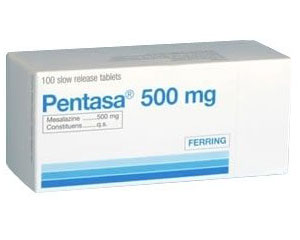
Pentasa
View Options
This website provides general information about medicines for educational purposes only. Always consult your doctor or pharmacist before taking any medication.
Choose Your Medicine
Select dosage and quantity
Online Consultation
Reviewed by a qualified physician
Fast, Discreet Delivery
Delivered to your door
Medical Information
About This Medicine
What Is Pentasa and How Does It Work?
Pentasa is a brand of mesalazine (also known as 5-aminosalicylic acid or 5-ASA), an anti-inflammatory agent used in the treatment and maintenance of ulcerative colitis and Crohn's disease. Unlike many anti-inflammatory drugs that work systemically throughout the body, mesalazine exerts its therapeutic effects locally within the gut mucosa, the inner lining of the intestines and colon. It is believed to work by inhibiting the production of inflammatory mediators, including prostaglandins and leukotrienes, thereby reducing inflammation and allowing the bowel lining to heal.
Pentasa uses a unique ethylcellulose-coated microgranule delivery system that allows the mesalazine to be released continuously and evenly throughout the small intestine and large bowel from the duodenum onwards. This gradual release profile distinguishes Pentasa from some other mesalazine formulations, which are designed to release primarily in the colon. The broad coverage makes Pentasa particularly useful in managing Crohn's disease affecting the small intestine, as well as ulcerative colitis throughout the colon.
Uses in Inflammatory Bowel Disease
In ulcerative colitis, Pentasa is used to induce remission during active flares and to maintain remission once symptoms are controlled. It is one of the cornerstone treatments for mild-to-moderate ulcerative colitis and is generally well tolerated for long-term use. In Crohn's disease, evidence for mesalazine is less robust than in ulcerative colitis, though it is used in clinical practice for mild disease, particularly when the ileum or upper gastrointestinal tract is involved.
Available Formulations
Pentasa is available in several formulations to suit different patients and disease locations: slow-release tablets (500 mg and 1 g), granule sachets, suppositories (for rectal disease), and enemas. The choice of formulation depends on the extent and location of bowel involvement. Patients with distal colitis or proctitis may benefit from topical rectal preparations, which deliver higher local drug concentrations directly to the affected area while minimising systemic exposure. Pentasa is often prescribed alongside other inflammatory bowel disease treatments, including corticosteroids for acute flares and immunosuppressants for refractory or frequently relapsing disease.
Usage & Dosage
How to Take Pentasa
Pentasa tablets and granules should be taken at the same time each day to maintain consistent drug levels in the bowel. Tablets may be swallowed whole or, for patients who have difficulty swallowing, dispersed in a small amount of water and consumed immediately. Granule sachets should be emptied directly onto the tongue and swallowed with water, or may be mixed with food. It is important not to crush or chew tablets, as this may disrupt the controlled-release mechanism.
Pentasa can be taken with or without food, though taking it consistently with meals can help establish a routine and may improve tolerability. During an active flare, Pentasa is typically taken in divided doses throughout the day. During remission maintenance, once-daily dosing is often used, which has been shown to be as effective as divided dosing for many patients and improves adherence.
Rectal Formulations
For rectal use, Pentasa suppositories should be inserted into the rectum after a bowel movement. Enemas should be used at bedtime and retained for as long as possible overnight to maximise contact time with the bowel lining. Contact your IBD nurse or prescriber if you have difficulty using the rectal preparations or if symptoms worsen during treatment.
Pentasa dosing varies depending on the condition, disease severity, and formulation.
Ulcerative colitis -- active disease: 2-4 g daily in divided doses. Ulcerative colitis -- maintenance of remission: 1.5-2 g once daily or in divided doses. Crohn's disease (active): 4 g daily in divided doses. Rectal disease -- suppositories: 1 g once daily at bedtime. Rectal disease -- enema: 1 g (100 ml) once daily at bedtime.
No dose adjustment is generally required for mild renal impairment, but Pentasa should be used with caution in moderate renal impairment and is contraindicated in severe renal failure. Renal function should be monitored periodically during long-term treatment, as mesalazine is excreted via the kidneys. Pentasa is not recommended for use in children unless on specialist advice.
Side Effects
Common Side Effects
- Headache
- Nausea and abdominal pain
- Diarrhoea (sometimes difficult to distinguish from disease activity)
- Flatulence
- Skin rash
- Dizziness
- Elevated liver enzymes (usually asymptomatic)
- Altered taste
Serious Side Effects
- Mesalazine-induced nephrotoxicity: decreased urine output, swelling, fatigue, kidney function must be monitored
- Acute pancreatitis: severe abdominal pain, vomiting (rare but recognised)
- Blood dyscrasias: unusual bruising, pallor, or persistent infection (agranulocytosis, aplastic anaemia, rare)
- Mesalazine hypersensitivity syndrome: fever, rash, worsening diarrhoea mimicking IBD flare
- Hepatitis: jaundice, right upper quadrant pain
Warnings & Precautions
Renal and Hepatic Monitoring
Pentasa contains mesalazine, which is primarily excreted through the kidneys. Nephrotoxicity is a recognised rare but serious complication of mesalazine therapy, which can develop insidiously without obvious symptoms. Renal function (urea and electrolytes, creatinine) should be checked before starting treatment, at three months, and then annually during long-term use. Patients who develop unexplained reduction in urine output, peripheral oedema, or fatigue should contact their prescriber promptly.
Mesalazine should be used with caution in patients with hepatic impairment. Liver function tests should be performed periodically during treatment. Patients with known G6PD deficiency are at increased risk of haemolytic anaemia with mesalazine and should be monitored closely.
Interactions and Salicylate Allergy
Pentasa contains a salicylate compound. Patients with a known hypersensitivity to aspirin or other salicylates may have cross-sensitivity to mesalazine. The combination of mesalazine with azathioprine or 6-mercaptopurine may theoretically increase the risk of myelosuppression; blood count monitoring is recommended. Mesalazine may reduce the anticoagulant effect of warfarin, necessitating INR monitoring. Inform your prescriber of all medicines you are taking before starting Pentasa.
Contraindications
- Known hypersensitivity to mesalazine, salicylates, or any excipient
- Severe renal impairment (eGFR below 30 ml/min/1.73 m2)
- Severe hepatic impairment
- Active peptic ulceration
- G6PD deficiency (relative contraindication with close monitoring)
- Blood clotting disorders (use with caution)
- Concurrent use with nephrotoxic drugs without careful monitoring
- Children under two years of age
Frequently Asked Questions
What is the difference between Pentasa and other mesalazine brands?
How long does Pentasa take to work for ulcerative colitis?
Can I take Pentasa during pregnancy?
Do I need blood tests while taking Pentasa?
Can Pentasa cause a flare of ulcerative colitis?
Dr. Ross Elledge
General Practitioner · General & Family Medicine
Verified Healthcare Professional
TopDoctors Profile