
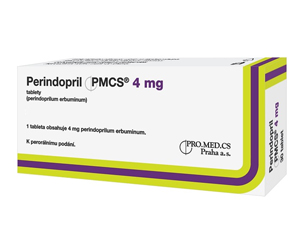
Perindopril
View Options
This website provides general information about medicines for educational purposes only. Always consult your doctor or pharmacist before taking any medication.
Choose Your Medicine
Select dosage and quantity
Online Consultation
Reviewed by a qualified physician
Fast, Discreet Delivery
Delivered to your door
Medical Information
About This Medicine
What Is Perindopril and How Does It Work?
Perindopril is an angiotensin-converting enzyme (ACE) inhibitor used in the management of hypertension (high blood pressure), chronic heart failure, stable coronary artery disease, and secondary prevention following myocardial infarction. Available under the brand name Coversyl, perindopril works by blocking the ACE enzyme that converts angiotensin I into angiotensin II, a potent vasoconstrictor. By reducing circulating levels of angiotensin II, perindopril causes blood vessels to relax and widen (vasodilation), which lowers blood pressure and reduces the workload on the heart. It also inhibits aldosterone secretion, reducing fluid and sodium retention.
Perindopril is a prodrug: when taken orally, it is rapidly absorbed and converted in the liver to its active metabolite, perindoprilat. This active form then exerts the therapeutic ACE-inhibitory effect. Peak plasma levels of perindoprilat are reached approximately three to four hours after dosing, and the medication's effects last for 24 hours, making once-daily dosing sufficient for most patients.
Cardiovascular Protection
Beyond blood pressure lowering, perindopril has well-established benefits in reducing cardiovascular events. The landmark EUROPA trial demonstrated that perindopril significantly reduced the risk of cardiovascular death, non-fatal myocardial infarction, and cardiac arrest in patients with stable coronary artery disease without clinical heart failure. Perindopril is also combined with the calcium channel blocker amlodipine in a fixed-dose combination product (Coveram), which offers additional blood pressure lowering and cardiovascular protection.
Role in Heart Failure and Post-MI Management
In chronic heart failure with reduced ejection fraction, perindopril improves symptoms, reduces hospitalisation rates, and lowers mortality. Following myocardial infarction, ACE inhibitors including perindopril are initiated early to prevent cardiac remodelling, the harmful structural changes to the heart muscle that can worsen long-term outcomes. Perindopril is generally well tolerated and is suitable for long-term use as part of a comprehensive cardiovascular risk management strategy.
Usage & Dosage
How to Take Perindopril
Perindopril tablets should be taken once daily, ideally in the morning before breakfast, as food significantly reduces the absorption of perindopril. Swallow the tablet whole with a glass of water. Take perindopril at the same time each day to maintain consistent blood levels and maximise its blood pressure lowering effect over 24 hours. If you miss a dose, take it as soon as you remember, unless it is close to the time of your next dose, in that case, skip the missed dose and resume your normal schedule. Never take two doses to make up for a missed one.
Blood pressure should be monitored regularly during treatment, particularly after starting perindopril or after a dose increase. Some patients experience a first-dose hypotensive effect, especially if they are taking diuretics, on a low-sodium diet, or are dehydrated. Your prescriber may recommend starting with a lower dose in these circumstances.
Monitoring During Treatment
Renal function and electrolytes (particularly potassium) should be checked before starting perindopril and periodically thereafter, especially during the first few months and after any dose increase. Perindopril can raise serum potassium levels (hyperkalaemia), particularly when combined with potassium-sparing diuretics or potassium supplements. Ensure you attend any follow-up blood test appointments arranged by your prescriber.
Perindopril is available as perindopril erbumine (Coversyl) and perindopril arginine, with different dose equivalences. All doses below refer to the erbumine salt unless stated.
Hypertension: starting dose 4 mg once daily, increased to 8 mg once daily after one month if tolerated and needed. Elderly patients or those on diuretics: 2 mg initially. Heart failure: starting dose 2 mg once daily, increased to 4 mg once daily if tolerated. Stable coronary artery disease: 4 mg once daily for two weeks, increased to 8 mg once daily as tolerated. Post-MI: 4 mg once daily.
Dose reduction is required in renal impairment: eGFR 30-60 ml/min: 2 mg once daily maximum; eGFR 15-30 ml/min: 2 mg on alternate days. Not recommended if eGFR is below 15 ml/min. No dose adjustment is needed for mild hepatic impairment.
Side Effects
Common Side Effects
- Dry, persistent cough (affects up to 15% of patients, class effect of ACE inhibitors)
- Headache
- Dizziness, particularly on standing up suddenly
- Fatigue
- Nausea or abdominal discomfort
- Skin rash
- Muscle cramps
- Altered taste (dysgeusia)
Serious Side Effects
- Angioedema: sudden swelling of the lips, face, tongue, throat, or larynx, a medical emergency requiring immediate discontinuation and emergency treatment
- Hyperkalaemia: elevated potassium causing cardiac arrhythmias
- Acute kidney injury: especially in patients with renal artery stenosis, heart failure, or severe dehydration
- First-dose hypotension: severe drop in blood pressure, particularly in high-risk patients
- Agranulocytosis: rare but serious reduction in white blood cells
Warnings & Precautions
Warnings Before Starting Perindopril
Perindopril and all ACE inhibitors are absolutely contraindicated in pregnancy due to the risk of serious foetal harm, including renal dysplasia, oligohydramnios, and neonatal death. Women of childbearing potential must use effective contraception during treatment and should switch to an alternative antihypertensive before planning a pregnancy. Perindopril must never be used in the second or third trimester of pregnancy.
Angioedema is a rare but potentially life-threatening adverse effect of ACE inhibitors that can develop at any time during treatment, even after years of use. Risk is higher in patients of Afro-Caribbean origin. Any swelling of the face, lips, tongue, or throat requires immediate discontinuation and emergency medical attention. Do not restart perindopril or any other ACE inhibitor after an episode of angioedema.
Renal and Electrolyte Monitoring
Perindopril can reduce renal perfusion in patients with haemodynamically significant bilateral renal artery stenosis, potentially causing acute renal failure. Renal function and potassium should be checked before and regularly during treatment. Concurrent use of NSAIDs, potassium-sparing diuretics, or potassium supplements increases the risk of hyperkalaemia and renal impairment.
Contraindications
- History of angioedema related to any ACE inhibitor
- Hereditary or idiopathic angioedema
- Pregnancy (all trimesters)
- Concurrent use with aliskiren in patients with diabetes or renal impairment
- Concurrent use with sacubitril/valsartan -- must allow 36 hours washout
- Bilateral renal artery stenosis or stenosis in a solitary kidney
- Severe hepatic impairment
- Hypersensitivity to perindopril or any ACE inhibitor
Frequently Asked Questions
Why do ACE inhibitors like perindopril cause a dry cough?
How long does perindopril take to lower blood pressure?
Is perindopril the same as Coversyl?
Can I take perindopril with potassium supplements?
What should I do if I miss a dose of perindopril?
Dr. Ross Elledge
General Practitioner · General & Family Medicine
Verified Healthcare Professional
TopDoctors Profile