
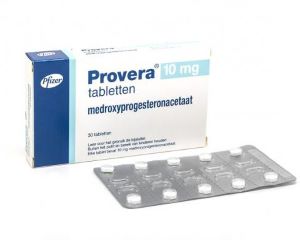
Provera
View Options
This website provides general information about medicines for educational purposes only. Always consult your doctor or pharmacist before taking any medication.
Choose Your Medicine
Select dosage and quantity
Online Consultation
Reviewed by a qualified physician
Fast, Discreet Delivery
Delivered to your door
Medical Information
About This Medicine
Provera (medroxyprogesterone acetate) is a synthetic progestogen tablet used to treat a range of gynaecological and oncological conditions. As an oral progestogen, it mimics the action of progesterone, the naturally occurring female sex hormone, and is used across a broad spectrum of clinical situations from managing abnormal uterine bleeding to providing palliation in hormone-sensitive cancers.
Gynaecological Uses
In gynaecology, Provera is used to treat secondary amenorrhoea (the absence of menstrual periods in women who have previously menstruated), dysfunctional uterine bleeding (heavy or irregular periods not caused by a structural abnormality), and endometriosis (a condition in which tissue similar to the womb lining grows outside the uterus). It is also prescribed as the progestogenic component of hormone replacement therapy (HRT) in women with an intact uterus, where it protects the endometrium from the risks of unopposed oestrogen stimulation.
Oncological Uses
At higher doses, Provera is used in the palliative treatment of hormone-sensitive cancers, including breast cancer and endometrial (uterine) cancer. Progestogens exert anti-oestrogenic and anti-androgenic effects that can slow or suppress the growth of certain tumours. In this context, the doses used are considerably higher than those prescribed for gynaecological conditions and treatment is managed by an oncologist.
How Provera Works
Medroxyprogesterone acetate binds to progesterone receptors in target tissues, producing effects that include transformation of proliferative endometrium into secretory endometrium, suppression of pituitary gonadotrophin release, and modulation of hormone receptor expression in tumour cells. These diverse mechanisms underpin its usefulness across multiple therapeutic areas. Provera should always be taken under medical supervision, and the dose and duration of treatment vary considerably depending on the indication being treated.
Usage & Dosage
How to Take Provera
Provera (medroxyprogesterone acetate) is taken by mouth, usually with or after food. The dose varies considerably depending on the indication.
For HRT regimens, doses of 2.5 to 10 mg daily are combined with an oestrogen preparation, either continuously (every day) or sequentially (for 12 to 14 days each month). For secondary amenorrhoea or dysfunctional uterine bleeding, a short cyclical course is typically prescribed, with the exact dose and duration determined by your doctor. For endometriosis, higher doses are used continuously for extended periods under specialist oversight.
Consistency
Take Provera at the same time each day. Do not stop or adjust your dose without speaking to your doctor — the timing and duration of progestogen use in HRT is important for protecting the uterine lining and maintaining the benefits of the overall regimen.
Provera is available in tablet strengths of 2.5mg, 5mg, and 10mg, with doses varying significantly by indication. For HRT progestogenic component, typical doses are 2.5 to 10mg daily. For secondary amenorrhoea, 2.5 to 10mg daily for 5 to 10 days is commonly prescribed, with withdrawal bleeding expected within 3 to 7 days of stopping. For dysfunctional uterine bleeding, 5 to 10mg daily for 5 to 10 days is typical.
For endometriosis, doses of 10mg three times daily may be used for at least 90 days. Palliative oncological doses range from 200mg upwards, as directed by a specialist. Provera should be stored at room temperature, below 25 degrees Celsius, in its original packaging and away from direct sunlight.
Side Effects
Common Side Effects
- Irregular spotting or breakthrough bleeding, particularly early in treatment
- Breast tenderness or discomfort
- Fluid retention causing ankle swelling
- Weight changes
- Mood changes, including low mood, irritability, or depression
- Headache or migraine
- Nausea
Long-term Considerations
Provera used as part of combined HRT (oestrogen plus progestogen) is associated with a small increased risk of breast cancer and blood clots (venous thromboembolism) compared with oestrogen-only HRT. The absolute risk for any individual depends on age, health history, and duration of use. Your doctor will review your HRT periodically to make sure the benefits continue to outweigh the risks. Report any new breast lumps, unexplained leg swelling, chest pain, or shortness of breath promptly.
Warnings & Precautions
Thromboembolic Risk
Medroxyprogesterone acetate at higher doses increases the risk of venous thromboembolism, including deep vein thrombosis and pulmonary embolism. This risk is particularly relevant for women who smoke, are overweight, have a personal or family history of blood clots, or are immobile for prolonged periods. Women should be counselled about the symptoms of VTE and advised to seek urgent medical attention if they develop sudden leg pain or swelling, unexplained chest pain, or breathlessness.
Breast and Uterine Cancer Monitoring
Women with a history of breast cancer or those at high risk should discuss with their doctor whether Provera is appropriate for them. Progestogens may promote the growth of certain breast tumour subtypes. Women on long-term treatment should maintain regular breast screening. Any new breast lump or nipple discharge should be assessed promptly.
Metabolic and Cardiovascular Considerations
Provera may affect glucose metabolism and should be used with caution in women with diabetes mellitus. It can also affect lipid profiles, particularly at higher doses. Women with cardiovascular risk factors should be monitored appropriately. Treatment should be discontinued if evidence of liver dysfunction, thromboembolic disease, or deteriorating cardiovascular status emerges.
Contraindications
- Known or suspected pregnancy
- Undiagnosed vaginal bleeding
- Active or past arterial or venous thromboembolic disease
- Known or suspected hormone-sensitive breast cancer (unless used as palliative therapy under specialist care)
- Severe liver disease or liver tumours (benign or malignant)
- Known hypersensitivity to medroxyprogesterone acetate or any excipient
- Incomplete miscarriage or missed abortion
- Porphyria
Frequently Asked Questions
What is Provera used for in women's health?
Can I take Provera during HRT and is it safe long-term?
Will Provera stop heavy periods immediately?
Does Provera cause weight gain?
Can Provera be used to treat endometriosis?
Dr. Ross Elledge
General Practitioner · General & Family Medicine
Verified Healthcare Professional
TopDoctors Profile