
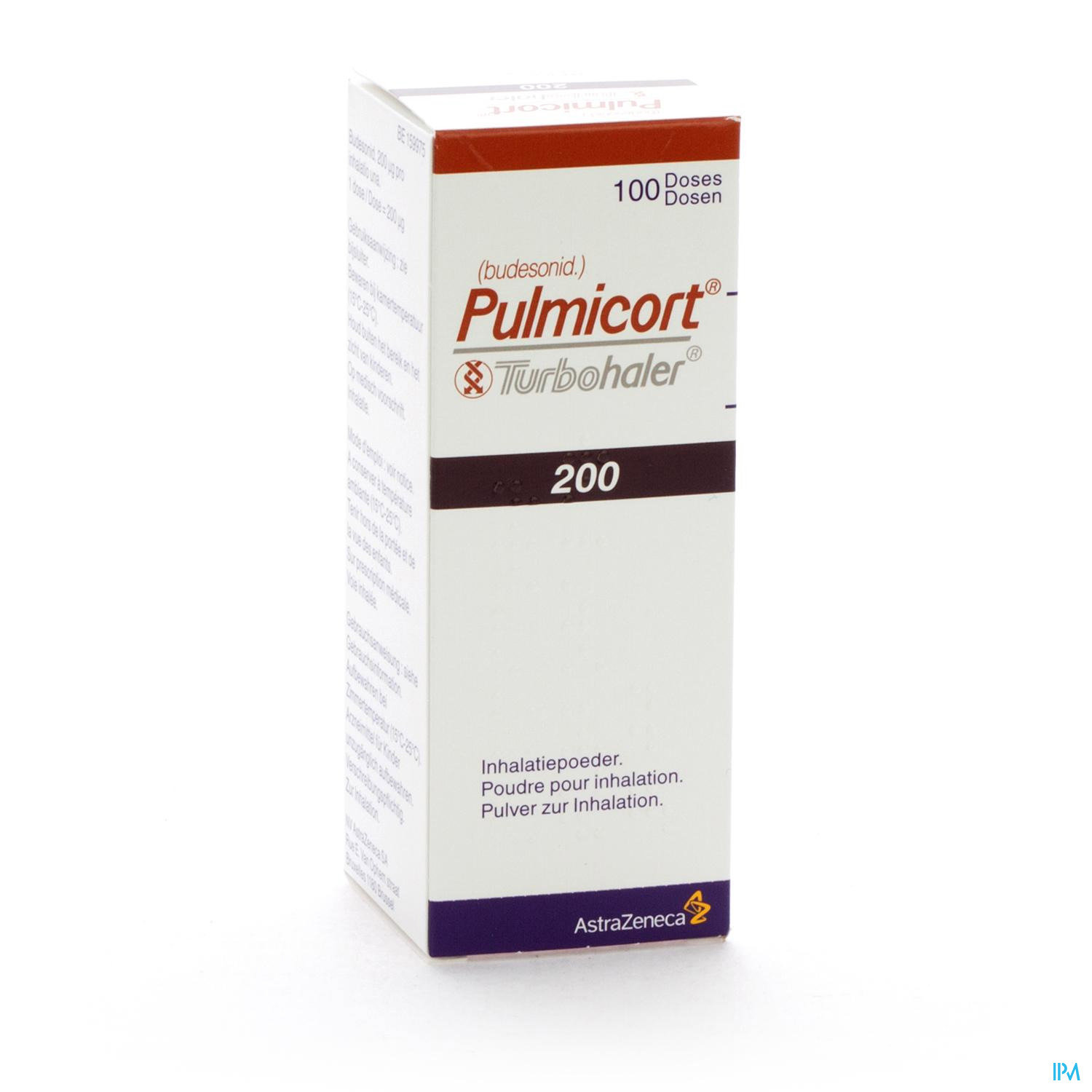
Pulmicort Turbohaler
View Options
This website provides general information about medicines for educational purposes only. Always consult your doctor or pharmacist before taking any medication.
Choose Your Medicine
Select dosage and quantity
Online Consultation
Reviewed by a qualified physician
Fast, Discreet Delivery
Delivered to your door
Medical Information
About This Medicine
Pulmicort Turbuhaler (budesonide) is an inhaled corticosteroid preventer inhaler used in the long-term management of asthma in adults and children. It is delivered via the Turbuhaler, a breath-actuated dry powder inhaler device that does not require coordination between pressing a canister and inhaling, making it suitable for a wide range of patients including children and older adults.
Role as a Preventer Inhaler
Unlike reliever inhalers (such as salbutamol), which act rapidly to open the airways during an acute asthma attack, Pulmicort Turbuhaler is a preventer inhaler that must be used every day regardless of whether symptoms are present. Regular use gradually reduces airway inflammation, decreasing the frequency and severity of asthma attacks, improving lung function, and reducing dependence on reliever inhalers. The full benefit is typically appreciated after four to eight weeks of consistent daily use.
Budesonide and Airway Inflammation
Asthma is fundamentally an inflammatory condition. The airways of people with asthma are chronically inflamed and hypersensitive to a variety of triggers including allergens, exercise, cold air, and respiratory infections. Budesonide, the active ingredient in Pulmicort, reduces this underlying inflammation by suppressing the production of inflammatory mediators in the airway mucosa, decreasing mucus secretion, and reducing bronchial hyper-reactivity. Over time, these effects lead to a calmer, less reactive airway.
Inhaler Device and Technique
The Turbuhaler device is simple to load and use, but correct technique is essential for adequate drug delivery to the lungs. Patients should breathe in strongly and deeply through the mouthpiece, rather than slowly. After each dose, the mouth should be rinsed thoroughly with water and spat out, not swallowed. This prevents the small amount of budesonide deposited in the mouth and throat from being absorbed and reduces the risk of oral thrush (candidiasis).
Pulmicort Turbuhaler is available in strengths of 100mcg, 200mcg, and 400mcg per actuation to allow step-wise titration of the inhaled corticosteroid dose in line with asthma control.
Usage & Dosage
Using Your Turbuhaler Correctly
Before inhaling a dose, the Turbuhaler must be loaded by twisting the brown grip at the bottom as far as it will go in one direction, then back again until a click is heard. With the device held upright, patients should breathe out away from the mouthpiece, then place the mouthpiece between the lips and inhale as forcefully and deeply as possible. The powder may be imperceptible on inhalation, which is normal. After inhaling, hold the breath briefly, then breathe out slowly away from the device.
Rinsing After Each Dose
Rinsing the mouth with water after every dose and spitting the water out is essential. Budesonide deposited in the mouth and throat can cause local side effects, particularly oral thrush (candidiasis), which presents as white patches or soreness. Rinsing significantly reduces this risk without affecting the therapeutic benefit, as the medicine has already been inhaled into the lungs.
The Turbuhaler contains a red indicator window that appears when approximately 20 doses remain, prompting the user to obtain a new inhaler. Pulmicort Turbuhaler should be used at the same times each day to establish a reliable routine.
Pulmicort Turbuhaler is available in 100mcg, 200mcg, and 400mcg strengths. In adults and adolescents, the usual starting dose for mild to moderate asthma is 200 to 400mcg twice daily, which can be reduced to once daily in well-controlled patients. For severe asthma, doses up to 800mcg twice daily (1600mcg daily) may be used under specialist supervision.
In children aged 6 and over, doses of 100 to 200mcg twice daily are typical. For children under 6, a nebulised form of budesonide is generally preferred. Doses should be titrated to the lowest effective level once asthma is well controlled. The device should be stored below 30 degrees Celsius and kept dry; the mouthpiece should be cleaned weekly with a dry cloth and never washed with water.
Side Effects
Common Side Effects
- Oral thrush (candidiasis): white patches or soreness in the mouth, preventable by mouth rinsing
- Hoarseness or voice changes (dysphonia) due to local steroid deposition on the vocal cords
- Throat irritation or cough after inhalation
- Headache
- Dry mouth
- Mild skin bruising at higher doses
- Nasopharyngitis (runny nose or sore throat)
Serious Side Effects
- Adrenal suppression: At high doses or with prolonged use, the adrenal glands may produce less cortisol; symptoms of adrenal crisis include profound fatigue, dizziness, and low blood pressure
- Reduced bone density: High-dose long-term inhaled corticosteroid use may reduce bone mineral density; discuss calcium and vitamin D supplementation with your doctor
- Growth retardation in children: High-dose budesonide may slow growth; the lowest effective dose should always be used and height monitored regularly
- Severe allergic reactions: Rash, bronchospasm, or angioedema require urgent medical attention
- Systemic corticosteroid effects: At very high doses, Cushing syndrome features including weight gain, skin thinning, and hypertension may occur
Warnings & Precautions
Do Not Stop Without Medical Advice
Pulmicort Turbuhaler must not be used as a reliever inhaler and should never be stopped abruptly if it has been used at high doses for a prolonged period, as the adrenal glands may have become partially suppressed. Any reduction in dose should be gradual and guided by a healthcare professional. Patients whose asthma worsens should seek medical review rather than stopping their preventer and relying solely on a reliever inhaler.
Systemic Corticosteroid Effects at High Doses
While inhaled budesonide produces far fewer systemic effects than oral prednisolone, patients using higher doses over many years may experience some degree of adrenal suppression, reduced bone density, or, in children, slowed growth rate. The risk should be weighed against the benefits of good asthma control, and the lowest effective dose should always be used. Patients switching from oral steroids to inhaled budesonide should do so gradually and under medical supervision, as adrenal insufficiency may emerge as the oral steroid is reduced.
Infections and Immunosuppression
Corticosteroids suppress immune function. Patients who have not had chickenpox should avoid contact with individuals who have chickenpox or shingles while taking higher doses of inhaled corticosteroids, and should seek urgent medical advice if exposure occurs. Latent tuberculosis may be reactivated and should be considered in patients with a relevant history.
Contraindications
- Known hypersensitivity to budesonide or any component of the Turbuhaler formulation
- Use as a reliever (rescue) inhaler in acute asthma attacks
- Children under 6 years (the Turbuhaler device is not suitable; nebulised formulations are preferred)
- Active or untreated pulmonary tuberculosis
- Untreated fungal, viral, or bacterial respiratory infections
- Severe lactose intolerance (the Turbuhaler contains lactose as a carrier)
Frequently Asked Questions
How do I use a Pulmicort Turbuhaler correctly?
Why is it important to rinse my mouth after using Pulmicort?
How long does it take for Pulmicort to improve my asthma?
Can Pulmicort Turbuhaler affect my child's growth?
Can I use Pulmicort Turbuhaler during pregnancy?
Dr. Ross Elledge
General Practitioner · General & Family Medicine
Verified Healthcare Professional
TopDoctors Profile