
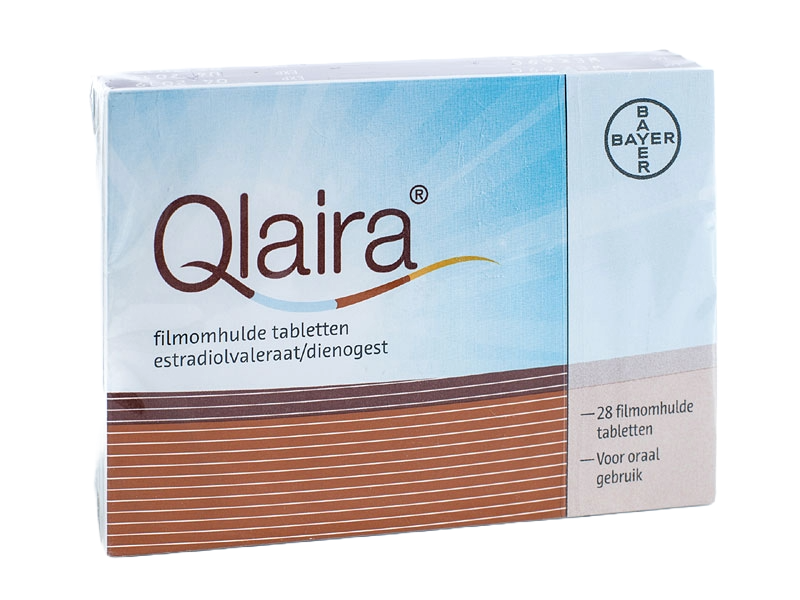
Qlaira
View Options
This website provides general information about medicines for educational purposes only. Always consult your doctor or pharmacist before taking any medication.
Choose Your Medicine
Select dosage and quantity
Online Consultation
Reviewed by a qualified physician
Fast, Discreet Delivery
Delivered to your door
Medical Information
About This Medicine
Qlaira is a combined oral contraceptive pill containing two active ingredients: estradiol valerate, a natural oestrogen, and dienogest, a progestogen with anti-androgenic properties. Unlike conventional combined pills that use synthetic ethinyloestradiol, Qlaira uses estradiol valerate, which is chemically identical to the oestrogen naturally produced by the ovaries. This distinction makes Qlaira a unique pill in terms of its hormonal composition.
Quadriphasic Dosing Regimen
Qlaira is a quadriphasic pill, meaning the ratio and dose of the two hormones varies across four phases during the 28-day pack. Each pack contains 28 tablets that are taken consecutively without a pill-free interval. The tablets are colour-coded to guide the user through the different phases: two dark yellow tablets of oestrogen only, five medium red tablets with a higher oestrogen dose plus dienogest, 17 light yellow tablets with a lower oestrogen dose plus dienogest, and two dark red tablets of oestrogen only, followed by two white placebo tablets. The withdrawal bleed typically occurs during the placebo phase and may be lighter and shorter than with conventional pills.
Additional Benefits Beyond Contraception
In addition to providing effective contraception, Qlaira is licensed in the UK for the treatment of heavy menstrual bleeding (menorrhagia) in women who wish to use oral contraception. The dienogest component has pronounced anti-proliferative effects on the endometrium, thinning the womb lining and thereby reducing menstrual blood loss. Dienogest also has anti-androgenic properties, and some women find that Qlaira improves conditions such as acne and hirsutism, though it is not formally licensed for these indications.
Qlaira is suitable for women who have difficulty tolerating ethinyloestradiol-containing pills. However, like all combined hormonal contraceptives, it is not appropriate for women with certain risk factors including a history of blood clots, stroke, or oestrogen-sensitive cancers. It should be discussed with a prescriber to determine whether it is the right contraceptive choice.
Usage & Dosage
Starting Qlaira
Start Qlaira on the first day of your natural menstrual period, in which case contraceptive protection is immediate. If started on any other day, use additional contraception such as condoms for the first nine days. After childbirth, do not start before day 28 due to the increased risk of blood clots in the postnatal period. After a miscarriage or termination, it can usually be started immediately.
Taking the Tablets
The 28 tablets in each pack must be taken in strict sequence, one tablet daily, following the arrows on the pack. Unlike conventional combined pills, there is no seven-day break, start a new pack immediately after the last tablet. Do not skip or take tablets out of order, as this could compromise contraceptive effectiveness. If a tablet is missed, consult the patient information leaflet carefully, as the rules for Qlaira differ from those of conventional monophasic pills.
Qlaira is taken as one tablet daily, continuously, with no pill-free interval. The 28-tablet pack contains colour-coded tablets of varying composition that must be taken in order. The recommended starting time is the first day of the menstrual period. Tablets should be taken at approximately the same time each day, swallowed whole with water, and may be taken with or without food.
Qlaira should not be taken during pregnancy or breastfeeding. In women with mild to moderate renal impairment, Qlaira may be used with caution; it is not recommended in severe hepatic impairment. There is no evidence supporting dose adjustment based on body weight. Store below 30 degrees Celsius in the original blister packaging.
Side Effects
Common Side Effects
- Headache or migraine
- Breast tenderness or pain
- Irregular menstrual spotting or intermenstrual bleeding, particularly in the first months
- Nausea
- Mood changes including depression or irritability
- Decreased libido
- Weight changes
- Acne (though dienogest may improve pre-existing acne in some women)
Serious Side Effects
- Venous thromboembolism: Deep vein thrombosis or pulmonary embolism; seek immediate attention for calf pain and swelling, sudden breathlessness, or chest pain
- Arterial events: Stroke or heart attack; symptoms include sudden severe headache, facial drooping, arm weakness, or chest pain requiring emergency care
- Liver tumours: Rare but serious; any severe upper abdominal pain should be investigated
- Severe depression: Mental health deterioration in susceptible individuals requires prompt medical review
- Hypertension: Blood pressure should be monitored regularly during treatment
Warnings & Precautions
Blood Clot Risk
All combined hormonal contraceptives increase the risk of venous thromboembolism (VTE) compared with non-users. The absolute risk remains small for healthy women, but it is higher than that associated with progestogen-only contraceptives. Risk is further increased in women who smoke (particularly over 35 years of age), are obese, have a family history of blood clots, or are immobile for prolonged periods. Women should be aware of the symptoms of VTE and seek immediate medical attention if they develop leg swelling, unexplained chest pain, or breathlessness.
Cervical and Breast Cancer Risk
Long-term use of combined oral contraceptives is associated with a small increase in the risk of cervical cancer and breast cancer. These risks return to baseline levels after stopping the pill and do not increase indefinitely with duration of use. Women should attend regular cervical screening and be breast-aware throughout their lives. Any new breast lump must be promptly investigated.
Liver Function
Qlaira should be discontinued if liver function tests become abnormal or if jaundice develops. Women with a history of liver disease should discuss the risks with their prescriber. The pill should also be stopped if arterial or venous thrombosis, uncontrolled hypertension, or new onset of migraine with aura occurs.
Contraindications
- Active or past venous or arterial thromboembolic events (DVT, pulmonary embolism, stroke, myocardial infarction)
- Presence of multiple risk factors for arterial disease (including diabetes with vascular complications, hypertension, smoking over 35 years)
- Migraine with focal neurological aura
- Breast cancer (current or past) or other oestrogen-sensitive malignancies
- Undiagnosed vaginal bleeding
- Severe or acute liver disease, or liver tumours
- Known hypersensitivity to estradiol valerate, dienogest, or excipients
- Pregnancy
- Breastfeeding in the first six weeks postpartum
Frequently Asked Questions
What makes Qlaira different from other combined contraceptive pills?
Can Qlaira help with heavy periods?
Is there a pill-free break with Qlaira?
Can I use Qlaira if I have acne or hormonal skin problems?
What should I do if I miss a Qlaira tablet?
Dr. Ross Elledge
General Practitioner · General & Family Medicine
Verified Healthcare Professional
TopDoctors Profile