
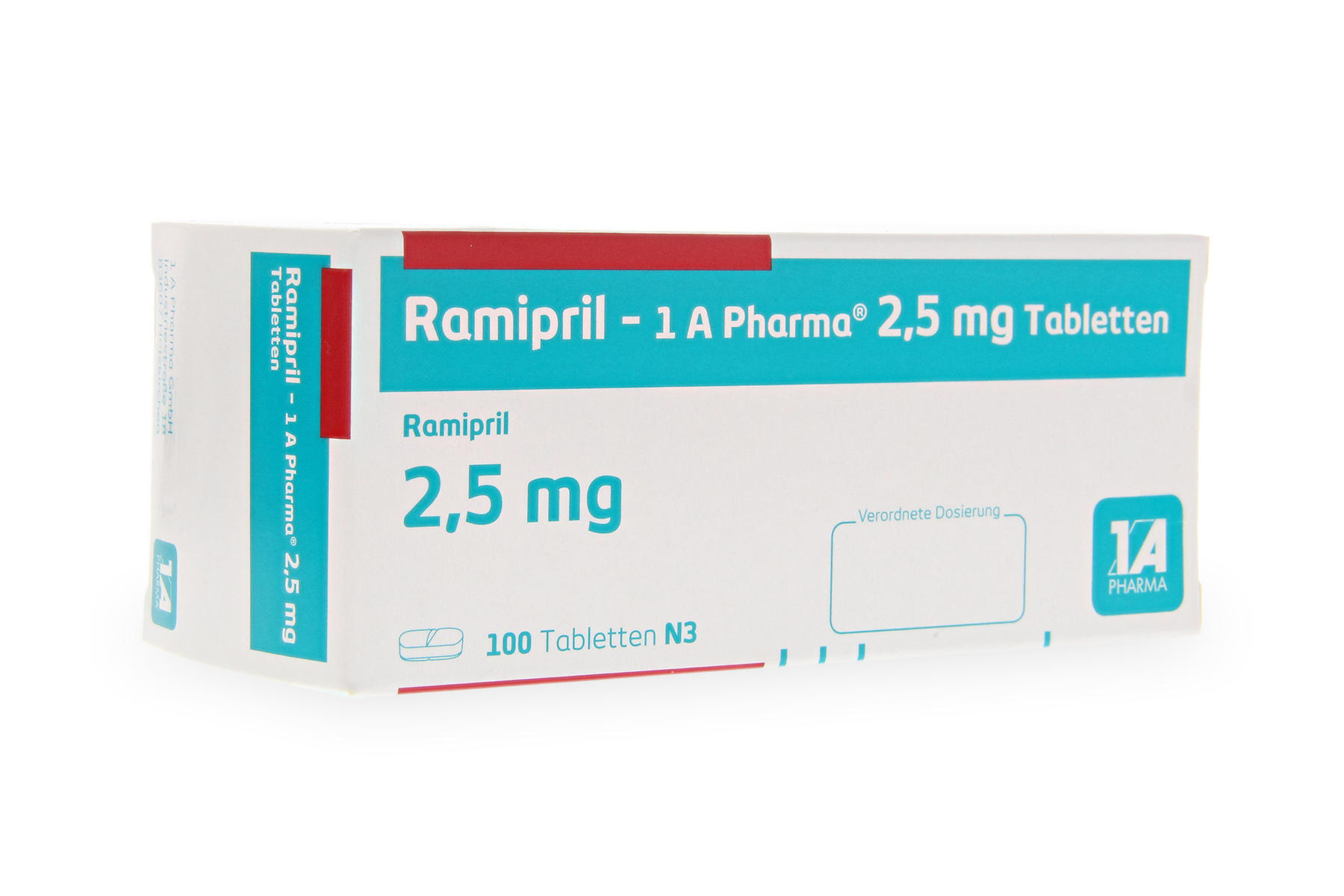
Ramipril
View Options
This website provides general information about medicines for educational purposes only. Always consult your doctor or pharmacist before taking any medication.
Choose Your Medicine
Select dosage and quantity
Online Consultation
Reviewed by a qualified physician
Fast, Discreet Delivery
Delivered to your door
Medical Information
About This Medicine
Ramipril (brand name Tritace) is an angiotensin-converting enzyme (ACE) inhibitor widely prescribed for the treatment of high blood pressure (hypertension), heart failure, and the prevention of cardiovascular events. It is one of the most commonly prescribed medicines in the UK and has a strong evidence base derived from landmark clinical trials, most notably the HOPE (Heart Outcomes Prevention Evaluation) trial, which demonstrated that ramipril substantially reduces the risk of heart attack, stroke, and cardiovascular death in high-risk patients even in the absence of heart failure.
How Ramipril Works
The renin-angiotensin-aldosterone system (RAAS) plays a central role in regulating blood pressure and fluid balance. Angiotensin-converting enzyme (ACE) converts angiotensin I into angiotensin II, a potent vasoconstrictor that raises blood pressure and stimulates aldosterone release. By blocking ACE, ramipril reduces angiotensin II levels, causing arterial and venous dilation, lowering blood pressure, and reducing the workload on the heart. It also reduces aldosterone-mediated sodium and water retention, which helps in heart failure management.
Cardiovascular Risk Reduction
Beyond its blood pressure-lowering effect, ramipril has been shown to reduce cardiovascular mortality and morbidity in patients following myocardial infarction (heart attack) with evidence of heart failure or reduced ejection fraction. The HOPE trial demonstrated that even in patients without significantly elevated blood pressure or established heart failure, ramipril reduced the combined risk of heart attack, stroke, and cardiovascular death by approximately 22 per cent over five years. This cardiovascular-protective effect, partly independent of blood pressure reduction, has established ramipril as a cornerstone medicine for high-risk patients.
Renal Protective Effects
Ramipril also exerts protective effects on the kidneys, particularly in patients with diabetic nephropathy (kidney disease due to diabetes). By reducing intraglomerular pressure through dilation of the efferent arteriole, ACE inhibitors slow the progression of proteinuria and reduce the rate of decline in renal function.
Usage & Dosage
Starting Treatment and Titration
Ramipril is usually started at a low dose of 1.25 to 2.5mg once daily to minimise the risk of first-dose hypotension, particularly in patients who are volume-depleted (for example, those on diuretics), elderly, or have renovascular disease. The dose is then increased gradually over several weeks to the target therapeutic dose, guided by blood pressure response, renal function, and tolerability.
For hypertension, the usual maintenance dose is 2.5 to 5mg once daily, with a maximum of 10mg. For heart failure, the target dose of up to 10mg daily is associated with better outcomes but is reached gradually. For post-MI protection and diabetic nephropathy, similar titration applies.
Monitoring
Renal function, electrolytes (particularly potassium), and blood pressure should be checked before starting ramipril, within one to two weeks of initiation or any dose change, and periodically thereafter. ACE inhibitors can raise potassium levels (hyperkalaemia) and may cause a small rise in serum creatinine at initiation, which is usually acceptable. A rise in creatinine of more than 30 per cent should prompt investigation for possible renal artery stenosis.
Ramipril is available in capsule and tablet form in strengths of 1.25mg, 2.5mg, 5mg, and 10mg. It is taken once daily, with or without food. The starting dose is typically 1.25 to 2.5mg once daily, increasing over four to eight weeks to the target dose for the condition being treated. The maximum dose for most indications is 10mg once daily.
In patients with creatinine clearance below 30 mL/min, doses should be halved and increased cautiously. Ramipril is not recommended in severe renal impairment. In hepatic impairment, the conversion of the prodrug to active ramiprilat may be impaired and specialist advice should be sought. Tablets and capsules should be stored below 25 degrees Celsius, away from moisture. Missed doses should be taken as soon as remembered; if close to the next dose time, skip and do not double up.
Side Effects
Common Side Effects
- Persistent dry cough (affects 10 to 15 per cent of patients, a class effect of ACE inhibitors)
- Dizziness or light-headedness, particularly on standing (postural hypotension)
- Headache
- Fatigue
- Raised potassium levels (hyperkalaemia)
- Mild rise in serum creatinine at initiation
- Skin rash
- Nausea or gastrointestinal upset
Serious Side Effects
- Angioedema: Sudden swelling of the face, lips, tongue, or throat is a rare but potentially life-threatening emergency requiring immediate withdrawal of the drug and urgent medical attention; more common in Black patients and those on concomitant ACE inhibitors
- Severe hypotension: Excessive blood pressure fall, particularly after the first dose or in volume-depleted patients
- Hyperkalaemia: Dangerously high potassium levels, particularly in patients with renal impairment or taking potassium-sparing diuretics
- Acute kidney injury: Renal function should be monitored; significant deterioration warrants dose reduction or discontinuation
- Agranulocytosis: Very rare; unexplained fever or infections should prompt investigation
Warnings & Precautions
Angioedema Risk
Ramipril must be stopped immediately and emergency medical help sought if angioedema occurs. This reaction, characterised by rapid swelling of the face, lips, tongue, or throat, can cause airway obstruction and is potentially fatal. Patients with a history of angioedema from any cause, including hereditary angioedema, should not take ACE inhibitors. The risk is approximately three times higher in Black patients compared with other ethnic groups. Once angioedema has occurred with an ACE inhibitor, the entire drug class is contraindicated.
Pregnancy
Ramipril is teratogenic and must not be taken during pregnancy. ACE inhibitors are associated with foetal renal agenesis, skull hypoplasia, oligohydramnios, and neonatal anuria when used in the second and third trimesters. Women of childbearing age should use effective contraception while taking ramipril. If pregnancy occurs, ramipril must be stopped immediately and alternative antihypertensive therapy commenced.
Renal Artery Stenosis
Ramipril should be used with extreme caution in patients with bilateral renal artery stenosis or stenosis of the artery to a single functioning kidney, as reducing angiotensin II in these patients can cause acute, severe kidney injury. Renal function should be closely monitored in any patient with suspected or confirmed renovascular disease.
Contraindications
- History of ACE inhibitor-associated angioedema
- Hereditary or idiopathic angioedema
- Pregnancy (especially second and third trimesters) and breastfeeding
- Bilateral renal artery stenosis or unilateral stenosis in a solitary kidney
- Known hypersensitivity to ramipril or any other ACE inhibitor
- Concurrent use with aliskiren in patients with diabetes mellitus or renal impairment
- Concurrent use with sacubitril/valsartan (neprilysin inhibitor); at least 36-hour washout required
- Severe hepatic impairment
Frequently Asked Questions
Why does ramipril cause a cough?
Can I take ramipril if I have diabetes?
What should I do if I become pregnant while taking ramipril?
What is the HOPE trial and why is it important for ramipril?
How long should I take ramipril?
Dr. Ross Elledge
General Practitioner · General & Family Medicine
Verified Healthcare Professional
TopDoctors Profile