
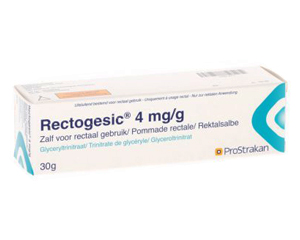
Rectogesic
View Options
This website provides general information about medicines for educational purposes only. Always consult your doctor or pharmacist before taking any medication.
Choose Your Medicine
Select dosage and quantity
Online Consultation
Reviewed by a qualified physician
Fast, Discreet Delivery
Delivered to your door
Medical Information
About This Medicine
Rectogesic (glyceryl trinitrate 0.4% rectal ointment) is a topical treatment for chronic anal fissure in adults. An anal fissure is a small tear or ulcer in the lining of the anal canal that causes intense pain, particularly during and after defaecation, and can become a persistent, debilitating condition that significantly impacts quality of life. Rectogesic offers a non-surgical treatment option that addresses the underlying cause of the problem rather than simply masking symptoms.
The Mechanism Behind Chronic Anal Fissure
Chronic anal fissures develop and persist primarily because of poor blood supply to the posterior anal canal combined with elevated internal anal sphincter tone. The high resting pressure of the internal anal sphincter (IAS) reduces blood flow to the anal mucosa, impairing healing of the initial tear. Pain during defaecation causes reflex spasm of the sphincter, further increasing pressure and worsening ischaemia in a self-perpetuating cycle. The tear does not heal because the tissue is essentially in a state of localised ischaemia.
How Rectogesic Works
Glyceryl trinitrate (GTN), the active ingredient in Rectogesic, is a nitric oxide donor. Nitric oxide causes smooth muscle relaxation by activating guanylate cyclase and increasing intracellular cyclic GMP levels. When applied to the perianal area, the GTN in Rectogesic relaxes the internal anal sphincter, reducing sphincter pressure and allowing blood flow to the ischaemic fissure to normalise. This improved perfusion enables tissue healing and breaks the cycle of spasm and ischaemia.
Effectiveness and Tolerability
Clinical studies have demonstrated that GTN ointment heals chronic anal fissures in approximately 50 to 70 per cent of patients, though recurrence rates are significant, with some studies showing relapse in up to 50 per cent of those who initially heal. The main limitation of Rectogesic is the very high incidence of headache, experienced by up to 50 per cent of patients due to systemic vasodilation from nitrate absorption. Rectogesic is an established alternative to surgery (lateral internal sphincterotomy) in appropriately selected patients.
Usage & Dosage
How to Apply Rectogesic
Rectogesic ointment is applied to the anal canal using the finger. A small amount of ointment approximately 2.5cm in length (about the size of a pea) is measured out using the measuring line on the cardboard ruler provided in the pack. This amount is applied gently to the inside of the anal canal (intra-anal application) using the index finger covered with a finger stall or latex glove, or it may be applied to the anal margin if intra-anal application is not tolerated. Hands should be washed thoroughly before and after application.
Frequency and Duration
The ointment is applied twice daily, ideally morning and evening, for eight weeks. If symptoms have not improved after this period, or if the fissure has not healed, further medical assessment is needed to consider alternative treatments such as botulinum toxin injection or surgical lateral internal sphincterotomy. A high-fibre diet and adequate hydration should be maintained throughout treatment to prevent constipation and reduce trauma to the fissure during defaecation. Topical anaesthetics or warm baths (sitz baths) may be recommended alongside Rectogesic for pain relief.
The recommended dose of Rectogesic is 2.5cm of ointment applied intra-anally twice daily for up to eight weeks. The dose should not be exceeded, as higher amounts increase the risk of headache and hypotension without improving therapeutic efficacy. The ointment should be measured carefully using the measuring guide provided in the pack.
If a dose is missed, it should be applied as soon as remembered. If it is nearly time for the next application, the missed dose should be skipped and the regular schedule resumed. Store below 25 degrees Celsius. Rectogesic should not be used by patients who have previously taken organic nitrates and developed tolerance to them, as the effectiveness of GTN may be reduced in this group.
Side Effects
Common Side Effects
- Headache: very common, affecting up to 50 per cent of patients, caused by systemic vasodilation; usually mild to moderate and improves over the course of treatment
- Flushing or feeling of warmth
- Dizziness or light-headedness
- Burning or stinging sensation at the application site
- Pruritus (itching) around the anal area
- Nausea
- Anal discomfort or rectal bleeding (may be related to the fissure rather than the medicine)
Serious Side Effects
- Severe hypotension: A dangerous fall in blood pressure, particularly if Rectogesic is used with PDE-5 inhibitors or antihypertensive medicines; symptoms include severe dizziness, fainting, or collapse
- Nitrate tolerance: With prolonged continuous use, GTN may become less effective; ensure treatment is not used beyond the recommended course without medical review
- Methaemoglobinaemia: Very rare adverse effect of nitrate compounds causing impaired oxygen-carrying capacity of the blood
- Severe allergic reactions: Contact dermatitis or systemic hypersensitivity reactions require discontinuation
Warnings & Precautions
Interaction with PDE-5 Inhibitors
Rectogesic must not be used by men taking phosphodiesterase-5 (PDE-5) inhibitors such as sildenafil (Viagra), tadalafil (Cialis), or vardenafil. The combination of a nitrate with a PDE-5 inhibitor causes potentially severe and life-threatening hypotension. This interaction is the same as that which makes systemic nitrates unsafe in these patients and applies equally to topical GTN due to systemic absorption.
Headache Management
Headache is the most common reason patients discontinue Rectogesic. It is caused by GTN-induced vasodilation of cerebral blood vessels. To minimise headache, patients should avoid applying more ointment than prescribed, rest in a seated or lying position after application, and take simple analgesia such as paracetamol if needed. Tolerance to the headache often develops after one to two weeks of treatment for most patients who continue.
Cardiovascular Considerations
Rectogesic should be used with caution in patients with severe anaemia, hypotension, or severe heart failure. Patients with a history of fainting or those who are dehydrated may be more susceptible to symptomatic hypotension. The ointment should not be used with alcohol, as alcohol potentiates the hypotensive effect of nitrates.
Contraindications
- Concurrent use of PDE-5 inhibitors (sildenafil, tadalafil, vardenafil, avanafil)
- Known hypersensitivity to glyceryl trinitrate, other organic nitrates, or any excipient
- Severe hypotension or hypovolaemia
- Severe anaemia
- Increased intracranial pressure (including head trauma and cerebral haemorrhage)
- Closed-angle glaucoma
- Severe hepatic or renal impairment
- Concurrent use with soluble guanylate cyclase stimulators (riociguat)
- Children and adolescents under 18 years
Frequently Asked Questions
What is an anal fissure and how does Rectogesic help?
Will Rectogesic cause headaches and how can I manage them?
Can I use Rectogesic if I take Viagra or Cialis?
How long do I need to use Rectogesic?
What can I do to help the fissure heal alongside using Rectogesic?
Dr. Ross Elledge
General Practitioner · General & Family Medicine
Verified Healthcare Professional
TopDoctors Profile