
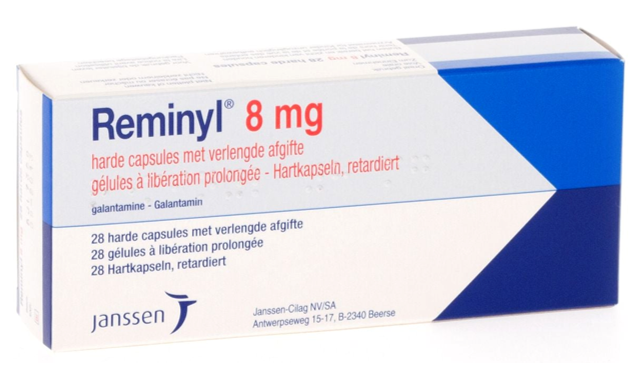
Reminyl
View Options
This website provides general information about medicines for educational purposes only. Always consult your doctor or pharmacist before taking any medication.
Choose Your Medicine
Select dosage and quantity
Online Consultation
Reviewed by a qualified physician
Fast, Discreet Delivery
Delivered to your door
Medical Information
About This Medicine
Reminyl (galantamine) is a prescription medicine used in the symptomatic treatment of mild to moderate Alzheimer's dementia. It belongs to the class of acetylcholinesterase inhibitors and represents one of the established pharmacological treatments for Alzheimer's disease available in the UK, alongside donepezil (Aricept) and rivastigmine (Exelon). By slowing the breakdown of acetylcholine in the brain, Reminyl helps to partially compensate for the loss of cholinergic neurons that characterises Alzheimer's disease.
The Role of Acetylcholine in Alzheimer's Disease
In Alzheimer's disease, there is a progressive degeneration of cholinergic neurons, particularly in the basal forebrain, that are responsible for the production and release of acetylcholine. Acetylcholine is a neurotransmitter essential for cognitive functions including memory formation, attention, and learning. The resulting cholinergic deficit is strongly correlated with the severity of cognitive impairment in Alzheimer's disease. Reminyl addresses this deficit by preventing the enzyme acetylcholinesterase from breaking down acetylcholine in the synaptic cleft, thereby increasing the availability of this neurotransmitter.
Unique Dual Mechanism
Unlike the other acetylcholinesterase inhibitors, galantamine has a unique additional mechanism of action: it is an allosteric potentiating ligand (APL) at nicotinic acetylcholine receptors. By binding to a regulatory site on nicotinic receptors, galantamine sensitises them to the effects of acetylcholine, potentially enhancing cholinergic neurotransmission beyond simple enzyme inhibition. This dual mechanism may contribute to the cognitive benefits observed with Reminyl.
Clinical Use and Expectations
Reminyl does not cure or halt the progression of Alzheimer's disease. Rather, it may slow the rate of symptomatic deterioration and improve cognitive function, daily activities, and behavioural symptoms in suitable patients, particularly those with mild to moderate disease. Treatment response is variable, and the decision to continue Reminyl should be assessed at regular intervals by the prescribing specialist.
Usage & Dosage
Initiating Treatment and Titration
Reminyl (galantamine) treatment must be initiated and supervised by a specialist. The medicine is started at a low dose and increased gradually to reduce the risk of gastrointestinal side effects. The standard titration for immediate-release tablets is:
- Weeks 1 to 4: 4 mg twice daily with meals
- Weeks 5 to 8: 8 mg twice daily with meals
- Week 9 onwards: 12 mg twice daily (usual maintenance dose), if well tolerated
For prolonged-release capsules, equivalent doses are 8 mg, 16 mg, and 24 mg once daily in the morning with food.
Monitoring and Review
Regular review by the supervising specialist is important to assess benefit and tolerability. In the UK, NICE guidance recommends continuing Reminyl as long as the MMSE score remains above 10 and a global assessment confirms treatment is still worthwhile.
Reminyl immediate-release tablets are available in strengths of 4mg, 8mg, and 12mg, taken twice daily with morning and evening meals. The prolonged-release capsule (Reminyl XL) is available in 8mg, 16mg, and 24mg strengths, taken once daily with breakfast. The standard target maintenance dose is 24mg daily (12mg twice daily or 24mg XL once daily).
In patients with moderate renal impairment (creatinine clearance 9 to 59 mL/min), the daily dose should not exceed 16mg. Reminyl is not recommended in patients with severe renal impairment (creatinine clearance below 9 mL/min). In moderate hepatic impairment, the dose should not exceed 16mg daily. Reminyl is contraindicated in severe hepatic impairment. Tablets should be stored below 30 degrees Celsius.
Side Effects
Common Side Effects
- Nausea and vomiting: most common during dose escalation, reduced by taking with food
- Diarrhoea
- Decreased appetite and weight loss
- Headache
- Dizziness
- Fatigue or lethargy
- Muscle cramps
- Bradycardia (slow heart rate), which is usually mild
Serious Side Effects
- Severe bradycardia or heart block: Galantamine increases cholinergic tone on the heart; patients with cardiac conduction abnormalities should be monitored with ECG
- Syncope (fainting): Related to bradycardia or postural hypotension; report any episodes of loss of consciousness
- Severe nausea and vomiting: Can lead to dehydration and electrolyte disturbance, particularly in the elderly; seek medical review if persistent
- Seizures: Increased cholinergic activity may lower the seizure threshold in susceptible individuals
- Severe allergic reactions: Stevens-Johnson syndrome has been reported rarely; any skin rash should be promptly assessed
Warnings & Precautions
Gastrointestinal Tolerability and Titration
The most important strategy for minimising gastrointestinal side effects is slow, gradual dose escalation. Nausea and vomiting are most prominent during the first few weeks of treatment and during each dose increase. Taking Reminyl with food substantially reduces the severity of these effects. If a patient experiences significant gastrointestinal disturbance during titration, the dose should be maintained at the previous level for an additional four weeks before attempting to increase again. Antiemetics may be required temporarily.
Cardiac Monitoring
Galantamine may cause bradycardia (slowed heart rate) due to its cholinomimetic effects on the sinoatrial node. Patients with a history of cardiac arrhythmias, sick sinus syndrome, or those taking other bradycardia-inducing medicines (such as beta-blockers or digoxin) should have their cardiac status assessed before starting treatment. ECG monitoring may be appropriate. Any syncope during treatment should prompt cardiac evaluation.
Renal and Hepatic Impairment
Dose adjustment is required in moderate renal or hepatic impairment. Reminyl is not suitable for patients with severe renal impairment or severe hepatic impairment. Renal function should be assessed before initiation and monitored periodically, particularly in elderly patients where renal function may decline over time during treatment.
Contraindications
- Severe renal impairment (creatinine clearance below 9 mL/min)
- Severe hepatic impairment
- Known hypersensitivity to galantamine or any excipient
- Concurrent use with other cholinesterase inhibitors (donepezil, rivastigmine)
- Severe obstructive airways disease or severe asthma
- History of severe gastrointestinal obstructive disease
- Active peptic ulcer disease (galantamine increases gastric acid secretion)
- Significant cardiac arrhythmias or cardiac conduction defects not managed with a pacemaker
- Children under 18 years
Frequently Asked Questions
How does Reminyl differ from other Alzheimer's medicines such as donepezil?
How long does it take for Reminyl to show an effect?
Can Reminyl slow down Alzheimer's disease?
What can I do to reduce nausea when starting Reminyl?
Is Reminyl suitable for other types of dementia?
Dr. Ross Elledge
General Practitioner · General & Family Medicine
Verified Healthcare Professional
TopDoctors Profile