
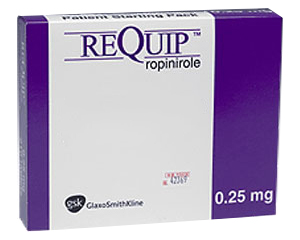
Requip
View Options
This website provides general information about medicines for educational purposes only. Always consult your doctor or pharmacist before taking any medication.
Choose Your Medicine
Select dosage and quantity
Online Consultation
Reviewed by a qualified physician
Fast, Discreet Delivery
Delivered to your door
Medical Information
About This Medicine
Requip is a prescription medicine containing ropinirole, a dopamine agonist used primarily in the management of Parkinson's disease and restless legs syndrome (RLS). It works by mimicking the action of dopamine in the brain, a neurotransmitter that plays a central role in coordinating smooth, controlled movement. Requip is available in immediate-release tablets and as Requip XL, an extended-release formulation designed for convenient once-daily dosing.
How Requip Works
Ropinirole acts on dopamine D2 and D3 receptors in the striatum, the part of the brain responsible for regulating movement. In Parkinson's disease, the gradual loss of dopamine-producing nerve cells leads to the characteristic tremor, rigidity, and slowness of movement. By activating dopamine receptors directly, Requip compensates for this deficiency and helps restore more normal motor function. In restless legs syndrome, dopaminergic dysfunction in the spinal cord and brain contributes to the uncomfortable urge to move the legs, and ropinirole reduces this urge significantly in most patients.
Parkinson's Disease and RLS Treatment
In Parkinson's disease, Requip may be used as monotherapy in early stages or in combination with levodopa as the condition progresses. It is particularly valued for its levodopa-sparing effect, reducing the risk of motor complications such as dyskinesias that can develop with long-term levodopa use. For restless legs syndrome, lower doses are generally effective, and treatment is typically started at 0.25 mg once daily in the evening, titrated according to response.
Important Considerations
Requip is associated with impulse control disorders, including compulsive gambling, hypersexuality, binge eating, and compulsive shopping. Patients and carers should be made aware of these risks before treatment begins, and any such behavioural changes should be reported promptly. Sudden sleep attacks, sometimes without preceding drowsiness, have been reported and patients should be counselled about driving and operating machinery. Nausea is common at initiation and usually settles as the dose is titrated slowly upward. Treatment should never be stopped abruptly, as this can cause a neuroleptic malignant syndrome-like reaction.
Usage & Dosage
Starting Requip
Requip (ropinirole) is started at a low dose and titrated slowly to the minimum effective dose. For Parkinson's disease, treatment usually begins at 0.25 mg three times daily, increasing weekly based on response and tolerability. The therapeutic dose for Parkinson's disease typically ranges from 3 mg to 24 mg daily in divided doses. Requip XL is taken once daily at the same time each day.
Restless Legs Syndrome
For restless legs syndrome, take Requip once daily, 1 to 3 hours before bedtime. The starting dose is 0.25 mg, increasing to 0.5 mg after two days, then to 1 mg by the end of the first week. The dose may be increased in weekly steps of 0.5 mg, up to a maximum of 4 mg daily. Tablets should be swallowed whole with water. Do not crush or chew extended-release tablets.
For Parkinson's disease using immediate-release Requip, the starting dose is 0.25 mg three times daily, increasing by 0.75 mg per day at weekly intervals up to 3 mg/day in week four, with further increments of up to 3 mg/day weekly to a maximum of 24 mg/day. The Requip XL extended-release tablet starts at 2 mg once daily for one to two weeks, then increased by 2 mg at weekly intervals as needed, up to a maximum of 24 mg/day. For restless legs syndrome, doses are lower: starting at 0.25 mg once nightly, increased to a maximum of 4 mg/day. In patients taking propranolol, ropinirole levels may increase due to CYP1A2 inhibition, and dose adjustment may be required. Dose reduction is recommended in patients with severe renal impairment. Elderly patients should be titrated with particular care. If treatment is to be discontinued, the dose should be tapered gradually over a minimum of one week to minimise the risk of withdrawal effects.
Side Effects
Common Side Effects
- Nausea, particularly at treatment initiation or after dose increases
- Dizziness or lightheadedness, especially when standing up (orthostatic hypotension)
- Somnolence and fatigue during daytime hours
- Hallucinations, more common in elderly patients with Parkinson's disease
- Headache and flu-like symptoms
- Peripheral oedema (swelling of the ankles and legs)
- Abdominal discomfort or vomiting
- Confusion or disorientation, particularly in older adults
Serious Side Effects
- Impulse control disorders: compulsive gambling, hypersexuality, binge eating, or compulsive spending - seek medical review immediately
- Sudden sleep attacks: falling asleep without warning, including while driving or operating machinery
- Dopamine agonist withdrawal syndrome: anxiety, depression, sweating, and pain on abrupt cessation
- Neuroleptic malignant syndrome-like reaction if treatment is stopped suddenly
- Syncope (fainting), particularly in the early stages of treatment
- Severe postural hypotension requiring dose reduction or discontinuation
Warnings & Precautions
Impulse Control and Behavioural Risks
Patients taking Requip should be monitored regularly for the development of impulse control disorders. These include pathological gambling, compulsive sexual behaviour, uncontrolled spending, and binge eating. These behaviours can occur at any dose but are more likely at higher doses and may not be immediately recognised by the patient as abnormal. Carers and family members should be informed of these risks and encouraged to report any concerning changes in behaviour. Dose reduction or discontinuation of Requip may be necessary if these behaviours develop.
Driving and Alertness
Ropinirole can cause episodes of sudden onset sleep, sometimes without preceding drowsiness or warning signs. Patients must be advised not to drive or operate dangerous machinery until they know how Requip affects them. Those who experience somnolence or sudden sleep episodes should refrain from driving and consult their doctor. Alcohol and other sedating medicines should be used with caution as they may potentiate sedative effects. Patients with Parkinson's disease have an inherently higher background risk of road traffic incidents and should undergo regular assessment of fitness to drive.
Requip should be used with caution in patients with severe cardiovascular disease, as dopamine agonists can cause postural hypotension, particularly at the start of treatment or after dose increases. Blood pressure monitoring is advisable, especially in the elderly. Patients with hepatic impairment should be monitored carefully; severe hepatic impairment may require dose adjustment. Requip should not be used during pregnancy or breastfeeding unless clearly necessary.
Contraindications
- Known hypersensitivity to ropinirole or any excipient in the formulation
- Severe hepatic impairment (use not recommended)
- Pregnancy (potential for harm to the developing foetus)
- Breastfeeding (ropinirole may inhibit lactation and passes into breast milk)
- Concurrent use with antipsychotic medicines that antagonise dopamine (may reduce efficacy)
- Severe renal impairment requiring dialysis (avoid use)
- History of impulse control disorders unless benefits clearly outweigh risks
- Patients with known hypersensitivity to other dopamine agonists (relative contraindication requiring careful assessment)
Frequently Asked Questions
Can I drive while taking Requip for Parkinson's disease?
What should I do if I notice changes in my behaviour while taking Requip?
Can I stop taking Requip suddenly if I experience side effects?
Is Requip XL better than the standard Requip tablets?
Does smoking affect how Requip works in my body?
Dr. Ross Elledge
General Practitioner · General & Family Medicine
Verified Healthcare Professional
TopDoctors Profile