
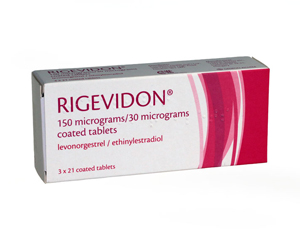
Rigevidon
View Options
This website provides general information about medicines for educational purposes only. Always consult your doctor or pharmacist before taking any medication.
Choose Your Medicine
Select dosage and quantity
Online Consultation
Reviewed by a qualified physician
Fast, Discreet Delivery
Delivered to your door
Medical Information
About This Medicine
Rigevidon is a combined oral contraceptive pill (COC) containing levonorgestrel 150 micrograms and ethinylestradiol 30 micrograms. It is a generic equivalent of Microgynon 30 and belongs to the second-generation combined pill category, one of the most widely prescribed and extensively studied forms of hormonal contraception available in the UK. Taken correctly, Rigevidon is over 99% effective at preventing pregnancy.
How Rigevidon Works
Rigevidon prevents pregnancy through three complementary mechanisms. Primarily, it suppresses ovulation by maintaining consistently elevated levels of synthetic oestrogen and progestogen, which inhibit the hormonal surges required for egg release. Additionally, the progestogen component causes thickening of the cervical mucus, making it more difficult for sperm to reach the egg. The endometrial lining is also altered, reducing the likelihood of implantation in the unlikely event that ovulation and fertilisation do occur.
Benefits Beyond Contraception
In addition to highly reliable contraception, Rigevidon is associated with several non-contraceptive benefits that many women find valuable. Regular pill cycles typically result in lighter, less painful periods, and the pill is commonly used to manage dysmenorrhoea and heavy menstrual bleeding. Long-term use is associated with a reduced risk of ovarian cysts, ovarian cancer, and endometrial cancer. The pill can also improve acne in some women, though it is not specifically licensed for this indication in the UK.
21-Day Pill Cycle
Rigevidon follows the standard 21-day regimen: one tablet is taken daily for 21 consecutive days, followed by a 7-day pill-free interval during which a withdrawal bleed typically occurs. A new pack is then started regardless of whether bleeding has finished. If pills are missed or taken incorrectly, additional contraceptive precautions such as condoms should be used, as outlined in the product leaflet.
Usage & Dosage
Starting Rigevidon
Rigevidon is usually started on the first day of your period (day 1), in which case no additional contraception is needed straight away. It can also be started up to day 5 of the cycle without extra precautions. If started later in the cycle, use barrier methods for the first 7 days. Take one tablet daily at the same time for 21 days, then have a 7-day break. During the break, a withdrawal bleed similar to a period usually occurs.
Missed Pills
If a pill is missed by less than 12 hours, take it as soon as you remember and continue as normal. If more than 12 hours late, take the missed pill as soon as possible, continue the rest of the pack, and use condoms for the next 7 days. If fewer than 7 pills remain in the pack after the missed pill, skip the pill-free break and start the next pack immediately.
One Rigevidon tablet is taken orally each day for 21 consecutive days. Tablets should be taken at the same time each day, ideally in the morning or evening, to maintain consistent hormone levels and reduce the risk of missed doses. After 21 tablets, a 7-day pill-free interval is observed, then a new pack is started. There is no dose adjustment based on weight, age (for women of childbearing age), or renal function. Rigevidon is suitable for most women who do not have contraindications to combined oestrogen-progestogen preparations. Women who experience breakthrough bleeding may benefit from taking the pill at the same time each day more strictly. For women wishing to delay withdrawal bleeds, a pharmacist or prescriber can advise on tricycling or continuous use, although this is off-label for Rigevidon specifically.
Side Effects
Common Side Effects
- Nausea, particularly in the first few cycles; taking the tablet with food may help
- Breast tenderness or swelling, especially at initiation
- Headache
- Mood changes, including low mood or irritability
- Spotting or breakthrough bleeding between periods, especially in the first 3 months
- Reduced libido
- Weight changes (slight fluid retention is possible)
- Contact lens intolerance due to changes in fluid balance in the eyes
Serious Side Effects
- Venous thromboembolism (VTE): deep vein thrombosis or pulmonary embolism - seek emergency help for sudden leg pain, breathlessness, or chest pain
- Arterial thrombosis: stroke or heart attack, particularly in smokers and those with additional risk factors
- Severe migraine with aura: a contraindication - stop the pill and seek urgent advice
- Hypertension (elevated blood pressure)
- Liver tumours (very rare, with long-term use)
- Cervical cancer (small increased risk with prolonged use)
Warnings & Precautions
Venous Thromboembolism Risk
All combined oral contraceptives increase the risk of venous thromboembolism compared with non-use, though the absolute risk remains low for most healthy women. The risk is highest in the first year of use and returns to baseline after stopping. Levonorgestrel-containing pills such as Rigevidon carry one of the lower VTE risks among combined pills. Women with additional risk factors for thrombosis - including obesity, smoking, immobility, personal or family history of VTE, or inherited thrombophilias - should be assessed individually. Stop Rigevidon immediately and seek emergency medical attention if symptoms of VTE occur, including unilateral leg swelling or pain, sudden chest pain, or difficulty breathing.
Smoking and Cardiovascular Risk
Women who smoke and are over 35 years of age should not use combined oral contraceptives, as the combination substantially increases the risk of arterial thrombosis including myocardial infarction and stroke. Blood pressure should be measured before starting Rigevidon and monitored regularly during use. If blood pressure becomes consistently elevated, the pill should be discontinued. Women with controlled hypertension may be able to use a progestogen-only pill as an alternative. Rigevidon does not protect against sexually transmitted infections.
Contraindications
- Personal history of venous thromboembolism (DVT or pulmonary embolism)
- Known thrombophilia (e.g. Factor V Leiden mutation, antiphospholipid syndrome)
- History of arterial thrombosis, stroke, or ischaemic heart disease
- Migraine with aura (current or past history)
- Smoking in women aged 35 years or over
- Uncontrolled hypertension or blood pressure consistently above 160/100 mmHg
- Active liver disease or liver tumours
- Current pregnancy or unexplained vaginal bleeding
- Hormone-sensitive cancers such as breast cancer
- Diabetes with vascular complications
Frequently Asked Questions
Is Rigevidon the same as Microgynon 30?
What should I do if I miss a Rigevidon pill?
Can Rigevidon help with painful or heavy periods?
How long after stopping Rigevidon will my fertility return?
Can I take Rigevidon if I have migraines?
Dr. Ross Elledge
General Practitioner · General & Family Medicine
Verified Healthcare Professional
TopDoctors Profile