
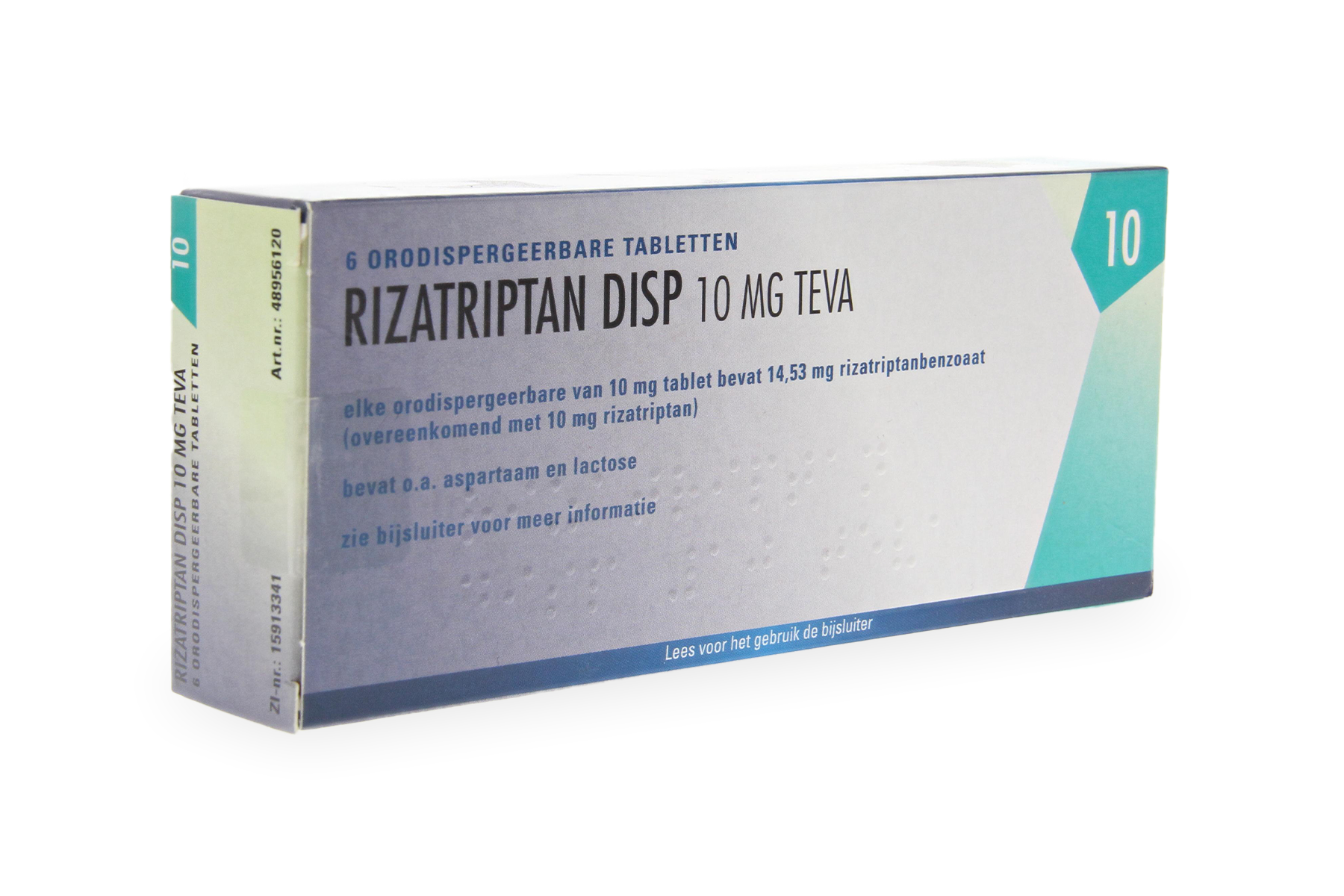
Rizatriptan
View Options
This website provides general information about medicines for educational purposes only. Always consult your doctor or pharmacist before taking any medication.
Choose Your Medicine
Select dosage and quantity
Online Consultation
Reviewed by a qualified physician
Fast, Discreet Delivery
Delivered to your door
Medical Information
About This Medicine
Rizatriptan is a prescription medicine used for the acute treatment of migraine attacks with or without aura. It belongs to the triptan class of medicines - selective serotonin 5-HT1B/1D receptor agonists - which work directly on the mechanisms underlying migraine to relieve pain and associated symptoms. Rizatriptan is available in 5 mg and 10 mg tablets and as Maxalt Melt, a wafer formulation that dissolves on the tongue without the need for water, making it particularly useful during migraine when nausea or access to water is a problem.
How Rizatriptan Works
Rizatriptan acts on serotonin receptors located on cranial blood vessels and trigeminal nerve endings. During a migraine attack, blood vessels around the brain dilate and the trigeminal nerve releases inflammatory neuropeptides. Rizatriptan causes constriction of these dilated cranial blood vessels and inhibits the release of inflammatory substances from trigeminal nerve terminals, addressing both vascular and neurogenic components of the migraine. It also reduces the transmission of pain signals to the brain stem.
Onset and Effectiveness
Rizatriptan has a relatively fast onset of action, with many patients experiencing meaningful pain relief within 30 to 60 minutes of taking a 10 mg dose. Clinical trials demonstrate that approximately 70% of patients achieve headache response (reduction from severe or moderate to mild or no pain) within 2 hours. The medicine is most effective when taken at the first sign of migraine headache rather than during the aura phase or when the headache has become established and severe.
Maxalt Melt Wafer
The Maxalt Melt orodispersible wafer is placed on the tongue where it dissolves within seconds, releasing rizatriptan for absorption through the oral mucosa and gastric mucosa. This formulation is particularly advantageous for patients who experience nausea or vomiting with their migraines and prefer not to swallow tablets, or for those who do not have access to water when an attack begins.
Usage & Dosage
When and How to Take Rizatriptan
Take rizatriptan as soon as the headache phase of a migraine begins. It is not intended for prevention and is not effective if taken during the aura before the headache starts. Standard tablets should be swallowed whole with water. The Maxalt Melt wafer should be removed from its foil pouch with dry hands and placed on the tongue, where it dissolves within seconds, no water needed, making it ideal during an attack.
If the first dose does not relieve the migraine after 2 hours, a second dose may be taken. Do not exceed two doses (maximum 20 mg) in any 24-hour period. Do not use rizatriptan on more than 10 days per month, as more frequent use risks medication overuse headache.
The recommended starting dose for adults is 10 mg, taken as a single dose at the onset of migraine headache. If the migraine returns after initial relief, a second 10 mg dose may be taken after 2 hours. The maximum dose within 24 hours is 20 mg (two 10 mg doses). For patients taking propranolol, the dose should be reduced to 5 mg per attack, with a maximum of 10 mg in 24 hours, due to a significant drug interaction that raises rizatriptan plasma concentrations. Rizatriptan is not recommended for use in children or adolescents under 18 years. The 10 mg dose is generally more effective than 5 mg and is preferred unless propranolol is being taken concurrently. Rizatriptan should not be used on more than 10 days per calendar month; excessive use can paradoxically worsen headache frequency (medication overuse headache).
Side Effects
Common Side Effects
- Dizziness or vertigo
- Drowsiness or fatigue
- Nausea
- Dry mouth
- Pressure or heaviness sensations in the chest, throat, neck, or jaw (usually transient and not cardiac in origin)
- Hot flushes or feeling of warmth
- Paraesthesia (tingling or pins and needles) in the extremities
- Weakness or fatigue
Serious Side Effects
- Chest pain or tightness: although usually non-cardiac, genuine coronary vasospasm has been reported - seek medical help if severe or prolonged
- Serotonin syndrome: especially if used with serotonergic medicines such as SSRIs or SNRIs - agitation, confusion, rapid heart rate, high temperature
- Severe allergic reaction: angioedema, anaphylaxis, rash - stop and seek emergency care
- Significant blood pressure elevation
- Stroke or transient ischaemic attack (rare, particularly in those with underlying vascular disease)
Warnings & Precautions
Cardiovascular Risk
Rizatriptan causes vasoconstriction and should not be used in patients with established cardiovascular disease, including ischaemic heart disease, prior myocardial infarction, Prinzmetal's angina, peripheral vascular disease, or uncontrolled hypertension. The first dose may be given under medical supervision in patients with significant cardiovascular risk factors. Chest tightness and pressure sensations are reported commonly after taking rizatriptan; these are usually non-cardiac, but any symptoms suggesting true cardiac ischaemia require immediate medical assessment. Rizatriptan is contraindicated within 24 hours of using ergotamine-containing medicines or other triptans.
Medication Overuse Headache
A critical warning for all migraine sufferers: using rizatriptan or any acute headache medication on more than 10 days per month can lead to medication overuse headache, a chronic daily headache that paradoxically worsens as more medicine is taken. Patients who find themselves needing rizatriptan very frequently should discuss preventive migraine therapy with their doctor. Common preventive options include beta-blockers (such as propranolol), amitriptyline, topiramate, or the newer anti-CGRP monoclonal antibodies. Keeping a migraine diary to track frequency of attacks and medication use is strongly encouraged.
Contraindications
- Established ischaemic heart disease, history of myocardial infarction, or coronary artery spasm (Prinzmetal's angina)
- Previous stroke or transient ischaemic attack
- Peripheral vascular disease
- Uncontrolled hypertension
- Concurrent use of MAO-A inhibitors or within 2 weeks of stopping them
- Concurrent use of ergotamine, ergotamine derivatives, or other triptans within 24 hours
- Severe hepatic or renal impairment
- Hemiplegic migraine or basilar-type migraine
- Children and adolescents under 18 years (not recommended)
- Known hypersensitivity to rizatriptan or any excipient
Frequently Asked Questions
How quickly does rizatriptan work for migraine?
What is Maxalt Melt and is it better than the standard tablet?
Can I take rizatriptan if I am also taking propranolol for migraine prevention?
How often can I use rizatriptan each month?
Is rizatriptan safe if I experience chest tightness after taking it?
Dr. Ross Elledge
General Practitioner · General & Family Medicine
Verified Healthcare Professional
TopDoctors Profile