
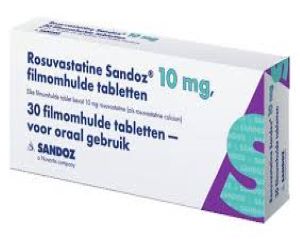
Rosuvastatin
View Options
This website provides general information about medicines for educational purposes only. Always consult your doctor or pharmacist before taking any medication.
Choose Your Medicine
Select dosage and quantity
Online Consultation
Reviewed by a qualified physician
Fast, Discreet Delivery
Delivered to your door
Medical Information
About This Medicine
Rosuvastatin is a prescription statin medicine used to lower elevated blood cholesterol levels and reduce the risk of cardiovascular disease. It belongs to the HMG-CoA reductase inhibitor class of medicines - commonly known as statins - and is among the most potent statins available, capable of reducing low-density lipoprotein (LDL) cholesterol by up to 50-60% at maximum therapeutic doses. Rosuvastatin is marketed under the brand name Crestor and is also available as a generic. It is used in adults, adolescents, and children from 6 years of age with familial or non-familial hypercholesterolaemia, mixed dyslipidaemia, and for the primary prevention of cardiovascular events in individuals at elevated risk.
How Rosuvastatin Reduces Cholesterol
Rosuvastatin works by competitively inhibiting HMG-CoA reductase, the enzyme responsible for the rate-limiting step in cholesterol synthesis within liver cells (hepatocytes). By blocking this enzyme, rosuvastatin reduces the production of mevalonate, the precursor to cholesterol. In response to reduced intracellular cholesterol, hepatocytes upregulate LDL receptors on their surface, increasing the uptake and clearance of LDL particles from the bloodstream. This dual mechanism - reduced synthesis and increased clearance - results in significant and sustained reductions in LDL cholesterol, total cholesterol, and triglycerides, alongside modest increases in high-density lipoprotein (HDL) cholesterol.
Cardiovascular Risk Reduction
Beyond its lipid-lowering effects, rosuvastatin has demonstrated substantial benefits in reducing the risk of major adverse cardiovascular events, including heart attacks, strokes, and cardiovascular death, even in people with near-normal baseline LDL levels but elevated C-reactive protein (CRP), a marker of inflammation. This was demonstrated in the landmark JUPITER trial. Rosuvastatin is therefore used both in secondary prevention (after a cardiovascular event) and in primary prevention for patients at elevated cardiovascular risk.
Potency and Dosing Advantages
Rosuvastatin's high potency means that clinically significant LDL reductions can be achieved at lower milligram doses than with less potent statins such as simvastatin. This is particularly relevant for patients with familial hypercholesterolaemia, who require aggressive LDL lowering.
Usage & Dosage
How to Take Rosuvastatin
Take rosuvastatin once daily, at any time of day, with or without food. Unlike some other statins, it does not need to be taken at night, as its long half-life provides consistent cholesterol control throughout the 24-hour period. Swallow the tablet whole with water and take at the same time each day to build a routine.
Lifestyle Alongside Medication
Rosuvastatin works best alongside a heart-healthy lifestyle: a low-saturated fat diet, regular exercise, maintaining a healthy weight, and not smoking. Rosuvastatin therapy is generally long-term and should not be stopped without medical advice, as cholesterol will return to pre-treatment levels on discontinuation.
Rosuvastatin is available in 5 mg, 10 mg, 20 mg, and 40 mg tablets. The starting dose for most patients is 5 mg or 10 mg once daily, with dose titration to 20 mg or 40 mg if required. The 40 mg dose is reserved for patients with severe hypercholesterolaemia and high cardiovascular risk who do not achieve their LDL target at 20 mg. In Asian patients (of Japanese, Korean, Chinese, Filipino, Vietnamese, or Indian descent), the starting dose should be 5 mg, with a maximum of 20 mg, due to higher systemic exposure observed in these populations. The maximum dose of 40 mg should not be used in Asian patients. Dose adjustment is required in patients with severe renal impairment (GFR below 30 mL/min), where the starting dose is 5 mg and the maximum is 20 mg. Rosuvastatin is not recommended for patients with active liver disease. Children aged 6 to 17 years should be started at 5 mg and the dose should not exceed 20 mg.
Side Effects
Common Side Effects
- Headache
- Muscle pain (myalgia) - generalised muscle aching without weakness
- Abdominal pain, nausea, or constipation
- Dizziness
- Elevated liver enzymes (usually asymptomatic; detected on blood tests)
- Fatigue
- Joint pain (arthralgia)
- Diabetes mellitus (small increased risk, particularly in those with pre-existing risk factors)
Serious Side Effects
- Myopathy or rhabdomyolysis: severe muscle pain, weakness, or dark urine indicating muscle breakdown - stop immediately and seek urgent medical attention
- Liver injury: jaundice, dark urine, abdominal pain with significantly raised liver enzymes
- Immune-mediated necrotising myopathy: rare autoimmune muscle disease that may persist even after stopping the statin
- Interstitial lung disease: breathlessness and dry cough (rare, with long-term use)
- Tendon rupture (very rare)
Warnings & Precautions
Muscle-Related Risks
The most serious risk associated with rosuvastatin is myopathy, which ranges from benign muscle pain (myalgia) to the life-threatening condition of rhabdomyolysis, where large-scale muscle breakdown releases myoglobin into the bloodstream, potentially causing acute kidney injury. Patients should be advised to report any unexplained muscle pain, weakness, or dark urine promptly. Creatine kinase (CK) should be measured before starting rosuvastatin in patients at higher risk, and rosuvastatin should be temporarily stopped if a patient develops a serious illness, major surgery, or severe dehydration that could increase myopathy risk. Concomitant use of medicines that increase rosuvastatin exposure - including ciclosporin, gemfibrozil, and some antivirals - substantially raises the risk of myopathy and may require dose reduction or avoidance.
Liver Monitoring and Special Populations
Liver function tests should be performed before starting rosuvastatin and repeated if clinically indicated. The medicine should not be started in patients with active liver disease or unexplained persistent elevation of liver transaminases. Rosuvastatin should be stopped during pregnancy and breastfeeding, as cholesterol biosynthesis is essential for foetal development and statin use in pregnancy is associated with potential harm. Women of childbearing age should use effective contraception during treatment.
Contraindications
- Active liver disease or persistently elevated serum transaminases of unknown cause
- Pregnancy or women planning pregnancy
- Breastfeeding
- Severe renal impairment (GFR below 30 mL/min) - maximum 20 mg dose; 40 mg dose contraindicated
- Concurrent use of ciclosporin (increases rosuvastatin exposure markedly)
- Concurrent use of combination antiretroviral therapy that significantly raises rosuvastatin levels
- Known hypersensitivity to rosuvastatin or excipients
- Asian patients: 40 mg dose is contraindicated due to higher systemic exposure
- Patients with risk factors predisposing to severe myopathy (including personal or family history of muscle disease)
Frequently Asked Questions
How much can rosuvastatin lower my cholesterol?
What should I do if I experience muscle pain while taking rosuvastatin?
Can I take rosuvastatin if I am of Asian ethnicity?
Do I need to take rosuvastatin at a specific time of day?
Can I stop taking rosuvastatin once my cholesterol is normal?
Dr. Ross Elledge
General Practitioner · General & Family Medicine
Verified Healthcare Professional
TopDoctors Profile