
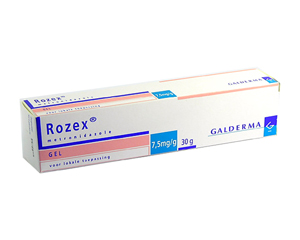
Rozex
View Options
This website provides general information about medicines for educational purposes only. Always consult your doctor or pharmacist before taking any medication.
Choose Your Medicine
Select dosage and quantity
Online Consultation
Reviewed by a qualified physician
Fast, Discreet Delivery
Delivered to your door
Medical Information
About This Medicine
Rozex is a prescription topical medicine containing metronidazole 0.75%, available as a cream or gel, used in the treatment of the inflammatory lesions of rosacea. Rosacea is a chronic inflammatory skin condition characterised by persistent facial redness, flushing, papules, pustules, and telangiectasia (visible small blood vessels), primarily affecting the central face. Rozex reduces the number and severity of papules and pustules associated with rosacea and has anti-inflammatory properties that contribute to its therapeutic effect.
How Rozex Works
Metronidazole is a nitroimidazole compound with well-established antimicrobial properties against anaerobic bacteria and protozoa. When applied topically for rosacea, however, its primary mechanism of benefit is believed to be anti-inflammatory rather than solely antimicrobial. Metronidazole inhibits reactive oxygen species production by neutrophils and modulates the inflammatory cascade within the skin, reducing the erythema, papules, and pustules that characterise rosacea. The exact pathogenesis of rosacea remains incompletely understood, but current evidence implicates immune dysregulation, neurovascular reactivity, and dysbiosis in the skin microbiome. Metronidazole addresses the inflammatory component effectively.
Treatment Expectations
Rozex is applied to the affected areas of the face twice daily. Unlike many cosmetic treatments, improvement in rosacea with topical metronidazole requires patience: most patients begin to see meaningful improvement in papule and pustule counts after 3 to 4 weeks of consistent use, with the best results typically seen after 8 to 12 weeks of treatment. Rozex does not cure rosacea, which is a chronic relapsing condition, and long-term maintenance therapy is often required to sustain remission.
Formulation Choices
Rozex is available as both a 0.75% cream and a 0.75% gel. The gel formulation is generally preferred by patients with oily or combination skin, as it has a lighter texture that does not feel heavy. The cream formulation may be better tolerated in patients with dry or sensitive skin, providing additional moisturising effect alongside the therapeutic action.
Usage & Dosage
How to Apply Rozex
Cleanse the face gently with a mild cleanser and pat dry before applying Rozex. Apply a thin layer to the affected areas (typically the nose, cheeks, forehead, and chin) twice daily, morning and evening. Rub in gently and avoid contact with the eyes, mouth, and nostrils. After applying Rozex, you may apply a non-comedogenic moisturiser or sunscreen over the top. Using a broad-spectrum sunscreen daily is particularly important, as UV exposure is one of the most common rosacea triggers.
Duration of Treatment
Treatment with Rozex should be continued for at least 8 to 12 weeks to achieve the best results. Do not stop prematurely even if initial improvement seems limited, as the full benefit develops gradually. Long-term maintenance may be appropriate for people with chronic rosacea.
Rozex 0.75% cream or gel is applied in a thin layer to the affected facial areas twice daily - once in the morning and once in the evening. The exact quantity used depends on the extent of involvement, but a pea-sized amount is often sufficient for the full face. There is no adjustment required based on age in adults; however, Rozex has not been evaluated in children and is not recommended for paediatric use. Systemic absorption following topical application is minimal, so there are no dose adjustments required for renal or hepatic impairment in the context of topical use. The twice-daily regimen should be maintained consistently for 8 to 12 weeks before the full clinical response is assessed. In the event of accidental ingestion, the systemic dose would be very small, but medical advice should be sought.
Side Effects
Common Side Effects
- Mild skin irritation, burning, or stinging at the application site
- Skin dryness or peeling
- Redness or erythema at the application site
- Itching (pruritus)
- Contact dermatitis in sensitive individuals
- Transient worsening of skin redness after initial applications
- Skin tingling
Serious Side Effects
- Allergic contact dermatitis: significant skin reaction, blistering, or worsening rash - stop use and seek medical advice
- Ocular irritation if the product contacts the eyes (wash eyes thoroughly with water)
- Although rare with topical use, systemic reactions including peripheral neuropathy have been reported with long-term use of very large quantities
- Disulfiram-like reaction with alcohol: theoretical risk with topical use is extremely low, but avoid applying to large areas of broken skin
Warnings & Precautions
Avoiding Triggers in Rosacea
Rozex treats the inflammatory lesions of rosacea but does not address the underlying vascular reactivity or flushing component. Patients should be counselled to identify and avoid personal triggers for rosacea flares, which commonly include UV sun exposure, spicy foods, hot beverages, alcohol, temperature extremes, and emotional stress. Daily use of a high-factor broad-spectrum sunscreen (SPF 30 or above) is recommended, as sun exposure is one of the most potent triggers for rosacea exacerbations and will reduce the effectiveness of Rozex treatment if not addressed.
Pregnancy and Breastfeeding
Rozex should be used with caution during pregnancy, particularly in the first trimester. Although systemic absorption from topical metronidazole is very low, oral metronidazole is generally avoided in the first trimester due to theoretical concerns about teratogenicity. During breastfeeding, metronidazole is excreted in breast milk when taken orally; topical exposure to an infant via breast milk from topical application is considered negligible, but as a precaution, Rozex should not be applied to the breast area. Patients should seek GP advice before using Rozex if pregnant or breastfeeding.
Rozex should not be applied near the eyes or to mucous membranes. Avoid skin contact with the eyes; if contact occurs, rinse thoroughly with water. Patients with a history of blood disorders or active central nervous system disease should inform their prescriber before use.
Contraindications
- Known hypersensitivity to metronidazole, other nitroimidazoles, or any excipient in the formulation
- First trimester of pregnancy (use only if clearly necessary; discuss with prescriber)
- Application to mucous membranes, eyes, or broken or abraded skin over a large area
- Children (safety and efficacy in paediatric patients not established)
- Patients with a history of blood dyscrasias (with caution; seek specialist advice)
- Known sensitivity to propylene glycol (present in some formulations)
Frequently Asked Questions
How long does Rozex take to work for rosacea?
Can I use Rozex with other rosacea treatments?
Is Rozex the same as Metrogel?
Can I drink alcohol while using Rozex cream?
Will Rozex help with the redness and flushing of rosacea?
Dr. Ross Elledge
General Practitioner · General & Family Medicine
Verified Healthcare Professional
TopDoctors Profile