
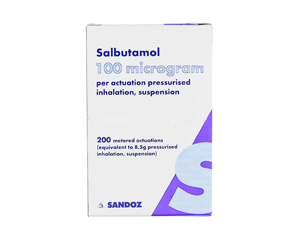
Salbutamol
View Options
This website provides general information about medicines for educational purposes only. Always consult your doctor or pharmacist before taking any medication.
Choose Your Medicine
Select dosage and quantity
Online Consultation
Reviewed by a qualified physician
Fast, Discreet Delivery
Delivered to your door
Medical Information
About This Medicine
Salbutamol is a short-acting beta-2 agonist (SABA) used as a reliever inhaler for asthma and COPD. It works within minutes by relaxing the smooth muscle surrounding the airways, opening them up and making breathing easier. Salbutamol is the most widely used rescue medication for acute bronchospasm.
While salbutamol provides rapid symptom relief, it does not treat the underlying inflammation of asthma. Frequent use (more than twice per week) suggests that the condition is not well controlled, and a preventer inhaler should be reviewed or initiated.
Usage & Dosage
How to Use Salbutamol
For relief of acute symptoms, inhale one to two puffs as needed. If taking two puffs, wait 30 seconds between each. Shake the inhaler before each use. Breathe out gently, place the mouthpiece between your lips, and press the canister while breathing in slowly and deeply. Hold your breath for about 10 seconds, then breathe out normally.
For exercise-induced asthma, take two puffs 10 to 15 minutes before physical activity. Do not exceed eight puffs in 24 hours without medical advice. If you are using your salbutamol reliever more than twice a week (other than for pre-exercise), your underlying asthma control should be reviewed by your doctor.
Each actuation delivers 100 micrograms of salbutamol. The usual dose is one to two puffs as needed for symptom relief, up to four times daily. If you are using your reliever inhaler more than twice a week (excluding pre-exercise use), consult your prescriber about stepping up preventer therapy.
Side Effects
Common Side Effects
Common side effects include:
- Tremor (fine shaking, especially of the hands)
- Headache
- Palpitations or increased heart rate
- Muscle cramps
These effects are usually mild, dose-related, and diminish with regular use. If palpitations are significant or persistent, discuss with your prescriber.
Warnings & Precautions
If your salbutamol inhaler is not providing adequate relief, or if you are needing it more frequently than usual, seek medical advice urgently. Increasing reliever use can signal a worsening of asthma that requires a change in maintenance treatment. In a severe asthma attack, call emergency services.
Contraindications
There are no absolute contraindications to salbutamol use in an acute asthma emergency. For routine use, caution is advised in patients with hyperthyroidism, cardiovascular disease, and susceptibility to QT prolongation.
Frequently Asked Questions
How often should I use my salbutamol inhaler?
Dr. Ross Elledge
General Practitioner · General & Family Medicine
Verified Healthcare Professional
TopDoctors Profile