
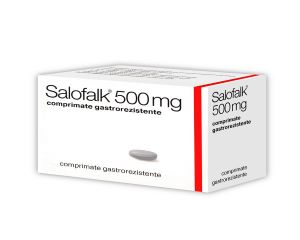
Salofalk
View Options
This website provides general information about medicines for educational purposes only. Always consult your doctor or pharmacist before taking any medication.
Choose Your Medicine
Select dosage and quantity
Online Consultation
Reviewed by a qualified physician
Fast, Discreet Delivery
Delivered to your door
Medical Information
About This Medicine
Salofalk is a prescription medicine containing mesalazine (also known as 5-aminosalicylic acid or 5-ASA), used in the treatment and maintenance of remission of ulcerative colitis and Crohn's disease. It is available in multiple formulations including oral granules, tablets, suppositories, and enemas, allowing targeted delivery of mesalazine to the specific segments of the bowel affected by inflammatory disease. Salofalk reduces intestinal inflammation at the mucosal level and is a cornerstone of treatment for mild to moderately active ulcerative colitis.
Mechanism of Anti-Inflammatory Action
Mesalazine acts locally within the intestinal mucosa through several complementary anti-inflammatory mechanisms. It inhibits the production of inflammatory mediators including prostaglandins, thromboxane, and leukotrienes by blocking the cyclooxygenase and 5-lipoxygenase pathways. It also modulates nuclear factor kappa B (NF-kB) signalling, a key regulator of the inflammatory response in the gut, and has antioxidant properties that protect mucosal cells from oxidative stress. The result is a reduction in the inflammation, ulceration, and mucosal damage characteristic of inflammatory bowel disease (IBD).
Targeted Delivery to the Gut
Different formulations of Salofalk are designed to release mesalazine at different levels of the gastrointestinal tract. Oral granules and tablets use pH-dependent or time-dependent coating systems to release mesalazine predominantly in the distal ileum and colon. Rectal suppositories deliver high concentrations of mesalazine directly to the rectum and sigmoid colon, making them particularly effective for proctitis or left-sided disease. Enemas (liquid or foam) allow distribution of mesalazine throughout the left colon and can reach the splenic flexure. Choosing the appropriate formulation ensures optimal drug delivery to the site of disease.
Long-Term Maintenance Therapy
Beyond treating active flares, Salofalk plays a key role in maintaining remission in ulcerative colitis. Regular maintenance therapy with mesalazine significantly reduces the frequency of relapses and, with long-term use, may reduce the risk of colorectal cancer, to which patients with long-standing extensive colitis are at increased risk.
Usage & Dosage
Oral Granules and Tablets
Pour Salofalk oral granules directly onto the tongue from the sachet and swallow with water, do not chew and do not mix with food. Tablets should be swallowed whole with a large glass of water. Both forms are taken 1 to 3 times daily as directed. Higher doses are used during an active flare; a lower maintenance dose is continued long-term during remission.
Rectal Formulations
Suppositories should be inserted into the rectum once or twice daily, ideally at bedtime. Enema preparations should be administered at bedtime while lying on your left side with knees drawn up, and retained overnight for maximum contact with the bowel lining. Salofalk rectal preparations are generally more effective than oral formulations for disease limited to the rectum and sigmoid colon.
For active ulcerative colitis, Salofalk oral granules are typically given at 3 g/day (as a single daily dose or in divided doses) for mild to moderate disease. During remission, the maintenance dose is 1.5 g/day. For Crohn's disease, doses of 3 to 4.5 g/day may be required. Rectal suppositories are available in 250 mg, 500 mg, and 1 g strengths; typical dosing for proctitis is 1 g suppository once daily at bedtime. Enemas containing 2 to 4 g of mesalazine are typically retained overnight. Dosing should be individualised based on disease extent, severity, and formulation used. Renal function (serum creatinine and urinalysis) should be checked before treatment and at 3 months, then annually during long-term treatment. Dose reduction or discontinuation is required if renal function deteriorates significantly.
Side Effects
Common Side Effects
- Headache
- Nausea, abdominal pain, or diarrhoea (sometimes difficult to distinguish from IBD symptoms)
- Flatulence
- Rash or skin reactions
- Local rectal irritation, burning, or discomfort with suppositories or enemas
- Raised liver enzymes (usually mild and asymptomatic)
- Malaise
Serious Side Effects
- Mesalazine-induced nephrotoxicity (interstitial nephritis): rising creatinine, proteinuria, haematuria - requires immediate discontinuation and specialist review
- Acute mesalazine intolerance syndrome: paradoxical worsening of colitis, bloody diarrhoea, fever, and abdominal pain within days of starting treatment (rare)
- Hepatotoxicity: rarely, elevated liver enzymes may progress to significant liver injury
- Blood dyscrasias: leucopenia, agranulocytosis, aplastic anaemia - rare but serious
- Pericarditis and myocarditis: rare but reported, presenting with chest pain and breathlessness
Warnings & Precautions
Renal Monitoring Requirements
Mesalazine can cause a rare but serious form of kidney damage known as interstitial nephritis, which may develop insidiously without obvious symptoms. Renal function must be monitored before starting Salofalk and regularly throughout treatment - typically at 3 months and then annually, or more frequently in patients with pre-existing renal impairment. Patients should be advised to report any significant change in urine output, unexplained swelling, or fatigue. If significant renal impairment develops, Salofalk should be discontinued promptly and the patient referred for specialist renal assessment.
Mesalazine Intolerance and Hypersensitivity
Rarely, patients develop an acute intolerance reaction to mesalazine, characterised by a paradoxical worsening of their colitis within days of starting or increasing the dose, along with systemic features such as fever, rash, and malaise. This should not be confused with a disease flare. Patients with a known hypersensitivity to salicylates (aspirin) or to sulfasalazine should be treated with caution, as cross-reactivity with mesalazine is possible. Salofalk should not be used in patients with severe hepatic impairment or in those with active peptic ulceration. During pregnancy, mesalazine can be used at the lowest effective dose if benefits clearly outweigh risks; the 5-ASA moiety is generally considered safer in pregnancy than sulfasalazine, though specialist advice should be sought.
Contraindications
- Known hypersensitivity to mesalazine, salicylates, or any excipient
- Severe renal impairment (GFR below 30 mL/min)
- Severe hepatic impairment
- Active peptic ulceration
- Known allergy to sulfasalazine with documented cross-reactivity to mesalazine
- Children under 2 years (safety not established for most formulations)
- Use of suppositories or enemas in patients with anal stenosis or bowel obstruction
- Bleeding diathesis or clotting disorders (with rectal formulations, relative contraindication)
Frequently Asked Questions
How long does Salofalk take to work for a ulcerative colitis flare?
Why does Salofalk come in so many different forms?
Do I need blood tests while taking Salofalk long-term?
Can I take Salofalk during pregnancy?
Why should I continue taking Salofalk even when my ulcerative colitis is in remission?
Dr. Ross Elledge
General Practitioner · General & Family Medicine
Verified Healthcare Professional
TopDoctors Profile