
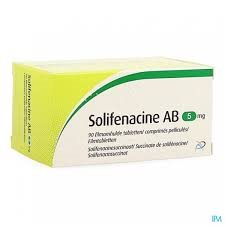
Solifenacin
View Options
This website provides general information about medicines for educational purposes only. Always consult your doctor or pharmacist before taking any medication.
Choose Your Medicine
Select dosage and quantity
Online Consultation
Reviewed by a qualified physician
Fast, Discreet Delivery
Delivered to your door
Medical Information
About This Medicine
Solifenacin (brand name Vesicare) is a selective muscarinic M3 receptor antagonist (antimuscarinic) used for the treatment of overactive bladder (OAB) syndrome in adults. It reduces the involuntary contractions of the bladder muscle, relieving the characteristic symptoms of OAB: urinary urgency, increased frequency, and urgency urinary incontinence.
How Solifenacin Works
The bladder detrusor muscle is under the control of the parasympathetic nervous system via muscarinic receptors. In OAB, these receptors trigger inappropriate bladder contractions, causing the sudden urge to urinate. Solifenacin selectively blocks M3 receptors in the bladder smooth muscle, reducing these involuntary contractions and increasing bladder capacity. It has a high degree of selectivity for the bladder compared to other tissues, contributing to its tolerability profile.
What to Expect from Treatment
Solifenacin typically begins to reduce urgency and frequency within one to two weeks, with the full benefit developing over four to six weeks of regular use. It reduces the number of toilet visits per day, urgency episodes, and urge incontinence episodes, significantly improving quality of life for patients with OAB.
Usage & Dosage
How to Take Solifenacin
Take one solifenacin tablet once daily at any time of day, with or without food. Swallow whole with water — do not crush or chew. Take at a consistent time each day to maintain steady blood levels.
The usual starting dose is 5 mg once daily. If this is well tolerated and symptom control is insufficient after four to six weeks, your doctor may increase the dose to 10 mg once daily — the maximum dose. Effects on urgency and frequency may begin within the first week, but the full benefit typically takes four to six weeks to develop.
Long-term Use
Solifenacin is used as a long-term treatment for overactive bladder. Do not stop without discussing it with your doctor, as symptoms will return. Bladder training exercises (gradually extending the time between toilet trips) alongside the medication often give better results than medication alone.
Solifenacin is available as 5 mg and 10 mg film-coated tablets. The standard starting dose is 5 mg once daily. If response is insufficient and the medication is well tolerated, the dose can be increased to 10 mg once daily. Dose reduction to 5 mg is recommended in patients with severe renal impairment, moderate hepatic impairment, or those taking potent CYP3A4 inhibitors.
Side Effects
Common Side Effects
- Dry mouth (the most common — drinking sips of water regularly helps)
- Constipation
- Blurred vision, particularly when focusing on close objects
- Indigestion or heartburn
- Nausea
- Dry eyes
- Drowsiness
Important Anticholinergic Warnings
Solifenacin is an antimuscarinic medicine. It can cause urinary retention (difficulty passing urine), particularly in men with prostate enlargement. If you find it increasingly difficult to pass urine, stop the medicine and seek medical advice. People with narrow-angle glaucoma, severe ulcerative colitis, or myasthenia gravis should not take solifenacin without specialist guidance. In older patients, anticholinergic medicines can occasionally affect memory and concentration — discuss any cognitive concerns with your doctor.
Warnings & Precautions
Use with caution in patients at risk of urinary retention (e.g. men with benign prostatic hyperplasia). Solifenacin should not be used in patients with known narrow-angle glaucoma without concurrent treatment of the glaucoma. Caution is required in patients with reduced gastrointestinal motility (e.g. severe constipation, toxic megacolon). Avoid in patients with myasthenia gravis. In elderly patients, start at the lower dose due to increased susceptibility to anticholinergic effects.
Contraindications
Contraindicated in patients with urinary retention, uncontrolled narrow-angle glaucoma, myasthenia gravis, severe hepatic impairment, severe gastrointestinal conditions (including toxic megacolon), hypersensitivity to solifenacin or any excipient, and in patients undergoing haemodialysis.
Frequently Asked Questions
How long does it take for solifenacin to work?
What can I do about the dry mouth caused by solifenacin?
Can I stop taking solifenacin suddenly?
Dr. Ross Elledge
General Practitioner · General & Family Medicine
Verified Healthcare Professional
TopDoctors Profile