
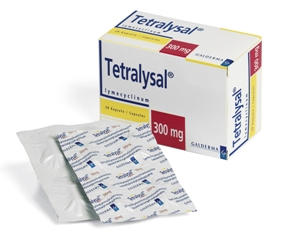
Lymecycline
View Options
This website provides general information about medicines for educational purposes only. Always consult your doctor or pharmacist before taking any medication.
Choose Your Medicine
Select dosage and quantity
Online Consultation
Reviewed by a qualified physician
Fast, Discreet Delivery
Delivered to your door
Medical Information
About This Medicine
Tetralysal is a prescription tetracycline antibiotic containing lymecycline 408 mg per capsule, used in the treatment of acne vulgaris. It is one of the most commonly prescribed oral antibiotics for acne in the UK, alongside doxycycline. Lymecycline works both as an antimicrobial agent - targeting the bacteria responsible for acne - and as an anti-inflammatory, addressing the inflammatory component of acne independently of its antibiotic action.
How Lymecycline Treats Acne
Acne vulgaris involves the overproduction of sebum, follicular hyperkeratinisation, colonisation of hair follicles by Cutibacterium acnes (formerly Propionibacterium acnes), and the resulting inflammatory response. Lymecycline inhibits bacterial protein synthesis by binding to the 30S ribosomal subunit, preventing the addition of amino acids to the growing peptide chain. This reduces C. acnes populations within sebaceous follicles and disrupts the inflammatory cascade that leads to the formation of papules, pustules, and nodules. Because of its additional anti-inflammatory properties, lymecycline remains useful in acne even when bacterial counts are lower.
Advantages Over Other Tetracyclines
Lymecycline is a prodrug of tetracycline, but it offers several advantages over older tetracyclines and even doxycycline. It is highly water soluble and can be taken without strict regard to food and posture, avoiding the risk of oesophageal ulceration that requires careful management with doxycycline. It has a good safety and tolerability profile, with fewer gastrointestinal side effects than doxycycline, and does not require split dosing - one capsule daily is sufficient. Lymecycline's water solubility also contributes to better absorption than tetracycline itself, which is markedly impaired by food.
Combination Therapy
Tetralysal is frequently prescribed alongside a topical retinoid (such as adapalene or tretinoin) or a topical benzoyl peroxide preparation. Benzoyl peroxide is particularly important because it has bactericidal activity and is less susceptible to resistance, which helps preserve the long-term efficacy of antibiotic therapy. NICE and BAD (British Association of Dermatology) guidelines recommend against using oral antibiotics as monotherapy for acne and advocate concurrent use of a topical preparation.
Usage & Dosage
Tetralysal capsules should be swallowed whole with a full glass of water. Taking the capsule with a large amount of water and remaining upright for at least 30 minutes after swallowing reduces the very small risk of the capsule lodging in the oesophagus. Unlike doxycycline, lymecycline has a lower risk of oesophageal irritation, but good practice still applies.
Timing and Diet
Tetralysal is taken once daily, at any consistent time of day. While food interaction is less of a concern than with older tetracyclines, it is advisable to avoid consuming dairy products (milk, yoghurt, cheese) or calcium-rich foods within two hours of taking the capsule. Calcium chelates tetracyclines, reducing their absorption. Similarly, iron supplements, antacids containing calcium, magnesium, or aluminium, and zinc supplements should be separated from lymecycline by at least two hours.
Sun Exposure and Skin Protection
Lymecycline, like all tetracyclines, can cause photosensitivity - an increased sensitivity of the skin to ultraviolet (UV) radiation. Patients should apply a broad-spectrum SPF 30 or higher sunscreen daily and avoid prolonged sun exposure or sunbed use during treatment. This is particularly relevant for acne patients who may already be using topical retinoids, which also increase photosensitivity.
Standard adult dose: One Tetralysal 408 mg capsule once daily.
Duration of treatment: Typically 8 to 12 weeks. Do not continue antibiotic therapy for acne beyond 3 months without review. NICE guidelines recommend a maximum course of 3 months at a time.
Combination: Always use with a topical preparation (e.g., benzoyl peroxide, topical retinoid) to reduce the risk of antibiotic resistance and improve efficacy.
Children: Not recommended under 12 years due to risk of dental staining and bone effects. Use in adolescents over 12 requires clinical assessment.
Side Effects
Common Side Effects
- Nausea or gastrointestinal discomfort (less common than with doxycycline)
- Headache
- Photosensitivity - increased sunburn risk
- Dizziness
- Vaginal thrush (candidiasis) due to disruption of normal flora
- Diarrhoea
Serious Side Effects
- Benign intracranial hypertension (pseudotumour cerebri) - persistent headache, visual disturbance, or vomiting; stop medication and seek urgent review
- C. difficile-associated diarrhoea (rare)
- Severe photosensitivity reactions or drug-induced lupus (very rare)
- Hepatotoxicity with prolonged use
- Oesophageal irritation or ulceration (less common than with doxycycline but still possible)
- Hypersensitivity reactions - rash, urticaria, angioedema
Warnings & Precautions
Tetralysal must not be used in pregnancy or breastfeeding. Tetracyclines cross the placenta and are deposited in foetal bones and teeth, causing permanent yellow-grey discolouration of the deciduous teeth and potentially inhibiting bone growth. They are also excreted in breast milk and can cause the same problems in nursing infants.
Antibiotic Resistance
Antibiotic resistance in C. acnes is an increasing concern. Long-term use of oral tetracyclines for acne without concurrent topical antibacterials (especially benzoyl peroxide) significantly increases the risk of resistance. Courses should be limited to three months, after which the ongoing need for antibiotic therapy should be reassessed. Patients should not use lymecycline alongside topical antibiotics such as clindamycin or erythromycin, as this increases selective pressure for resistance without additive benefit.
Intracranial Hypertension and Vision Changes
Tetracyclines, including lymecycline, have been associated with benign intracranial hypertension. Symptoms include persistent severe headache, blurred vision, visual field defects, and pulsatile tinnitus. These symptoms require urgent medical review and discontinuation of the antibiotic. Concurrent use of isotretinoin and tetracyclines is absolutely contraindicated due to the additive risk of intracranial hypertension. Female patients of childbearing potential using Tetralysal should use effective contraception, as the medication may interact with the reliability of combined hormonal contraceptives (though evidence is debated).
Contraindications
- Known hypersensitivity to lymecycline, other tetracyclines, or any excipient
- Pregnancy - risk of foetal bone and dental development effects
- Breastfeeding - excreted in breast milk
- Children under 12 - risk of dental staining and impaired bone growth
- Concurrent use with isotretinoin - additive intracranial hypertension risk
- Renal or hepatic impairment - accumulation risk; use with caution
- Concurrent use with systemic retinoids
- Caution with oral contraceptives (theoretical reduction in efficacy)
- Not to be used with antacids, iron supplements, or zinc within 2 hours
Frequently Asked Questions
How long does Tetralysal take to work for acne?
Can I take Tetralysal with the contraceptive pill?
Why do I need to avoid dairy when taking Tetralysal?
Can I use Tetralysal with topical acne treatments?
What happens if I forget to take a dose of Tetralysal?
Dr. Ross Elledge
General Practitioner · General & Family Medicine
Verified Healthcare Professional
TopDoctors Profile