
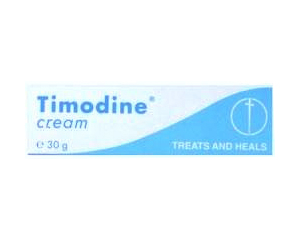
Timodine
View Options
This website provides general information about medicines for educational purposes only. Always consult your doctor or pharmacist before taking any medication.
Choose Your Medicine
Select dosage and quantity
Online Consultation
Reviewed by a qualified physician
Fast, Discreet Delivery
Delivered to your door
Medical Information
About This Medicine
Timodine is a combination topical cream containing four active ingredients: hydrocortisone 0.5%, nystatin 100,000 units per gram, benzalkonium chloride 0.2%, and dimeticone 350 10%. This unique formulation addresses the multiple components of napkin rash (nappy rash), intertrigo, and other inflammatory skin conditions in flexural areas complicated by secondary fungal and bacterial infection. Timodine is a prescription medicine in the UK.
Understanding the Four-Component Formula
Each ingredient in Timodine serves a distinct therapeutic purpose. Hydrocortisone 0.5% is a mild corticosteroid that reduces the inflammation, redness, and itch associated with napkin dermatitis and intertrigo. Nystatin is a polyene antifungal that works by binding to ergosterol in the fungal cell membrane, causing increased permeability and ultimately cell death. It is active against Candida albicans, the most common yeast responsible for secondary fungal infection in napkin rash. Benzalkonium chloride is a quaternary ammonium antiseptic that provides broad-spectrum antibacterial action against both Gram-positive and Gram-negative organisms. Dimeticone (a silicone-based fluid) acts as a barrier agent, protecting the skin from moisture, urine, and faeces - which are primary irritants in napkin rash.
Why Napkin Rash Requires Multi-Component Treatment
Napkin rash arises from the combination of occlusion, prolonged skin contact with urine and faeces (which produce irritant ammonia), heat, and friction. This environment disrupts the skin barrier and creates ideal conditions for Candida overgrowth and secondary bacterial colonisation. A single-ingredient cream - whether a simple emollient, an antifungal, or a steroid - addresses only part of this picture. Timodine's four-way action simultaneously reduces inflammation, eradicates fungal and bacterial infection, and protects the skin with a barrier layer, making it a highly effective solution for established napkin dermatitis with secondary infection.
Usage & Dosage
Timodine cream should be applied to the affected skin at each nappy change, or as directed by a healthcare professional. Clean and gently dry the affected area before each application. Apply a thin layer of Timodine to the skin in the nappy area, including the flexures and any areas with visible redness, rash, or Candida infection (which typically presents as a beefy red rash with satellite lesions around the margins).
Frequency and Duration
Timodine is typically applied three to four times daily, coinciding with nappy changes. It should not be used for longer than one week without medical review in children, due to the steroid component. In adults with intertrigo, treatment may continue for up to two weeks at the discretion of the prescribing clinician. Once the rash has resolved, Timodine should be discontinued and a simple barrier cream or emollient substituted for ongoing skin protection.
Application Technique
After cleaning the skin and patting gently dry, apply a thin film of Timodine cream to all affected areas including skin folds. The dimeticone component creates a water-repellent barrier layer on the skin. Avoid using occlusive plastic pants or wrapping over the treated area, as this increases absorption of the hydrocortisone component and may reduce the airflow that is important for healing. Allow air circulation where possible between nappy changes.
Infants and children (napkin rash): Apply at each nappy change - typically 3-4 times daily. Maximum duration 1 week without review.
Adults (intertrigo): Apply 2-4 times daily to affected flexural areas. Maximum duration 2 weeks.
Application: Thin layer only. Wash hands before and after application. Do not apply to broken, ulcerated, or extensively damaged skin without medical advice.
Review: If no improvement after 1 week (children) or 2 weeks (adults), stop and seek medical review.
Side Effects
Common Side Effects
- Skin irritation or burning on application
- Contact sensitisation to any of the four active ingredients (particularly benzalkonium chloride)
- Skin dryness
- Mild stinging in areas of broken skin
Serious Side Effects
- HPA axis suppression with prolonged or extensive use in infants - even mild corticosteroids can cause adrenal suppression in young children under occlusion
- Skin atrophy with prolonged use of the hydrocortisone component
- Sensitisation to benzalkonium chloride - may cause allergic contact dermatitis
- Spread of untreated infection masked by the steroid component
- Rare hypersensitivity reactions to any component
Warnings & Precautions
Timodine contains hydrocortisone 0.5%, a mild corticosteroid. Although this is the lowest potency of corticosteroid available, prolonged use in infants - particularly under occlusive nappies, which act as occlusive dressings - can cause systemic absorption and adrenal suppression. Timodine should not be used continuously for more than one week in infants without medical review. Once the inflammatory component of the rash is controlled, switch to a simple barrier cream.
Benzalkonium Chloride Sensitivity
Benzalkonium chloride, while effective as an antiseptic, is a well-recognised contact allergen. Patients or carers should be aware of the possibility of allergic contact dermatitis developing with repeated exposure. If the rash worsens or changes character during treatment, this should prompt consideration of sensitisation and medical review.
Avoiding Misuse and Overuse
Timodine should not be used as a routine preventive cream for all nappy rash, as it contains active therapeutic agents inappropriate for prevention. Simple barrier preparations such as zinc oxide cream or petroleum jelly are appropriate for routine nappy hygiene. Timodine is reserved for established rash with signs of inflammation and secondary infection. If systemic signs of infection develop (fever, widespread rash, unwell infant), a doctor should be seen promptly rather than continuing topical treatment alone.
Contraindications
- Known hypersensitivity to hydrocortisone, nystatin, benzalkonium chloride, dimeticone, or any excipient
- Untreated primary skin infections with organisms not covered by nystatin or benzalkonium chloride (e.g., herpes simplex - steroid component may worsen viral infections)
- Tuberculous skin lesions
- Rosacea or perioral dermatitis
- Application to the face
- Prolonged use under occlusive dressings in infants beyond recommended duration
- Use on atrophic or extensively thinned skin
- Do not use in or near the eyes
Frequently Asked Questions
What is Timodine cream used for?
How quickly does Timodine work for nappy rash?
Can I use Timodine as a regular barrier cream?
Is Timodine safe for newborns?
What is the difference between Timodine and Canesten HC?
Dr. Ross Elledge
General Practitioner · General & Family Medicine
Verified Healthcare Professional
TopDoctors Profile