
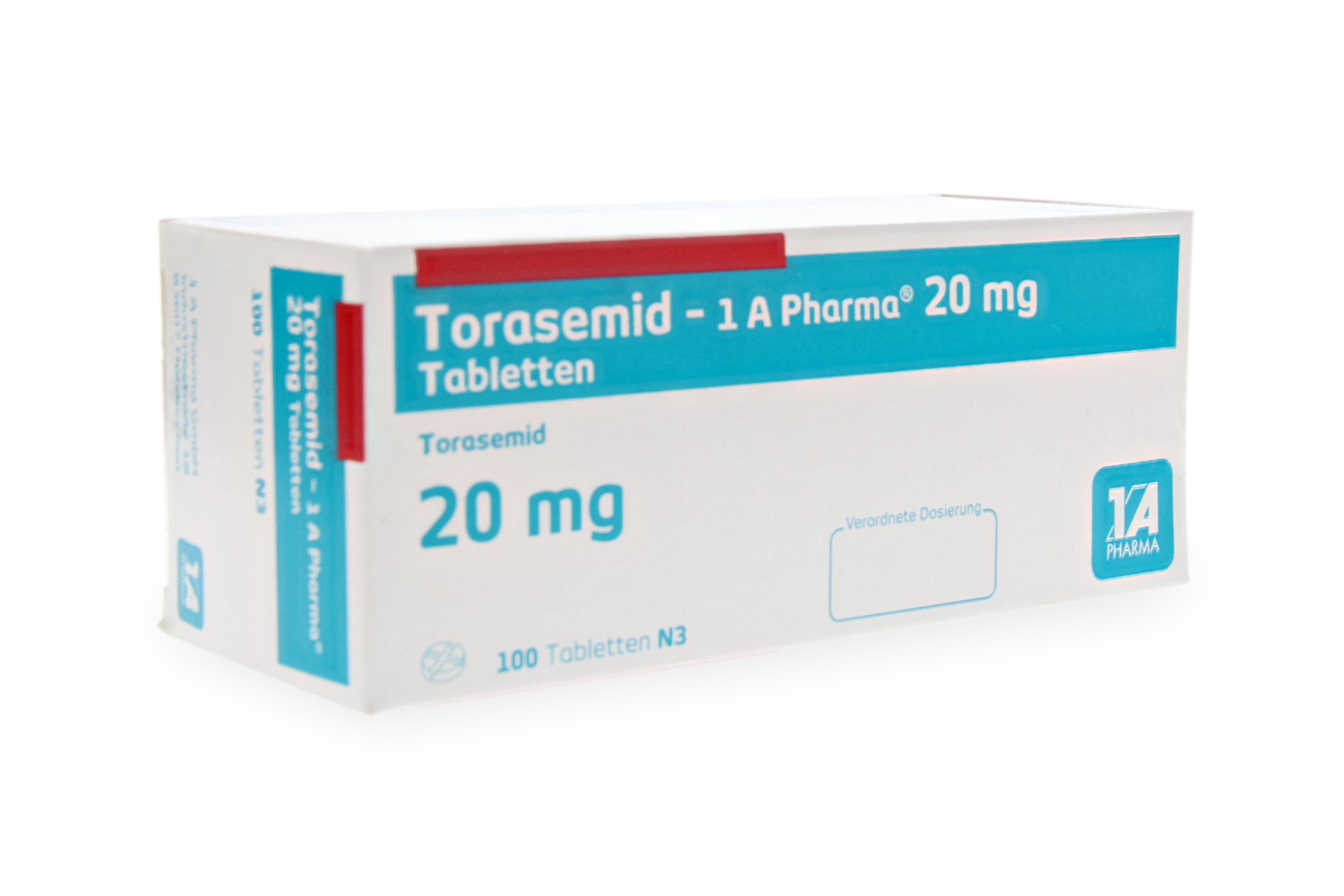
Torasemide
View Options
This website provides general information about medicines for educational purposes only. Always consult your doctor or pharmacist before taking any medication.
Choose Your Medicine
Select dosage and quantity
Online Consultation
Reviewed by a qualified physician
Fast, Discreet Delivery
Delivered to your door
Medical Information
About This Medicine
Torasemide is a loop diuretic used to treat fluid retention (oedema) and high blood pressure (hypertension). It belongs to the same pharmacological class as furosemide but offers certain practical advantages that make it an important alternative in clinical practice. It is available as tablets in the UK and is prescribed for adults with heart failure, chronic kidney disease, liver cirrhosis, and hypertension where fluid management is a therapeutic priority.
How Torasemide Works
Torasemide acts in the thick ascending limb of the loop of Henle in the kidney, where it inhibits the sodium-potassium-chloride co-transporter (NKCC2). This blocks the reabsorption of sodium, chloride, and water, leading to a substantial increase in urine output. The resulting reduction in circulating fluid volume lowers blood pressure and relieves congestion in the lungs, legs, and abdomen.
Compared with furosemide, torasemide has more predictable and consistent oral bioavailability, approximately 80% compared with furosemide's highly variable 10-90%. This means patients are less likely to experience unpredictable fluctuations in diuretic response, which is particularly valuable in heart failure management.
Clinical Applications
In heart failure, torasemide reduces peripheral and pulmonary oedema, improving breathlessness, exercise tolerance, and quality of life. Some clinical data suggest it may have additional anti-fibrotic effects in the heart, which has generated interest in its potential to favourably modify cardiac remodelling over time, though this remains an area of ongoing research.
In hypertension, torasemide reduces blood pressure primarily through volume depletion and, at lower doses, through a mild vasodilatory effect on peripheral blood vessels. It is often used when thiazide diuretics have proven insufficient or are not well tolerated.
Monitoring and Electrolytes
Like all loop diuretics, torasemide causes loss of potassium and other electrolytes in the urine. Regular monitoring of blood electrolytes, particularly potassium, sodium, and creatinine, is essential during treatment. Patients with low potassium levels are at increased risk of cardiac arrhythmias and may require potassium supplementation or concurrent use of a potassium-sparing diuretic.
Usage & Dosage
How to Take Torasemide
Torasemide is usually taken once daily in the morning. Taking it in the morning means the peak diuretic effect (increased urine output) happens during the day rather than overnight, which is much more practical and less disruptive to sleep. Tablets can be taken with or without food. Swallow whole with a glass of water.
Take your tablet at the same time each morning. If you miss a dose, take it as soon as you remember on the same day. If the day has passed, skip the missed dose and carry on as normal the next morning. Do not double up.
Monitoring
Your doctor will periodically check your kidney function, electrolytes (especially potassium and sodium), and blood pressure during treatment. Torasemide increases the excretion of potassium, so eating potassium-rich foods (bananas, oranges, potatoes, leafy greens) or taking a potassium supplement may be recommended if levels drop. Report symptoms of low potassium — muscle cramps, weakness, or an irregular heartbeat — to your doctor.
Doses vary depending on the clinical indication and are adjusted individually by the prescribing doctor.
Hypertension: Typically 2.5 mg once daily, which may be increased to 5 mg if blood pressure remains inadequately controlled after four to six weeks.
Heart failure and oedema: Starting dose is usually 5 mg once daily, titrated according to response up to 20 mg once daily in most cases. In severe or refractory cases, doses up to 200 mg daily may be used under specialist supervision in hospital settings.
Hepatic cirrhosis with ascites: 5-10 mg once daily, often in combination with spironolactone.
Chronic kidney disease: Doses at the higher end of the range may be required due to reduced renal tubular secretion.
Torasemide tablets are available in strengths of 2.5 mg, 5 mg, 10 mg, and 20 mg. Administration is oral, once daily, in the morning.
Side Effects
Common Side Effects
- Increased frequency and volume of urination, particularly in the first few hours after taking the dose
- Dizziness or light-headedness, especially when standing up quickly (postural hypotension)
- Headache
- Fatigue and weakness
- Muscle cramps (often related to low potassium)
Electrolyte Imbalances
The main risk with loop diuretics like torasemide is electrolyte imbalance, particularly low potassium (hypokalaemia) and low sodium (hyponatraemia). Low potassium can cause muscle weakness, cramps, and heart rhythm disturbances. Seek medical advice if you develop significant dizziness, fainting, severe cramps, or feel very unwell — these can be signs of dehydration or electrolyte imbalance that may need a blood test and dose adjustment.
Warnings & Precautions
Torasemide requires careful use and monitoring, particularly in vulnerable patient groups.
Electrolyte and Fluid Balance
The most significant ongoing risk with torasemide is electrolyte disturbance. Hypokalaemia is particularly dangerous in patients with heart disease, as low potassium levels predispose to ventricular arrhythmias. Patients taking digoxin alongside a loop diuretic are at especially high risk, as digoxin toxicity is potentiated by hypokalaemia. Electrolytes should be monitored regularly and corrected promptly. Hyponatraemia (low sodium) can also occur, particularly in the elderly, and may cause confusion, falls, and seizures.
Torasemide should be used with caution in patients who are already dehydrated or who have a low circulating blood volume, as further fluid depletion can precipitate acute kidney injury. Similarly, patients with poor renal function require careful monitoring of kidney parameters throughout treatment.
Drug Interactions and Special Populations
Torasemide interacts with a number of medicines. NSAIDs such as ibuprofen and naproxen reduce its diuretic effect and may worsen kidney function. ACE inhibitors and ARBs may cause excessive blood pressure falls when started alongside torasemide, particularly in volume-depleted patients. Aminoglycoside antibiotics and platinum-based chemotherapy agents increase the risk of ototoxicity and nephrotoxicity. Lithium levels can rise significantly due to reduced renal clearance, requiring monitoring.
The elderly are more susceptible to the adverse effects of loop diuretics, including dehydration, electrolyte imbalance, and falls due to postural hypotension. Dose adjustments and more frequent monitoring are appropriate in this group.
Contraindications
- Anuria (absence of urine production) or severe oliguria unresponsive to volume replacement
- Hypersensitivity to torasemide or other sulfonamide-derived compounds
- Hepatic coma or precoma (in patients with liver cirrhosis)
- Severe hypokalaemia or hyponatraemia
- Severe hypovolaemia or dehydration
- Renal failure due to nephrotoxic or hepatotoxic agents
- Pregnancy (particularly the first trimester; use in later pregnancy only with specialist guidance)
- Breastfeeding (may suppress lactation)
- Concurrent use with lithium without close monitoring
Frequently Asked Questions
What is the difference between torasemide and furosemide?
Will torasemide make me urinate a lot?
Do I need to eat potassium-rich foods while taking torasemide?
Can I take ibuprofen while on torasemide?
How long will I need to take torasemide?
Dr. Ross Elledge
General Practitioner · General & Family Medicine
Verified Healthcare Professional
TopDoctors Profile