
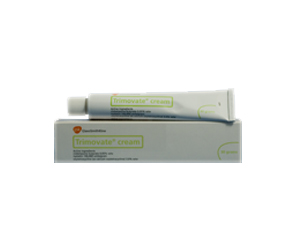
Trimovate
View Options
This website provides general information about medicines for educational purposes only. Always consult your doctor or pharmacist before taking any medication.
Choose Your Medicine
Select dosage and quantity
Online Consultation
Reviewed by a qualified physician
Fast, Discreet Delivery
Delivered to your door
Medical Information
About This Medicine
Trimovate Cream is a combination topical preparation containing three active components: clobetasone butyrate 0.05% (a mild-to-moderate topical corticosteroid), oxytetracycline 3% (a tetracycline-class antibiotic), and nystatin 100,000 units per gram (an antifungal agent). This triple-combination formulation is designed for the short-term treatment of inflammatory skin conditions that are complicated by secondary bacterial and/or fungal infection.
What Trimovate Cream Contains
The three ingredients in Trimovate Cream work in complementary ways. Clobetasone butyrate reduces the inflammatory response, suppressing the redness, itching, swelling, and discomfort associated with eczema and other inflammatory skin conditions. Oxytetracycline is bacteriostatic against a wide range of Gram-positive and some Gram-negative bacteria commonly associated with secondary skin infections, including Staphylococcus aureus and Streptococcus pyogenes. Nystatin acts by binding to ergosterol in fungal cell membranes, disrupting their integrity and killing yeasts such as Candida albicans, which frequently colonise inflamed or macerated skin.
When Trimovate Cream Is Used
Trimovate is indicated for inflammatory skin conditions where infection or the risk of infection is a concern. Typical presentations include eczema with secondary infection, intertrigo (inflamed skin at body fold sites), and similar conditions in which the skin is broken, weeping, or macerated and has become colonised by bacteria or fungi. It is particularly useful in flexural areas, such as the groin, armpits, and beneath the breasts, where warmth and moisture encourage mixed infections.
Short-Term Treatment Only
Trimovate Cream is intended for short courses of treatment only, generally no longer than seven days. Prolonged use of even a mild corticosteroid can cause local skin thinning (atrophy), stretch marks, and other changes, while extended antibiotic application can promote bacterial resistance. If symptoms have not improved within seven days, the diagnosis should be reviewed and an alternative treatment sought.
Usage & Dosage
How to Apply Trimovate Cream
Clean the affected skin gently and pat it dry before application. Apply a thin layer of Trimovate Cream to the affected area and rub in gently. Using the smallest amount that provides relief is important — thick application does not improve the effect but increases the risk of side effects. The cream is typically applied two to three times daily, as directed by your doctor or pharmacist.
Trimovate contains three active ingredients: clobetasone butyrate (a moderate-strength corticosteroid), oxytetracycline (an antibiotic), and nystatin (an antifungal). It is used for inflammatory skin conditions where bacterial or fungal infection is also present or suspected.
Duration of Use
Use for the shortest time needed to bring the condition under control, usually no more than four weeks. On sensitive areas such as the face, armpits, or groin, limit use to five to seven days. Wash your hands after applying unless your hands are the area being treated.
Trimovate Cream is for topical (external) use only and should not be ingested.
Standard dosage: Apply thinly to the affected area two to three times daily.
Maximum duration: Seven days per course of treatment. If no improvement is seen within seven days, stop using the cream and consult a doctor for re-evaluation.
Adults and children: Can be used in adults and children, but apply with greater caution in children and neonates, as young skin is more permeable to corticosteroids and the surface area-to-body weight ratio is higher, increasing the risk of systemic absorption.
Quantities: Use the minimum amount required to cover the affected area thinly. Excessive quantities should not be applied. Do not use more frequently than directed.
If symptoms return after completing a short course, do not restart without medical advice. Repeated short courses may be appropriate in some circumstances but should be overseen by a doctor.
Side Effects
Common Side Effects
- Mild burning, stinging, or irritation at the application site on first use
- Skin dryness or mild peeling around the treated area
- Temporary redness at the application site (usually settles quickly)
- Itching at the application site in some patients
- Skin sensitisation or allergic contact dermatitis (uncommon)
With Prolonged Use
Clobetasone butyrate is a moderate-strength steroid, and prolonged or excessive use can cause skin thinning, reduced skin strength, and stretch marks — particularly on the face, in skin folds, and in the groin area. These effects are more likely if the cream is used under occlusive dressings or on large areas. If your skin becomes more irritated rather than better, or if you see no improvement after two weeks, see your doctor. This may suggest the diagnosis needs reviewing or a different treatment is required.
Warnings & Precautions
Trimovate Cream is a short-term treatment and must be used precisely as directed to avoid complications.
Duration and Overuse
Trimovate Cream must not be used for more than seven days without medical review. Even though clobetasone butyrate is classified as a mild-to-moderate corticosteroid, repeated or prolonged use can still cause skin atrophy, striae (stretch marks), and hypopigmentation, particularly at flexural sites and in children. The antibiotic component (oxytetracycline) is also susceptible to generating resistance in skin flora if used for extended periods, reducing its future effectiveness.
Trimovate should not be used as a long-term maintenance treatment for chronic conditions such as eczema. Emollients and, where appropriate, a plain corticosteroid formulation should be used for ongoing management under medical supervision.
Contraindicated Skin Conditions
Trimovate Cream is not suitable for all types of skin lesion. It should not be applied to rosacea, perioral dermatitis, acne vulgaris, or viral skin infections such as cold sores (herpes simplex), chickenpox, or shingles, as the corticosteroid component can worsen these conditions. It should not be used on uninfected or perianal eczema without medical advice. The cream is not suitable for use in the ear canal without specialist direction.
Use in pregnancy should be limited to the minimum effective dose for the shortest possible duration, as topical corticosteroids are potentially absorbed systemically. The cream should not be used extensively during breastfeeding, particularly over the breast area.
Contraindications
- Hypersensitivity to clobetasone, oxytetracycline, nystatin, or any excipient
- Rosacea and perioral dermatitis
- Acne vulgaris
- Viral skin infections (herpes simplex, varicella, herpes zoster)
- Tuberculous or syphilitic skin lesions
- Primary cutaneous fungal infections treated with azole antifungals (nystatin in Trimovate may be insufficient)
- Perianal and genital itch without evidence of infection (corticosteroid may worsen)
- Children under 1 year without specialist advice
- Occlusive dressings without medical direction
- Face (unless specifically directed by a doctor)
Frequently Asked Questions
Can I use Trimovate Cream on my face?
How long can I use Trimovate Cream for?
Can Trimovate Cream treat thrush?
Is Trimovate Cream safe in pregnancy?
Can I cover the treated area with a bandage after applying Trimovate Cream?
Dr. Ross Elledge
General Practitioner · General & Family Medicine
Verified Healthcare Professional
TopDoctors Profile