
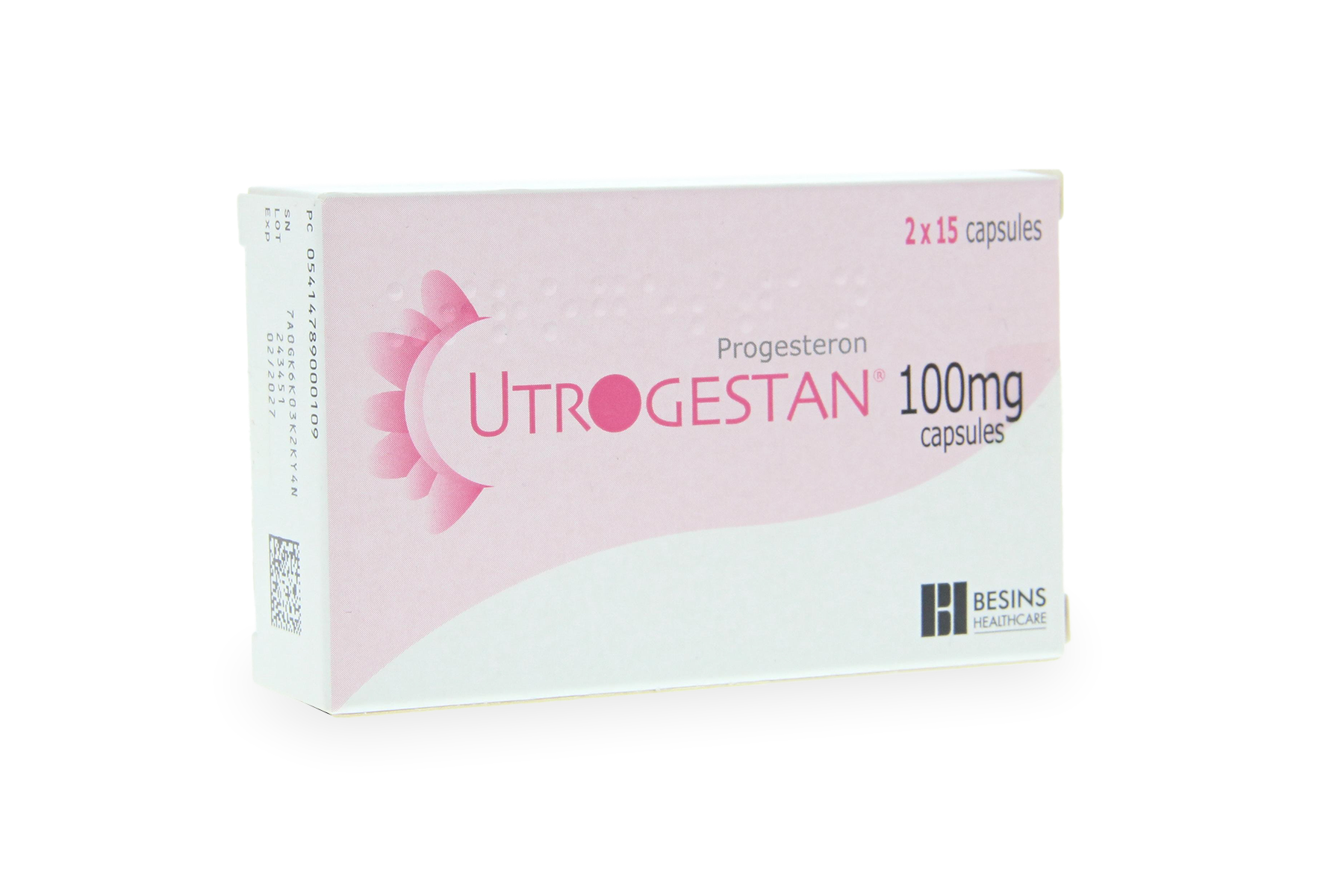
Utrogestan
View Options
This website provides general information about medicines for educational purposes only. Always consult your doctor or pharmacist before taking any medication.
Choose Your Medicine
Select dosage and quantity
Online Consultation
Reviewed by a qualified physician
Fast, Discreet Delivery
Delivered to your door
Medical Information
About This Medicine
Utrogestan is a body-identical hormone preparation containing micronised progesterone, a form of the naturally occurring progestogen that is chemically identical to the progesterone produced by the human ovary. It is licensed in the UK for use as the progestogen component of hormone replacement therapy (HRT) in women with an intact uterus, and in assisted reproduction as luteal phase support following IVF or other fertility procedures.
What Makes Utrogestan Different
The term "body-identical" refers to the fact that the progesterone molecule in Utrogestan is identical in structure to endogenous human progesterone, in contrast to synthetic progestogens such as norethisterone or medroxyprogesterone acetate, which have a modified chemical structure. This distinction may have clinical relevance: observational data suggest that micronised progesterone carries a lower risk of breast cancer than synthetic progestogens when used in HRT, though the evidence base continues to evolve. Micronised progesterone also appears to have a more neutral or even beneficial effect on cardiovascular parameters compared to some synthetic progestogens.
Routes of Administration
Utrogestan can be taken orally (swallowed as a capsule) or used vaginally (inserted into the vagina). The route chosen affects both the clinical effect and the side effect profile. When taken orally, progesterone is extensively metabolised by the gut and liver, producing metabolites with sedative properties. This can cause drowsiness, which, while sometimes problematic, can be turned to advantage by taking the capsule at bedtime. The vaginal route avoids this first-pass metabolism, producing higher local endometrial concentrations with lower circulating levels and fewer sedative effects; this route is typically preferred in fertility treatment.
Clinical Applications
In HRT, Utrogestan 100 mg is used as a 12-day sequential progestogen (usually days 15-26 of the cycle) to protect the endometrium from oestrogen-induced hyperplasia. In continuous combined HRT regimens, 100 mg daily can be used to achieve an oestrogen-progestogen balance that prevents monthly bleeds. Utrogestan 200 mg vaginally is used for luteal support in assisted reproduction.
Usage & Dosage
How to Take Utrogestan
Utrogestan (micronised progesterone) capsules can be swallowed orally or inserted vaginally, depending on your doctor's instructions and the indication.
For sequential HRT (to protect the uterine lining during oestrogen therapy), Utrogestan 100 mg is typically taken orally for 12 days per month (usually days 15 to 26). For continuous combined HRT, 100 mg is taken every day without a break. Take capsules at bedtime with a small glass of water — the sedative effect of progesterone (when taken orally) is most pronounced in the first one to two hours after taking it, and bedtime use makes this effect an advantage rather than a problem.
Vaginal Use
When used vaginally (for example during fertility treatment or early pregnancy support), insert the capsule high into the vagina using your finger. This route largely avoids the sedative effect.
HRT (sequential use): Utrogestan 100 mg orally for 12 days per month (typically days 15-26 of the cycle), taken at bedtime.
HRT (continuous combined use): Utrogestan 100 mg orally once daily, taken at bedtime.
Luteal support in IVF: Utrogestan 200 mg vaginally two or three times daily, as directed by the fertility specialist. Often started on the day of egg collection or embryo transfer.
Vaginal use for HRT: Some clinicians prescribe vaginal use of Utrogestan 100 mg for HRT in women who experience significant drowsiness from the oral route; this is an off-label use but is supported by clinical practice.
Capsules are available in 100 mg strength. Utrogestan is not suitable as a contraceptive -- it does not reliably inhibit ovulation and should not be used for birth control purposes.
Side Effects
Common Side Effects
- Drowsiness and sedation, particularly with oral use (most noticeable in the first hour or two after taking it)
- Dizziness or light-headedness
- Headache
- Breast tenderness, particularly during the progestogen phase
- Vaginal discharge or mild irritation with vaginal use
- Irregular spotting or breakthrough bleeding in the first few months
Compared with Synthetic Progestogens
Many women find Utrogestan better tolerated than synthetic progestogens such as medroxyprogesterone acetate, with fewer mood-related side effects. The sedating effect with oral use is caused by the conversion of progesterone to a naturally sedating compound in the brain — this is why taking it at bedtime is strongly recommended rather than during the day.
Warnings & Precautions
Utrogestan carries the general warnings applicable to all progestogen-containing medicines used in HRT and reproductive medicine.
Drowsiness and Driving
Oral Utrogestan causes significant sedation in many users due to the conversion of progesterone to neuroactive metabolites such as allopregnanolone, which act on GABA receptors in the brain. This effect is strongest in the first one to two hours after taking the capsule. Women who take Utrogestan orally should avoid driving or operating machinery for several hours after the dose. Taking the capsule at bedtime is strongly recommended to manage this side effect safely and effectively.
Breast Cancer and Hormone-Sensitive Conditions
While observational evidence suggests micronised progesterone may carry a lower breast cancer risk than synthetic progestogens in HRT, it is not risk-free, and should not be used in women with current or previous breast cancer unless under the guidance of a specialist oncologist who has weighed the individual risks and benefits. Similarly, Utrogestan should not be used in women with a history of other hormone-sensitive malignancies without specialist review.
Women who are pregnant should not use Utrogestan unless it has been specifically prescribed for luteal support or pregnancy maintenance by a fertility specialist. The capsules contain peanut oil (arachis oil), and must not be used in women with peanut or soya allergy. This is a critical safety point that must be checked at prescribing. Women with rare hereditary conditions such as galactose intolerance should also avoid Utrogestan due to its lactose content.
Contraindications
- Known or suspected breast cancer or history of breast cancer
- Active or history of hormone-dependent malignancy
- Unexplained vaginal bleeding
- Known thrombophilic disorders or active venous thromboembolism
- Acute or severe liver disease
- Porphyria
- Peanut or soya allergy (capsules contain arachis oil -- this is a critical contraindication)
- Galactose intolerance, Lapp lactase deficiency, or glucose-galactose malabsorption
- Recent arterial thromboembolic event (stroke, myocardial infarction)
- Hypersensitivity to progesterone or any excipient
Frequently Asked Questions
Why does Utrogestan make me sleepy?
Is Utrogestan safer than synthetic progestogens?
Can I use Utrogestan vaginally instead of taking it orally?
Does Utrogestan contain peanut products?
How long do I take Utrogestan for luteal support in IVF?
Dr. Ross Elledge
General Practitioner · General & Family Medicine
Verified Healthcare Professional
TopDoctors Profile