
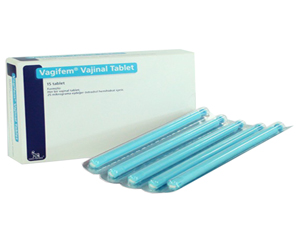
Vagifem
View Options
This website provides general information about medicines for educational purposes only. Always consult your doctor or pharmacist before taking any medication.
Choose Your Medicine
Select dosage and quantity
Online Consultation
Reviewed by a qualified physician
Fast, Discreet Delivery
Delivered to your door
Medical Information
About This Medicine
Vagifem is a vaginal tablet containing 10 micrograms of estradiol, a low-dose localised oestrogen treatment used to relieve the urogenital symptoms of the menopause. Unlike systemic HRT, which delivers oestrogen throughout the body to treat a wide range of menopausal symptoms, Vagifem acts locally within the vaginal and surrounding tissues, with minimal absorption into the bloodstream.
Urogenital Menopause Symptoms
Following the menopause, declining oestrogen levels cause significant changes in the lower urogenital tract. The vaginal lining thins and becomes less elastic, losing its natural lubrication and acidic environment. This condition, known as vulvovaginal atrophy or genitourinary syndrome of menopause (GSM), causes vaginal dryness, soreness, burning, discomfort during sexual intercourse (dyspareunia), and sometimes postcoital bleeding. Urinary symptoms such as urgency, frequency, and recurrent urinary tract infections also frequently develop as a consequence of the same oestrogen-deprived tissue changes in the urethra and bladder trigone.
How Vagifem Works
Estradiol in Vagifem is absorbed directly by the vaginal mucosa, where it stimulates the local oestrogen receptors. This restores the thickness and elasticity of the vaginal epithelium, increases natural secretions, and helps restore the normal acidic pH of the vagina, which in turn discourages recurrent bacterial and yeast infections. The 10 mcg dose is specifically designed to achieve these local effects while minimising the amount of oestrogen that enters the general circulation, meaning that systemic risks associated with higher-dose oestrogen are substantially reduced.
Efficacy and Use
Clinical studies demonstrate that Vagifem effectively reduces symptoms of vaginal atrophy in the majority of women, with improvements in dryness, burning, and pain during intercourse typically apparent within four to six weeks of starting treatment. Its effects are sustained with ongoing twice-weekly maintenance use, and unlike water-based lubricants, Vagifem treats the underlying tissue changes rather than simply providing temporary symptomatic relief.
Usage & Dosage
How to Insert Vagifem
Wash your hands thoroughly before handling the applicator. Remove one pre-loaded Vagifem (estradiol 10 mcg) applicator from its blister pack. Lie on your back with your knees bent and feet flat, or stand with one foot raised on a chair. Gently insert the applicator as far into the vagina as feels comfortable, then press the plunger to release the tablet. Withdraw the applicator and dispose of it — each applicator is single-use only.
Dosing Schedule
The initial dose is one tablet (10 mcg) daily for two weeks. After this, the maintenance dose is one tablet twice weekly (for example, every Monday and Thursday), continued as long as needed for symptom relief.
Vagifem delivers oestrogen locally to the vaginal tissue and is used for symptoms of vaginal atrophy: dryness, discomfort, and pain during intercourse. At this low dose, systemic absorption is minimal. It does not provide contraception and is not a full systemic HRT.
Initial treatment (loading phase): One Vagifem 10 mcg tablet inserted vaginally once daily for 14 consecutive days.
Maintenance phase: One Vagifem 10 mcg tablet inserted vaginally twice weekly on the same two days each week (e.g., Monday and Thursday). Continue indefinitely as long as symptoms persist and treatment is reviewed as beneficial.
No dose adjustments are available within the Vagifem range -- a single 10 mcg dose is the only available strength. Women who require systemic HRT for other menopausal symptoms (hot flushes, night sweats) will need a separate systemic preparation in addition to Vagifem; Vagifem alone does not control systemic symptoms at this local dose.
Vagifem is not a contraceptive and does not protect against sexually transmitted infections. Women who are not clearly postmenopausal should continue to use contraception as advised.
Side Effects
Common Side Effects
- Vaginal discharge (usually mild and related to the tablet base dissolving)
- Localised vaginal discomfort, burning, or irritation, especially in the first few weeks
- Headache (generally mild)
- Breast tenderness (uncommon at this low dose)
- Light vaginal spotting or bleeding, particularly in the first weeks
When to Seek Advice
Some vaginal spotting in the initial weeks of treatment is not unusual as the atrophic tissue adjusts. However, report any unexpected vaginal bleeding to your doctor, especially if it persists or is heavier than light spotting — this needs to be investigated to rule out other causes. Women with a history of hormone-sensitive cancers should discuss whether Vagifem is appropriate for them with their specialist.
Warnings & Precautions
Vagifem is considered one of the safest oestrogen preparations available, but it is not entirely free of considerations and should be used under medical supervision.
Endometrial Safety and Monitoring
Because Vagifem delivers oestrogen locally with very low systemic absorption, women using it alone (without any systemic HRT) do not generally require a progestogen to protect the womb lining. Clinical studies support the endometrial safety of Vagifem 10 mcg used continuously, in contrast to higher-dose local oestrogen products. However, any unexpected vaginal bleeding, including light spotting outside the initial loading phase, should be reported and investigated promptly to exclude endometrial pathology.
Women who are also using systemic oestrogen-containing HRT should discuss with their doctor whether adding Vagifem is appropriate and whether progestogen is required. The combination of systemic and local oestrogen increases total oestrogenic exposure and requires individual assessment.
Risk Factors and Long-Term Safety
The risks associated with systemic HRT -- including breast cancer, cardiovascular disease, and venous thromboembolism -- are substantially lower with Vagifem at the 10 mcg dose due to minimal systemic absorption. Women with a history of breast cancer, oestrogen-sensitive tumours, or unexplained vaginal bleeding should not use Vagifem without specialist oncological review. Women with a history of thromboembolism or cardiovascular disease should inform their prescriber, though the thrombotic risk of Vagifem at this dose is considered to be very low.
All women on Vagifem should continue to attend cervical screening and mammography as invited and remain alert to any new breast or gynaecological symptoms.
Contraindications
- Known, suspected, or previous breast cancer
- Known or suspected oestrogen-dependent malignancy (e.g., endometrial cancer)
- Unexplained vaginal bleeding
- Untreated endometrial hyperplasia
- Previous or current venous thromboembolism (only with significant systemic exposure, but caution required)
- Active or recent arterial thromboembolic disease
- Acute or severe liver disease
- Porphyria cutanea tarda
- Hypersensitivity to estradiol or any excipient in Vagifem
- Pregnancy and breastfeeding
Frequently Asked Questions
Is Vagifem safe to use long-term?
Do I need a progestogen (progesterone) alongside Vagifem?
How long does it take for Vagifem to work?
Can I use Vagifem if I have had breast cancer?
Will Vagifem affect my sex life?
Dr. Ross Elledge
General Practitioner · General & Family Medicine
Verified Healthcare Professional
TopDoctors Profile