
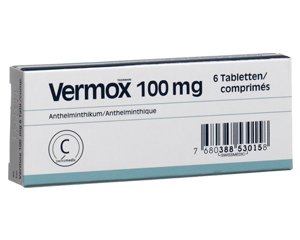
Vermox
View Options
This website provides general information about medicines for educational purposes only. Always consult your doctor or pharmacist before taking any medication.
Choose Your Medicine
Select dosage and quantity
Online Consultation
Reviewed by a qualified physician
Fast, Discreet Delivery
Delivered to your door
Medical Information
About This Medicine
Vermox is an anthelmintic (anti-worm) medicine containing mebendazole, used to treat a range of intestinal worm infections in adults and children aged over two years. It works by selectively blocking the uptake of glucose in parasitic worms, effectively starving them and causing their death, while having minimal effect on the human host. Vermox is available as 100mg chewable tablets and is one of the most commonly recommended treatments for worm infestations in the UK.
Worm Infections Treated by Vermox
Vermox is indicated for the treatment of several intestinal parasites. It is most frequently used for threadworm (Enterobius vermicularis), which is the most common worm infection in the UK and particularly prevalent in school-age children. Vermox is also effective against roundworm (Ascaris lumbricoides), hookworm (Ancylostoma duodenale and Necator americanus), and whipworm (Trichuris trichiura). Mixed infections involving more than one species can also be treated with a single course.
How Mebendazole Works
Mebendazole interferes with the formation of a structural protein called tubulin within the worm's cells. Without functional tubulin, the worm cannot absorb glucose, its sole energy source. The parasite gradually becomes immobilised and dies over the course of one to three days, after which it is passed naturally in the stool. The drug is poorly absorbed from the gut into the bloodstream, which concentrates its activity within the intestine where the worms reside and minimises systemic side effects.
Treatment of the Whole Household
Because threadworm eggs spread easily through microscopic particles on hands, bedding, and surfaces, re-infection within a household is common if only the affected individual is treated. For threadworm infections, all members of the household should be treated simultaneously, regardless of whether they have noticed symptoms. Hygiene measures are equally important: washing hands thoroughly, cutting fingernails short, and laundering bedding and towels at 60 degrees Celsius on the day of treatment all help to break the cycle of re-infection. For roundworm, hookworm, and whipworm, a three-day course of mebendazole is required rather than a single dose.
Usage & Dosage
Vermox tablets are chewable and may be swallowed whole or chewed, with or without food. The dose and duration of treatment depend on the type of worm infection being treated.
Dosage Instructions by Infection Type
For threadworm, the standard treatment for adults and children over two years is a single 100mg tablet. Because threadworm eggs can persist in the environment and cause re-infection, a second dose is recommended two weeks after the first if the infection has not fully cleared. For roundworm, hookworm, and whipworm, the recommended course is one 100mg tablet twice daily (morning and evening) for three consecutive days.
Important Hygiene Measures Alongside Treatment
Taking Vermox alone is not always sufficient to eliminate a threadworm infection. On the day of treatment, wash all bed linen, nightwear, and towels at 60 degrees Celsius. Vacuum and damp-dust sleeping areas. Every household member should wash their hands and scrub under their nails before eating, after using the toilet, and first thing in the morning. These measures should be maintained for at least two weeks following treatment. Children should wear close-fitting underwear to bed to reduce the risk of transferring eggs from the anal area to the hands during sleep. All household members should take a simultaneous dose to prevent ping-pong re-infection.
For threadworm in adults and children over 2 years: a single 100mg tablet. A second dose may be taken after two weeks if symptoms persist or re-infection is suspected.
For roundworm, hookworm, and whipworm: one 100mg tablet in the morning and one in the evening for three consecutive days.
Vermox is not recommended for children under two years of age or during the first trimester of pregnancy. Women in the second or third trimester of pregnancy should consult a doctor before use. If there is no improvement within a few days of completing the course, or if symptoms return, seek medical advice. A repeat course or stool examination may be required to confirm clearance of the infection.
Side Effects
Common Side Effects
- Abdominal pain or stomach cramps
- Nausea
- Diarrhoea
- Flatulence
- Headache
- Dizziness
- Skin rash or itching
Serious Side Effects
- Severe allergic reaction (anaphylaxis): seek emergency help if you experience swelling of the face, lips, or throat, or difficulty breathing
- Agranulocytosis or neutropenia (abnormally low white blood cell count) with prolonged use at high doses
- Stevens-Johnson syndrome or toxic epidermal necrolysis (rare, severe skin reactions): stop treatment immediately and seek medical attention
- Convulsions (rare)
Warnings & Precautions
Vermox is generally well tolerated but there are important considerations to be aware of before starting treatment.
Use in Pregnancy and Breastfeeding
Mebendazole should not be used during the first trimester of pregnancy as animal studies have shown potential effects on foetal development at high doses, although human data are reassuring. During the second and third trimesters, it may be used if the benefit clearly outweighs the risk and after discussion with a doctor or midwife. The drug is excreted into breast milk only in very small amounts and is considered to carry minimal risk during breastfeeding, though caution is still advised.
Drug Interactions and Liver Disease
Metronidazole and cimetidine can increase plasma levels of mebendazole and should be used with care if taken concurrently. Although mebendazole is minimally absorbed from the gut when used at standard doses, patients with severe liver disease should exercise caution with prolonged courses. If you are taking any prescription medicines, particularly anticonvulsants such as phenytoin or carbamazepine, inform your doctor, as these can reduce the effectiveness of mebendazole. Vermox is not suitable for children under two years old, and no dose adjustment is required in elderly patients for standard short-course treatment.
Contraindications
- Known hypersensitivity to mebendazole or any excipient in the formulation
- Children under two years of age
- First trimester of pregnancy
- Patients with hereditary fructose intolerance, sucrase-isomaltase deficiency, or glucose-galactose malabsorption (tablets contain sucrose)
- Concurrent use with metronidazole at high mebendazole doses (increased risk of Stevens-Johnson syndrome)
- Severe hepatic impairment (relative contraindication for prolonged courses)
Frequently Asked Questions
Can the whole family take Vermox at the same time for threadworm?
How quickly does Vermox kill worms?
Is Vermox safe for children?
Do I need a prescription for Vermox in the UK?
What should I do if Vermox does not work after one dose?
Dr. Ross Elledge
General Practitioner · General & Family Medicine
Verified Healthcare Professional
TopDoctors Profile