
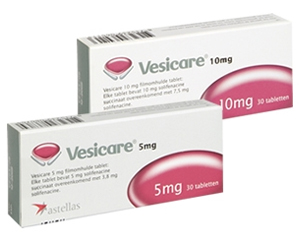
Vesicare
View Options
This website provides general information about medicines for educational purposes only. Always consult your doctor or pharmacist before taking any medication.
Choose Your Medicine
Select dosage and quantity
Online Consultation
Reviewed by a qualified physician
Fast, Discreet Delivery
Delivered to your door
Medical Information
About This Medicine
Vesicare is a prescription medicine containing solifenacin succinate, used to treat the symptoms of overactive bladder (OAB) in adults. It belongs to a class of drugs known as antimuscarinics (or anticholinergics), which work by relaxing the smooth muscle of the bladder wall and reducing involuntary contractions. Vesicare is available as 5mg and 10mg film-coated tablets taken once daily, making it a convenient option for long-term management of a condition that can significantly impact quality of life.
Understanding Overactive Bladder
Overactive bladder is a common condition characterised by a sudden and compelling urge to urinate that is difficult to suppress (urgency), often accompanied by urinary frequency (needing to pass urine more than eight times in 24 hours), nocturia (waking at night to urinate), and urge urinary incontinence (leakage that occurs with urgency). It affects both men and women and becomes more prevalent with age. The condition can cause embarrassment, anxiety, and disruption to everyday activities, work, and sleep.
How Solifenacin Works
The detrusor muscle in the bladder wall is controlled by muscarinic receptors, particularly the M3 subtype. In overactive bladder, these receptors are overstimulated, causing involuntary and premature contractions. Solifenacin selectively blocks M3 muscarinic receptors, reducing the frequency and force of these contractions without fully suppressing voluntary bladder control. This allows the bladder to fill to a greater capacity before the urge to void becomes overwhelming. Clinical trials have demonstrated that Vesicare significantly reduces the number of micturitions per day, urgency episodes, and incontinence episodes compared with placebo.
Benefits and Tolerability
Vesicare has been shown to improve both subjective symptoms and objective measures of bladder function. Patients typically begin to notice improvement within two to four weeks of starting treatment, with maximum benefit usually achieved by eight weeks. The once-daily formulation and the availability of two doses (5mg and 10mg) allow for flexible management, with the lower dose recommended as the starting dose for most patients. Tolerability is generally good, with dry mouth and constipation being the most frequently reported side effects.
Usage & Dosage
Vesicare tablets should be taken once daily, swallowed whole with water. They can be taken with or without food and should ideally be taken at the same time each day to help establish a routine and maintain consistent blood levels of the drug.
Starting Treatment and Dose Adjustment
Treatment is usually initiated at 5mg once daily. If symptoms are not adequately controlled after four to eight weeks and the lower dose is well tolerated, the dose may be increased to 10mg once daily as directed by your doctor. It is important not to increase the dose without medical advice. Vesicare should be used alongside bladder training techniques and lifestyle modifications such as reducing caffeine and alcohol intake, managing fluid intake appropriately, and pelvic floor exercises. These non-pharmacological measures can significantly enhance the effectiveness of drug treatment.
Missed Doses and Long-Term Use
If a dose is missed, take it as soon as you remember, provided the next scheduled dose is not within 12 hours. Do not take a double dose to make up for a missed one. Vesicare is intended for long-term use; however, its continued need should be reviewed periodically with your doctor. Some patients experience a lasting improvement after a course of treatment and may be able to reduce or stop the medication under medical supervision.
The standard starting dose is 5mg once daily. If the response is insufficient after four to eight weeks and the 5mg dose is well tolerated, the dose may be increased to 10mg once daily on medical advice.
In patients with severe renal impairment (creatinine clearance below 30 mL/min) or moderate hepatic impairment, the dose should not exceed 5mg daily. Vesicare is contraindicated in severe hepatic impairment. In patients taking potent CYP3A4 inhibitors such as ketoconazole, the maximum dose is 5mg daily. Vesicare is not recommended for use in children or adolescents. Elderly patients do not generally require dose adjustment, but greater caution is warranted.
Side Effects
Common Side Effects
- Dry mouth (most common)
- Constipation
- Nausea
- Dyspepsia (indigestion)
- Blurred vision
- Dry eyes
- Urinary tract infection
- Fatigue
Serious Side Effects
- Urinary retention: inability to pass urine - seek urgent medical attention
- Severe allergic reaction: swelling of the face, lips, throat, or tongue; difficulty breathing - call 999
- Angioedema (rapid swelling under the skin)
- QT interval prolongation (in predisposed patients), which may cause heart rhythm disturbances
- Hallucinations or confusion (particularly in elderly patients)
Warnings & Precautions
Vesicare should be used with caution in several clinical situations, and patients should discuss their full medical history with their prescriber before starting treatment.
Caution in Elderly Patients and Cognitive Effects
Anticholinergic medicines including solifenacin can cause confusion, disorientation, and memory difficulties, particularly in older adults. Evidence suggests that long-term use of anticholinergic drugs may be associated with an increased risk of dementia, though the causal relationship is not firmly established. The risks and benefits should be carefully reviewed in elderly patients, particularly those already taking other medicines with anticholinergic properties, as cumulative effects can be significant.
Precautions for Specific Medical Conditions
Vesicare should be used with caution in patients with clinically significant bladder outflow obstruction, as it carries a risk of precipitating urinary retention. It is also to be used with care in patients with reduced gastrointestinal motility (such as those with constipation or a history of bowel obstruction), hiatus hernia with reflux oesophagitis, autonomic neuropathy, or a history of QT interval prolongation. Patients with narrow-angle glaucoma should inform their ophthalmologist if Vesicare is being considered, as anticholinergics can raise intraocular pressure. Anyone who experiences severe abdominal pain, vomiting, or inability to pass stool while taking Vesicare should seek urgent medical review.
Contraindications
- Known hypersensitivity to solifenacin or any excipient
- Urinary retention
- Severe gastrointestinal conditions (including toxic megacolon)
- Myasthenia gravis
- Narrow-angle glaucoma not adequately controlled
- Severe hepatic impairment (Child-Pugh C)
- Patients on haemodialysis
- Severe renal impairment receiving more than 5mg daily
- Concurrent use with potent CYP3A4 inhibitors at doses above 5mg
Frequently Asked Questions
How long does it take for Vesicare to work?
Can I drink alcohol while taking Vesicare?
Is Vesicare suitable for men with prostate problems?
What is the difference between Vesicare 5mg and 10mg?
Can Vesicare cause memory problems?
Dr. Ross Elledge
General Practitioner · General & Family Medicine
Verified Healthcare Professional
TopDoctors Profile