
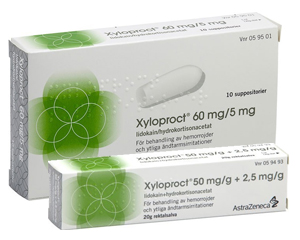
Xyloproct
View Options
This website provides general information about medicines for educational purposes only. Always consult your doctor or pharmacist before taking any medication.
Choose Your Medicine
Select dosage and quantity
Online Consultation
Reviewed by a qualified physician
Fast, Discreet Delivery
Delivered to your door
Medical Information
About This Medicine
Xyloproct is a prescription combination preparation used for the relief of symptoms associated with haemorrhoids (piles) and other ano-rectal conditions. It contains two active ingredients: lidocaine 5% (a local anaesthetic) and hydrocortisone acetate 0.275% (a mild topical corticosteroid). The combination of these two agents addresses both the pain and itching of perianal conditions and the underlying inflammation, making Xyloproct an effective short-term treatment for symptomatic relief. It is available in two formulations: an ointment and suppositories.
Haemorrhoids and Their Symptoms
Haemorrhoids are cushions of vascular tissue located in the anal canal that become symptomatic when they enlarge, prolapse, or become inflamed. Internal haemorrhoids arise above the dentate line and are not typically painful unless they prolapse and become strangulated. External haemorrhoids form below the dentate line, in skin richly supplied by somatic nerves, and are often painful, itchy, and associated with perianal discomfort. Both types can cause rectal bleeding, which typically appears as bright red blood on the toilet paper or in the pan following defaecation. Anal fissures - small tears in the lining of the anal canal - cause intense pain during and after bowel movements and may also be treated with Xyloproct.
How Lidocaine and Hydrocortisone Work Together
Lidocaine, at the 5% concentration used in Xyloproct, rapidly blocks sodium channels in the sensory nerve endings of the perianal skin and anal mucosa, providing fast-acting relief from pain, burning, and itching. The onset of local anaesthetic action is typically within a few minutes of application. Hydrocortisone acetate, a mild Class I topical corticosteroid, reduces inflammation, oedema, and pruritus at the site of application. It works by suppressing the release of inflammatory mediators and reducing capillary permeability in inflamed tissue. Together, these two components provide symptomatic relief across the full spectrum of perianal symptoms while the underlying condition heals.
Duration of Use and Additional Measures
Xyloproct is intended as a short-term treatment only, with a maximum recommended duration of seven days due to the risks associated with prolonged topical corticosteroid use in the perianal area. Alongside Xyloproct, patients are advised to increase dietary fibre and fluid intake to soften stools, avoid straining during defaecation, take sitz baths, and maintain good perianal hygiene. If symptoms persist, worsen, or if rectal bleeding is present, a medical review is essential to exclude serious underlying pathology.
Usage & Dosage
Xyloproct ointment is applied to the affected area around the anus and, using the rectal applicator provided, can also be inserted into the anal canal for internal haemorrhoids. The ointment should be applied two to four times daily, particularly in the morning, at night, and after each bowel movement.
Application of Ointment and Suppositories
For external haemorrhoids and perianal symptoms, apply a small amount of ointment to clean, dry skin around the anal area. For internal haemorrhoids or anal fissures affecting the lower anal canal, attach the rectal nozzle applicator and gently introduce the tip into the anus before squeezing a small amount of ointment into the canal. For suppositories: after a bowel movement, wash and dry the area, then insert one suppository into the rectum. Suppositories are particularly useful for internal haemorrhoids and provide sustained local drug release over several hours.
Hygiene and Supportive Measures
Good perianal hygiene is an important part of haemorrhoid management. Gently clean the anal area with warm water after each bowel movement; avoid vigorous wiping with dry toilet paper, which can worsen irritation. Use soft, unscented toilet tissue. Avoid sitting on hard surfaces for prolonged periods and elevate the legs when possible. Dietary changes such as increasing fruit, vegetables, and wholegrains, and drinking at least two litres of water per day, are essential supportive measures to reduce straining during defaecation and facilitate healing.
Ointment: apply a small amount to the affected area two to four times daily, including after each bowel movement and at bedtime. The maximum duration of treatment is seven days.
Suppositories: insert one suppository into the rectum up to three times daily. Again, maximum duration is seven days.
Xyloproct should not be used for longer than seven days due to the risk of skin thinning, telangiectasia, and steroid-induced skin changes from the hydrocortisone component. If symptoms persist beyond seven days, seek medical review. Xyloproct is not recommended for use in children without specific medical advice, and it should be used with particular caution in pregnant women, only if clearly necessary and under medical supervision.
Side Effects
Common Side Effects
- Local stinging or burning sensation on application (transient)
- Skin irritation or contact dermatitis at the application site
- Sensation of warmth
- Temporary increase in perianal itching on first application
- Sensitisation to lidocaine or other components (rare but may cause increased irritation with repeated use)
- Local oedema
Serious Side Effects
- Skin atrophy or thinning with prolonged use of the topical corticosteroid component
- Telangiectasia (dilated capillaries) with extended use
- Adrenal suppression (very rare with short-term topical use at low hydrocortisone concentrations, but possible with extensive application)
- Severe allergic reaction to lidocaine (rare; may cause contact sensitisation)
- Secondary infection of the perianal area (corticosteroids can mask signs of infection)
Warnings & Precautions
Xyloproct must not be used for longer than seven days, as prolonged application of corticosteroid-containing preparations to the perianal area can cause irreversible skin thinning, telangiectasia, and other steroid-related cutaneous changes.
Caution in Infection and Pregnancy
Topical corticosteroids should not be applied to infected skin, as they suppress the immune response and can allow bacterial, viral, or fungal infections to spread. If signs of perianal infection (increased pain, swelling, discharge, or fever) develop during use, Xyloproct should be stopped and medical review sought promptly. In pregnancy, topical corticosteroids should be used sparingly and for the shortest possible duration. Haemorrhoids are common in pregnancy, and a healthcare professional should assess whether Xyloproct or a corticosteroid-free topical preparation is more appropriate for the individual patient.
Rectal Bleeding and Underlying Conditions
Any rectal bleeding should be investigated before attributing it solely to haemorrhoids, particularly in adults over 40, those with a change in bowel habit, unexplained weight loss, or a family history of colorectal cancer. Do not assume that rectal bleeding is caused by haemorrhoids without medical assessment, particularly if it is associated with changes in stool consistency, colour, or frequency. Xyloproct treats symptoms but does not address the root cause of haemorrhoids, and definitive treatment (banding, sclerotherapy, or surgery) may be required for significant or recurrent haemorrhoids.
Contraindications
- Known hypersensitivity to lidocaine, amide local anaesthetics, hydrocortisone, or any excipient
- Perianal or anorectal infection (bacterial, viral including herpes simplex, or fungal such as candidiasis)
- Tuberculosis of the anal region
- Children under a specified age (unless directed by a physician)
- Use for more than seven days
- Known hypersensitivity to wool alcohols (the ointment contains lanolin)
- Perioral use or application to large body surface areas (risk of systemic absorption of hydrocortisone)
Frequently Asked Questions
How quickly does Xyloproct relieve haemorrhoid pain?
Can I use Xyloproct for longer than seven days?
Is Xyloproct safe to use during pregnancy?
Should I see a doctor before using Xyloproct?
What is the difference between Xyloproct ointment and suppositories?
Dr. Ross Elledge
General Practitioner · General & Family Medicine
Verified Healthcare Professional
TopDoctors Profile