
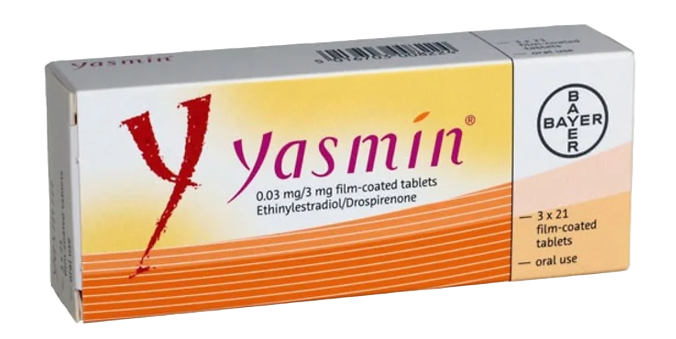
Yasmin
View Options
This website provides general information about medicines for educational purposes only. Always consult your doctor or pharmacist before taking any medication.
Choose Your Medicine
Select dosage and quantity
Online Consultation
Reviewed by a qualified physician
Fast, Discreet Delivery
Delivered to your door
Medical Information
About This Medicine
Yasmin is a combined oral contraceptive (COC) tablet containing two synthetic hormones: drospirenone 3mg and ethinylestradiol 30mcg. It belongs to the fourth-generation progestogen family, and its unique anti-mineralocorticoid progestogen sets it apart from many other contraceptive pills on the market.
How Yasmin Works
Yasmin prevents pregnancy through three complementary mechanisms. Primarily, it suppresses ovulation by inhibiting the mid-cycle surge of luteinising hormone (LH) and follicle-stimulating hormone (FSH). Additionally, it thickens cervical mucus to impede sperm penetration and alters the endometrial lining to reduce the likelihood of implantation should ovulation occur. When taken correctly and consistently, Yasmin is over 99% effective at preventing pregnancy.
The drospirenone component has a pharmacological profile similar to natural progesterone. Unlike some older progestogens, it has anti-androgenic and anti-mineralocorticoid properties, which means it counteracts the water-retaining effects of oestrogen. Many women find that Yasmin causes less bloating and fluid retention compared to pills containing levonorgestrel or norethisterone.
Additional Benefits
Beyond contraception, Yasmin is frequently prescribed to manage symptoms of premenstrual dysphoric disorder (PMDD), including mood changes, irritability, and physical bloating in the days before menstruation. It is also used off-label to improve acne and reduce excess facial or body hair (hirsutism) attributable to androgen activity.
Women who switch to Yasmin from other pills often report lighter, more regular, and less painful periods. The pill is taken on a 21-day active cycle followed by a seven-day hormone-free interval, during which a withdrawal bleed typically occurs.
Important Considerations
Because drospirenone has a mild potassium-sparing effect, there is a potential risk of hyperkalaemia (raised blood potassium levels) when Yasmin is taken alongside ACE inhibitors, angiotensin-II receptor antagonists, potassium-sparing diuretics, or regular NSAIDs. Renal function and potassium levels should be checked in women taking these medicines concurrently.
Like all combined pills, Yasmin carries a small increased risk of venous thromboembolism (VTE). Women with a personal or family history of blood clots, those who smoke, or those with a BMI above 35 should discuss the risk-benefit balance carefully with their prescriber before starting Yasmin. The pill does not protect against sexually transmitted infections.
Usage & Dosage
Yasmin is taken orally, one tablet each day for 21 consecutive days, followed by a seven-day pill-free interval. During the pill-free interval, a withdrawal bleed usually occurs, though this is not a true menstrual period.
Starting Yasmin
If you are starting Yasmin on day one of your natural period, you are protected from pregnancy immediately. If you start on any other day, use additional contraception such as condoms for the first seven days. When switching from another combined pill, begin Yasmin the day after finishing your last active tablet, with no additional precautions needed. When switching from a progestogen-only pill (mini-pill), start Yasmin on any day and use extra protection for seven days.
Taking the Tablet Correctly
Swallow each tablet whole with water at roughly the same time each day. Consistency of timing is important for maximum efficacy. If you miss a tablet by fewer than 12 hours, take it as soon as you remember and continue as normal. If more than 12 hours have elapsed since a missed dose, follow the patient information leaflet guidance and use additional contraception for the next seven days. Certain medications can reduce Yasmin's effectiveness, including rifampicin, anticonvulsants such as phenytoin and carbamazepine, and St John's Wort. Inform your prescriber or pharmacist about all medicines and supplements you are taking.
The standard dose of Yasmin is one tablet (drospirenone 3mg / ethinylestradiol 30mcg) taken daily for 21 days, followed by a seven-day break. Yasmin is not available in different dose strengths in the UK; however, women who experience side effects may be offered an alternative formulation by their prescriber. There is no dose adjustment for body weight in routine use. Because drospirenone has mild potassium-sparing activity, women with mild to moderate renal impairment should be assessed for hyperkalaemia risk before and during use. Yasmin is not recommended for women with severe renal or hepatic impairment, or with adrenal insufficiency.
Side Effects
Common Side Effects
- Nausea, particularly during the first few weeks
- Breast tenderness or enlargement
- Headaches or migraines
- Mood changes, including low mood or irritability
- Reduced libido
- Spotting or breakthrough bleeding in the first cycles
- Contact lens intolerance due to corneal changes
Serious Side Effects
- Signs of venous thromboembolism: sudden leg pain or swelling, chest pain, breathlessness, seek emergency care immediately
- Arterial thromboembolism: stroke symptoms such as sudden facial drooping, arm weakness, or speech difficulty
- Hyperkalaemia: muscle weakness, irregular heartbeat, particularly relevant if taking potassium-sparing medicines
- Severe liver reactions: jaundice, right upper abdominal pain
- Hypertension: blood pressure should be monitored periodically during use
Warnings & Precautions
Yasmin contains drospirenone, which has anti-mineralocorticoid activity and can increase potassium levels. Women taking potassium-sparing diuretics, ACE inhibitors, angiotensin-II receptor antagonists, aldosterone antagonists, or heparin concurrently should have serum potassium checked during the first treatment cycle.
Thromboembolism Risk
Combined oral contraceptives are associated with a small but real increase in the risk of venous thromboembolism compared with non-users. The absolute risk remains low (approximately 3-9 per 10,000 women-years for COC users versus 2 per 10,000 for non-users). Risk is highest in the first year of use and when restarting after a break. Yasmin should be stopped at least four weeks before major elective surgery involving prolonged immobilisation.
Other Warnings
Yasmin should be used with caution in women with a history of depression. Blood pressure should be measured before starting and periodically during treatment. Yasmin is not recommended during breastfeeding as it may reduce milk supply. Women who develop severe hypertension, migraine with aura, or signs of hepatic dysfunction should discontinue the pill and seek medical advice promptly. Smoking significantly increases cardiovascular risk when using combined oral contraceptives.
Contraindications
- Current or past venous thromboembolism (DVT or pulmonary embolism)
- Known thrombophilic disorders (e.g. Factor V Leiden, protein C or S deficiency)
- Arterial thrombosis or history of stroke or myocardial infarction
- Migraine with aura
- Severe or uncontrolled hypertension
- Diabetes mellitus with vascular complications
- Severe hepatic disease or liver tumours
- Unexplained vaginal bleeding
- Breast cancer or oestrogen/progestogen-sensitive malignancy
- Hypersensitivity to drospirenone, ethinylestradiol, or any excipient
- Adrenal insufficiency
Frequently Asked Questions
Can Yasmin help with acne?
Is Yasmin different from other combined pills?
What should I do if I miss a Yasmin tablet?
Can I use Yasmin to delay my period?
Does Yasmin protect against sexually transmitted infections?
Dr. Ross Elledge
General Practitioner · General & Family Medicine
Verified Healthcare Professional
TopDoctors Profile