
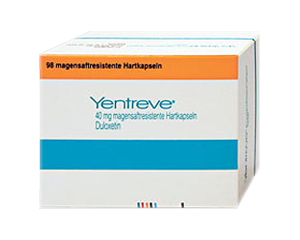
Yentreve
View Options
This website provides general information about medicines for educational purposes only. Always consult your doctor or pharmacist before taking any medication.
Choose Your Medicine
Select dosage and quantity
Online Consultation
Reviewed by a qualified physician
Fast, Discreet Delivery
Delivered to your door
Medical Information
About This Medicine
Yentreve is a prescription medicine containing duloxetine 20mg, formulated specifically for the treatment of moderate to severe stress urinary incontinence (SUI) in women. It belongs to the serotonin-noradrenaline reuptake inhibitor (SNRI) class of medicines, though in this context it is used for its effects on the lower urinary tract rather than as an antidepressant.
How Yentreve Works
Stress urinary incontinence occurs when the sphincter muscle at the base of the bladder is unable to remain closed during physical activities that raise intra-abdominal pressure, such as coughing, sneezing, laughing, or exercise. Duloxetine works centrally in the sacral spinal cord, inhibiting the reuptake of both serotonin and noradrenaline. This action enhances the activity of Onuf's nucleus, the region of the sacral spinal cord that controls the pudendal nerve. The result is increased resting and reflex tone in the urethral sphincter and pelvic floor muscles, reducing the frequency of involuntary leakage episodes.
Clinical trials demonstrated that Yentreve reduced the median frequency of incontinence episodes by approximately 50-64% compared with placebo. The greatest benefit is typically seen when pharmacological treatment is combined with pelvic floor muscle training (PFMT) exercises rather than used in isolation.
Who Yentreve Is For
Yentreve is indicated for women aged 18 and over who experience moderate to severe stress urinary incontinence. It is not indicated in men. It may be recommended when pelvic floor exercises alone have not provided adequate relief, or as part of a structured bladder rehabilitation programme supervised by a continence adviser or physiotherapist. Treatment is generally reviewed after two to four weeks and again at twelve weeks to assess response. The medicine is not intended for long-term indefinite use without periodic reassessment.
Usage & Dosage
Yentreve (duloxetine 20mg) is taken orally as a gastro-resistant capsule. The capsules must be swallowed whole and should not be chewed, crushed, or opened, as doing so would destroy the enteric coating designed to protect against gastric acid and improve tolerability.
Dosing Schedule
Treatment begins at 20mg twice daily for two weeks to minimise initial gastrointestinal side effects, before increasing to the recommended therapeutic dose of 40mg twice daily. Doses should be taken at approximately 12-hour intervals, morning and evening, with or without food. Taking the capsule with food may help reduce nausea, which is the most commonly reported side effect during the initiation phase.
Duration and Discontinuation
Yentreve should be assessed for benefit at 2-4 weeks and formally reviewed at 12 weeks. If the medicine is to be stopped, the dose should be tapered gradually over at least two weeks rather than discontinued abruptly, as sudden cessation can cause discontinuation symptoms such as dizziness, nausea, headache, and irritability. If you experience troublesome side effects early in treatment, speak to your prescriber before stopping, dose reduction may be more appropriate than immediate withdrawal.
The recommended starting dose of Yentreve is 20mg twice daily for two weeks. The maintenance dose is 40mg twice daily (total daily dose 80mg). Doses above 80mg per day are not recommended and do not confer additional benefit. Yentreve should be used with caution in women with hepatic impairment and is not recommended for those with significant liver disease. In women over 65 years or those with renal impairment (creatinine clearance below 30mL/min), a dose reduction or specialist review may be required. Always follow the prescriber's specific instructions, which may differ from the standard regimen if there are individual clinical considerations.
Side Effects
Common Side Effects
- Nausea (most common, usually improves after 1-2 weeks)
- Dry mouth
- Constipation
- Dizziness or light-headedness
- Insomnia or sleep disturbance
- Headache
- Fatigue or somnolence
Serious Side Effects
- Suicidal ideation or worsening mood: report any new or worsening depression, anxiety, or thoughts of self-harm to your prescriber promptly
- Serotonin syndrome: agitation, rapid heart rate, tremor, sweating, and muscle rigidity, seek emergency care
- Hepatotoxicity: jaundice, dark urine, right upper abdominal pain, stop the medicine and seek immediate medical advice
- Hypertension or tachycardia: blood pressure should be monitored in susceptible women
Warnings & Precautions
Yentreve carries a precautionary warning regarding mood and behaviour. Although duloxetine is used here for urinary incontinence rather than depression, SNRIs can influence mood and, in rare cases, trigger suicidal ideation, particularly during the initiation period. Women with a personal or family history of bipolar disorder, mania, or previous suicidal thoughts should be monitored closely.
Interaction Risks
Yentreve must not be combined with monoamine oxidase inhibitors (MAOIs) -- a gap of at least 14 days is required between stopping a MAOI and starting duloxetine, and at least five days after stopping duloxetine before starting a MAOI. Combining Yentreve with other serotonergic medicines (including SSRIs, triptans, tramadol, and linezolid) increases the risk of serotonin syndrome. Concomitant use of thioridazine or fluvoxamine is contraindicated due to pharmacokinetic interactions.
Additional Precautions
Women with uncontrolled narrow-angle glaucoma should not use Yentreve. The medicine can raise blood pressure and heart rate; cardiovascular status should be assessed before and periodically during treatment. Alcohol consumption should be minimised as it potentiates the central nervous system effects of duloxetine. Yentreve is not recommended during pregnancy or breastfeeding.
Contraindications
- Known hypersensitivity to duloxetine or any excipient
- Concurrent use of monoamine oxidase inhibitors (MAOIs)
- Uncontrolled narrow-angle glaucoma
- Severe hepatic impairment (Child-Pugh C)
- Severe renal impairment (creatinine clearance below 30mL/min) unless specialist-supervised
- Concurrent use of fluvoxamine or thioridazine
- Pregnancy or breastfeeding
- Use in men (not indicated)
Frequently Asked Questions
How long does Yentreve take to work?
Can Yentreve be used alongside pelvic floor exercises?
Will I experience withdrawal symptoms if I stop Yentreve?
Is Yentreve the same as an antidepressant?
Can Yentreve affect my mood?
Dr. Ross Elledge
General Practitioner · General & Family Medicine
Verified Healthcare Professional
TopDoctors Profile