
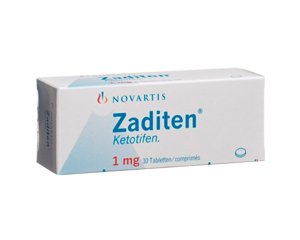
Zaditen
View Options
This website provides general information about medicines for educational purposes only. Always consult your doctor or pharmacist before taking any medication.
Choose Your Medicine
Select dosage and quantity
Online Consultation
Reviewed by a qualified physician
Fast, Discreet Delivery
Delivered to your door
Medical Information
About This Medicine
Zaditen is a medicine containing ketotifen, an antihistamine with additional mast cell stabilising properties. It is available in two distinct formulations in the UK: oral tablets and syrup (ketotifen 1mg, used for allergic asthma and seasonal allergic rhinitis) and eye drops (ketotifen 0.025%), used for the relief of allergic conjunctivitis.
Mechanism of Action
Ketotifen works through two complementary mechanisms that distinguish it from conventional antihistamines. First, it competitively antagonises histamine H1 receptors, blocking the effects of histamine released during an allergic reaction. Second, it stabilises mast cells, reducing the release of inflammatory mediators such as histamine, leukotrienes, and prostaglandins in response to allergen exposure. This dual action makes Zaditen useful in both the acute relief of allergic symptoms and the longer-term prophylactic management of allergic conditions.
Unlike sodium cromoglicate, which acts purely as a mast cell stabiliser, Zaditen provides both immediate antihistamine relief and preventative stabilisation. Unlike bronchodilators such as salbutamol, Zaditen does not directly relax airway smooth muscle but reduces the underlying allergic inflammatory response over time.
Uses of Zaditen
Oral Zaditen is used as prophylactic (preventative) treatment in patients with atopic asthma, particularly when symptoms are triggered by allergen exposure. It is also used for the management of perennial and seasonal allergic rhinitis, including hay fever. For asthma, it should be considered an add-on therapy rather than a replacement for established inhaled corticosteroids or bronchodilators; any existing asthma medicines must not be discontinued abruptly when starting Zaditen.
Sedation and Tolerance
Ketotifen is notably sedating, particularly in the first few weeks of treatment. This central nervous system effect is mediated by its antihistamine properties and tends to diminish with continued use as tolerance develops. Patients should be warned not to drive or operate machinery until they know how Zaditen affects them. The sedative effect can be useful in individuals who struggle with sleep due to allergic symptoms at night.
Usage & Dosage
Zaditen tablets and syrup are taken orally. The standard adult dose is one tablet (1mg) twice daily, one in the morning and one in the evening, preferably with food to reduce gastrointestinal side effects.
Initiation and Titration
Because ketotifen can cause significant sedation at the outset, some prescribers recommend starting with the evening dose alone for the first week, then introducing the morning dose once the patient has assessed their tolerance. This is particularly relevant for people who need to drive or perform skilled tasks during the day.
Duration of Treatment
Zaditen is a prophylactic treatment requiring several weeks of consistent use before the full anti-allergic benefit is realised, typically four to six weeks. Patients should not expect immediate relief of asthma symptoms and must continue any existing inhaled therapy throughout. If Zaditen is to be discontinued, the dose should be tapered gradually over two to four weeks. Abrupt withdrawal in asthmatic patients can precipitate a rebound exacerbation.
For allergic conjunctivitis, Zaditen eye drops (0.025% ketotifen) are instilled one drop in each affected eye twice daily. Contact lenses should be removed before using the eye drops and not reinserted for at least 15 minutes.
Zaditen oral tablets and syrup: standard adult dose is 1mg (one tablet or 5mL syrup) twice daily. In children aged three years and above, the recommended syrup dose is 0.05mg/kg body weight twice daily up to a maximum of 1mg twice daily. Children under three years are not routinely treated with oral Zaditen without specialist input. For the eye drop formulation (0.025%), one drop is instilled in each affected eye twice daily in adults and children aged three and over. No dose adjustment is specified for renal impairment in the oral form, though caution is advised. Zaditen syrup contains sucrose and is not appropriate for patients with sucrose-isomaltase deficiency.
Side Effects
Common Side Effects
- Drowsiness or sedation (most common, especially early in treatment)
- Dry mouth
- Weight gain or increased appetite
- Dizziness
- Headache
- Nausea or mild gastrointestinal upset
- Irritability or excitability (particularly in children)
Serious Side Effects
- Severe skin reactions: Stevens-Johnson syndrome (rare), rash, blistering, mucosal ulceration
- Seizures (rare, particularly in children with a history of epilepsy)
- Paradoxical bronchospasm if existing asthma medication is stopped abruptly on starting Zaditen
- Hepatotoxicity (very rare): jaundice or elevated liver enzymes
Warnings & Precautions
Zaditen has sedating properties that are most pronounced during the first weeks of treatment. Patients should be advised not to drive, operate heavy machinery, or consume alcohol during this period, as the combination significantly potentiates central nervous system depression.
Asthma Management
Oral Zaditen is not a rescue treatment and must not be used to relieve acute asthma attacks. Patients with asthma should retain access to their short-acting beta-2 agonist (e.g. salbutamol) at all times. Crucially, existing inhaled corticosteroids or bronchodilators must not be discontinued when starting Zaditen, even if symptoms improve. Abrupt withdrawal of established asthma medicines in someone starting Zaditen can precipitate a life-threatening exacerbation.
Paediatric Considerations
Children taking Zaditen may experience paradoxical excitability or restlessness rather than sedation. Parents should be informed of this possibility. Zaditen syrup is appropriate for younger children who cannot swallow tablets, but a specialist paediatrician or allergist should supervise initiation. The oral formulation interacts with central nervous system depressants (including benzodiazepines, opioids, and alcohol), which should be avoided or used with extreme caution.
Contraindications
- Known hypersensitivity to ketotifen or any excipient
- Children under 3 years (oral formulation) without specialist supervision
- Driving or operating machinery until sedation is assessed and tolerated
- Concurrent use with oral antidiabetic medicines (risk of thrombocytopenia -- monitor if unavoidable)
- Severe hepatic impairment (limited data)
- Pregnancy (first trimester) -- use only if benefit clearly outweighs risk
- Breastfeeding -- ketotifen passes into breast milk
Frequently Asked Questions
How long does Zaditen take to work for asthma?
Can I take Zaditen if I drive regularly?
Can Zaditen be used for hay fever?
Is Zaditen safe for children?
What happens if I stop Zaditen suddenly?
Dr. Ross Elledge
General Practitioner · General & Family Medicine
Verified Healthcare Professional
TopDoctors Profile