
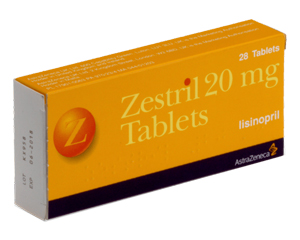
Zestril
View Options
This website provides general information about medicines for educational purposes only. Always consult your doctor or pharmacist before taking any medication.
Choose Your Medicine
Select dosage and quantity
Online Consultation
Reviewed by a qualified physician
Fast, Discreet Delivery
Delivered to your door
Medical Information
About This Medicine
Zestril is a brand of lisinopril, an angiotensin-converting enzyme (ACE) inhibitor used to treat hypertension (high blood pressure), heart failure, and to protect the heart following a myocardial infarction (heart attack). It is available in tablet strengths of 2.5mg, 5mg, 10mg, and 20mg.
Mechanism of Action
Lisinopril works by blocking the enzyme responsible for converting angiotensin I into angiotensin II. Angiotensin II is a potent vasoconstrictor, a substance that narrows blood vessels and triggers the release of aldosterone, a hormone that causes sodium and water retention. By inhibiting ACE, lisinopril lowers levels of angiotensin II, leading to vasodilation, reduced blood pressure, and decreased cardiac workload. It also prevents the degradation of bradykinin, which contributes both to its blood pressure-lowering effect and to its most common side effect, a persistent dry cough.
Clinical Applications
In hypertension, Zestril reduces blood pressure effectively either as monotherapy or in combination with other antihypertensives. It is a first-line treatment in guidelines for patients with diabetes or chronic kidney disease, as ACE inhibitors provide renoprotective benefits beyond blood pressure reduction, slowing the progression of diabetic nephropathy.
In heart failure, lisinopril reduces symptoms, hospitalisation rates, and mortality when used alongside diuretics and, where appropriate, beta-blockers. Following a myocardial infarction, Zestril started within 24 hours of the event and continued long-term has been shown to reduce early and late mortality, particularly in patients with left ventricular dysfunction.
Patient Considerations
Zestril is generally well tolerated but carries a risk of first-dose hypotension, particularly in volume-depleted patients or those also taking diuretics. Renal function and electrolytes, particularly potassium, must be monitored at baseline and periodically during treatment, as ACE inhibitors can cause hyperkalaemia and acute kidney injury in susceptible individuals.
Usage & Dosage
Zestril is taken orally, once daily. Tablets may be taken with or without food. Consistent timing each day helps maintain stable plasma levels and optimal blood pressure control.
Hypertension
In adults, the usual starting dose is 10mg once daily. The dose may be titrated upward at intervals of two to four weeks to 20mg or 40mg once daily depending on blood pressure response. In older patients or those with renal impairment, a lower starting dose of 2.5mg is often appropriate to reduce the risk of first-dose hypotension.
Heart Failure and Post-Myocardial Infarction
For heart failure, treatment typically begins at 2.5mg once daily under close supervision, titrating slowly to a target of 5-20mg as tolerated. Following a heart attack, Zestril is initiated at 5mg within 24 hours, followed by 5mg after 24 hours, then 10mg after 48 hours, and then 10mg once daily for at least six weeks. Blood pressure, renal function, and serum potassium should be measured before starting Zestril and after any dose change. Patients should be advised to report signs of angioedema (swelling of the face, lips, tongue, or throat) promptly, as this is a rare but potentially life-threatening reaction.
Zestril (lisinopril) is available in 2.5mg, 5mg, 10mg, and 20mg tablets.
Hypertension: starting dose 10mg once daily; usual maintenance 20mg once daily; maximum 40mg licensed in most UK indications.
Heart failure: starting dose 2.5-5mg once daily; target 10-20mg once daily.
Post-MI: 5mg within 24 hours, titrating to 10mg daily for six weeks minimum.
Renal impairment: dose must be reduced in proportion to creatinine clearance. For CrCl 10-30mL/min, start at 2.5-5mg; for CrCl below 10mL/min (including dialysis), use only under specialist supervision.
The elderly: start at 2.5mg and titrate cautiously.
Side Effects
Common Side Effects
- Persistent dry cough (affects up to 20% of patients, class effect of ACE inhibitors)
- Dizziness or light-headedness, especially on standing (orthostatic hypotension)
- Headache
- Fatigue
- Nausea or diarrhoea
- Elevated serum potassium (hyperkalaemia)
- Raised creatinine (transient rise in renal function markers)
Serious Side Effects
- Angioedema: sudden swelling of face, lips, tongue, or throat, stop Zestril immediately and seek emergency treatment
- Acute kidney injury: particularly in patients with renal artery stenosis or volume depletion
- Severe hyperkalaemia: can cause life-threatening cardiac arrhythmias
- Neutropenia or agranulocytosis (rare, particularly in patients with autoimmune conditions or renal impairment)
- Teratogenicity: Zestril must not be used in pregnancy, causes foetal renal dysplasia
Warnings & Precautions
Zestril is contraindicated in pregnancy. ACE inhibitors cause foetal renal dysplasia, oligohydramnios, limb contractures, and neonatal death when used in the second or third trimester. Women of childbearing potential must use effective contraception during treatment, and Zestril should be discontinued as soon as pregnancy is confirmed.
Hyperkalaemia and Renal Monitoring
Lisinopril reduces aldosterone activity and can raise serum potassium. The risk is significantly increased when combined with potassium-sparing diuretics (e.g. spironolactone, amiloride), potassium supplements, or other medicines that raise potassium levels. Renal function and electrolytes should be checked before starting treatment, after each dose increase, and periodically during long-term therapy.
Renal Artery Stenosis
In patients with bilateral renal artery stenosis or significant stenosis of the artery to a single functioning kidney, lisinopril can precipitate acute renal failure. It should be used with extreme caution in these patients and only under specialist supervision. Patients who develop angioedema with any ACE inhibitor should not be rechallenged with lisinopril, as this reaction can be life-threatening.
Contraindications
- History of angioedema (ACE inhibitor-associated or hereditary angioedema)
- Pregnancy (any trimester -- teratogenic)
- Concomitant use with aliskiren in patients with diabetes or renal impairment
- Concomitant use with sacubitril/valsartan (within 36 hours)
- Bilateral renal artery stenosis or stenosis of artery to single kidney
- Severe aortic stenosis or hypertrophic obstructive cardiomyopathy
- Hypersensitivity to lisinopril, any ACE inhibitor, or any excipient
- Severe hyperkalaemia
- Haemodynamically significant valvular heart disease
Frequently Asked Questions
Why does Zestril cause a dry cough?
How quickly does Zestril lower blood pressure?
Is Zestril safe if I have diabetes?
Can I take Zestril with ibuprofen or other anti-inflammatory medicines?
What should I do if I miss a dose of Zestril?
Dr. Ross Elledge
General Practitioner · General & Family Medicine
Verified Healthcare Professional
TopDoctors Profile