
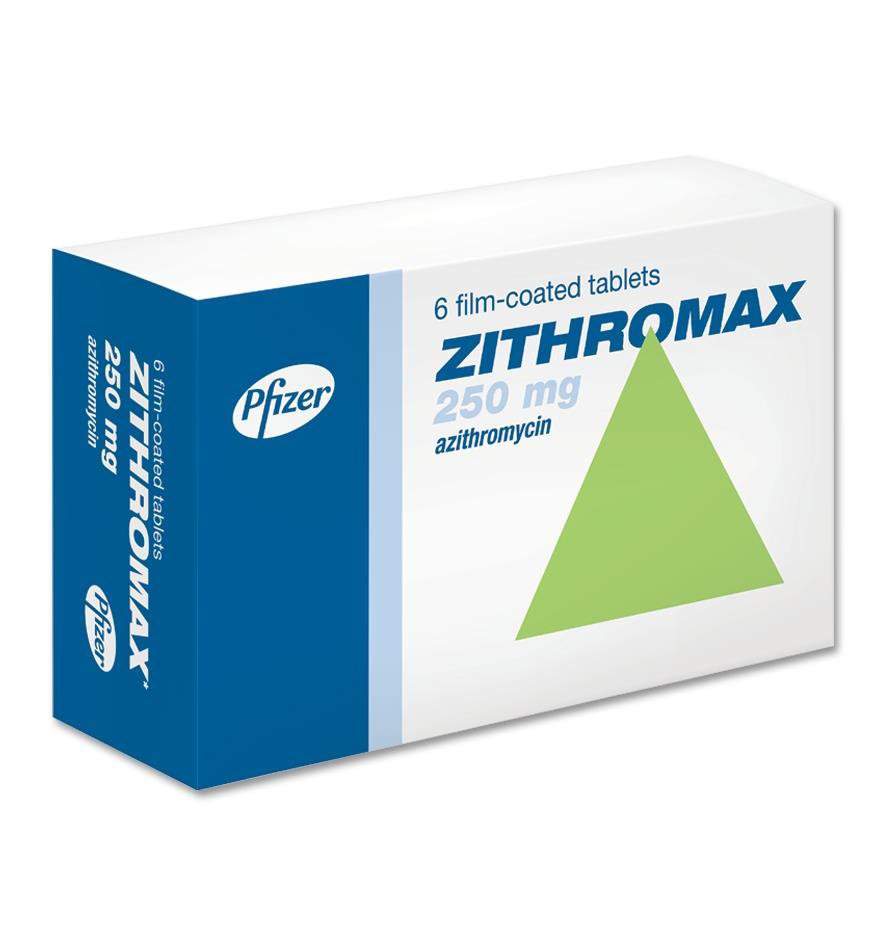
Zithromax
This website provides general information about medicines for educational purposes only. Always consult your doctor or pharmacist before taking any medication.
Choose Your Medicine
Select dosage and quantity
Online Consultation
Reviewed by a qualified physician
Fast, Discreet Delivery
Delivered to your door
Medical Information
About This Medicine
Zithromax is the branded formulation of azithromycin, a macrolide antibiotic with an exceptionally long tissue half-life that allows short treatment courses. A three-day or single-dose course provides effective antibiotic concentrations at the site of infection for up to ten days. Azithromycin is used for respiratory tract infections, skin infections, chlamydia (single-dose treatment), and other susceptible infections.
Usage & Dosage
How to Take Azithromycin
For capsules, take one hour before or two hours after food for best absorption. Tablets and suspension can be taken with food. Complete the full course as prescribed.
The standard five-day course for most infections is 500 mg on the first day, followed by 250 mg once daily for four days. For a single-dose chlamydia treatment, 1 g is taken all at once. Take at the same time each day and do not skip doses, even if you feel better after a few days.
Standard: 500 mg on day 1, then 250 mg daily for 4 more days (total 1.5 g). Chlamydia: 1 g as a single dose. Community-acquired pneumonia: 500 mg daily for 3 days.
Side Effects
Common Side Effects
Common side effects include:
- Nausea
- Diarrhoea
- Abdominal pain
- Vomiting
These are usually mild and settle once the course is completed. Azithromycin can prolong the QT interval (a marker of electrical activity in the heart). While the risk is small at standard doses, caution is needed in patients with existing heart rhythm problems or those taking other QT-prolonging medicines. Tell your doctor if you experience palpitations or an irregular heartbeat.
Warnings & Precautions
Azithromycin can prolong the QT interval. Use with caution in patients with existing QT prolongation or taking other QT-prolonging drugs. Liver function monitoring may be needed for prolonged courses.
Contraindications
Contraindicated in known hypersensitivity to azithromycin, erythromycin, or other macrolides, and severe hepatic impairment.
Frequently Asked Questions
Why is the course only three days?
Dr. Ross Elledge
General Practitioner · General & Family Medicine
Verified Healthcare Professional
TopDoctors Profile