
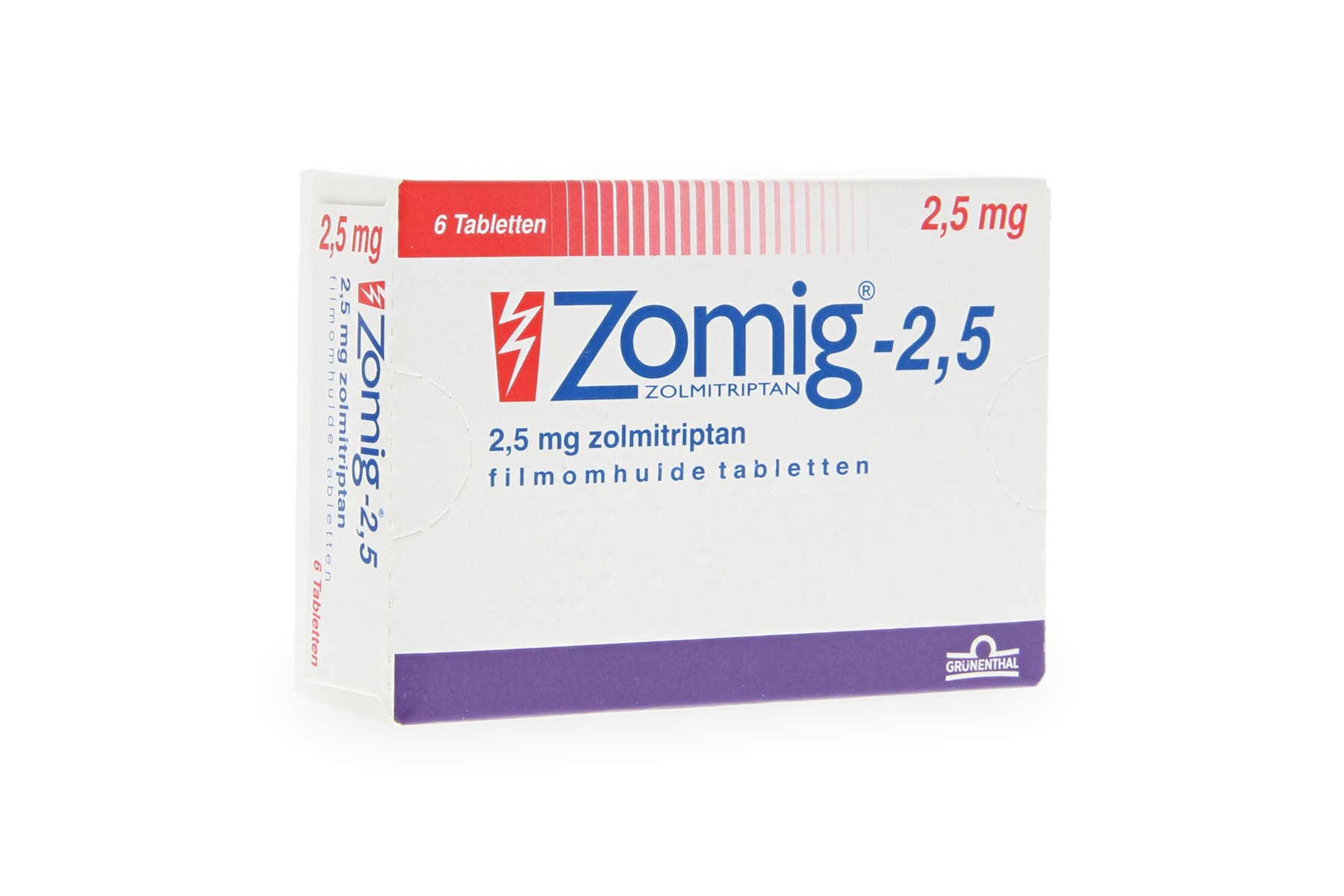
Zomig
View Options
This website provides general information about medicines for educational purposes only. Always consult your doctor or pharmacist before taking any medication.
Choose Your Medicine
Select dosage and quantity
Online Consultation
Reviewed by a qualified physician
Fast, Discreet Delivery
Delivered to your door
Medical Information
About This Medicine
Zomig is the branded formulation of zolmitriptan, a selective serotonin (5-HT1B/1D) receptor agonist (triptan) used for the acute treatment of migraine attacks, with or without aura. It is available in the UK in three distinct formulations: Zomig 2.5mg and 5mg standard tablets, Zomig Rapimelt 2.5mg orodispersible tablets (which dissolve on the tongue), and Zomig Nasal Spray 5mg per actuation.
The Zomig Range
The availability of multiple formulations makes Zomig versatile for different migraine presentations and patient preferences. The standard tablets are the most widely prescribed and appropriate for most patients. Zomig Rapimelt orodispersible tablets are particularly valuable for patients who experience severe nausea or vomiting at the start of a migraine, as they dissolve within seconds on the tongue without requiring water. The nasal spray offers the fastest absorption of the three formulations, bypassing the gastrointestinal tract entirely, and is useful when gastric emptying is delayed during a severe attack.
How Zomig Works
Zolmitriptan exerts its antimigraine effect by binding selectively to 5-HT1B receptors on the smooth muscle of intracranial blood vessels, causing vasoconstriction and reversing the pathological vasodilation that contributes to migraine pain. It additionally acts at 5-HT1D receptors on trigeminal nerve endings, blocking the release of neuropeptides such as calcitonin gene-related peptide (CGRP) and substance P. The combined peripheral and central action addresses both the vascular and neurological components of a migraine attack.
Effectiveness
Zomig is effective in the majority of patients, with clinical trials showing freedom from pain at two hours in approximately 35-40% of patients taking 2.5mg, rising to around 42-44% with 5mg. Consistent early use at the onset of headache, rather than waiting for pain to become severe, is associated with better outcomes and a lower rate of headache recurrence.
Usage & Dosage
Zomig should be taken at the onset of the headache phase of a migraine. Do not take it during the prodrome or aura; wait until the headache has begun. Early treatment when pain is mild tends to produce better outcomes than waiting for headache to become severe.
Standard Tablets
Swallow Zomig 2.5mg or 5mg tablets whole with a drink of water. The recommended starting dose is 2.5mg. If the headache returns after initial relief, a second dose (2.5mg or 5mg) may be taken at least two hours after the first. Do not exceed 10mg in any 24-hour period.
Zomig Rapimelt Orodispersible Tablets
Place the Rapimelt tablet on the tongue and allow it to dissolve, it typically dissolves within seconds and can be swallowed with saliva. No water is needed. This formulation is particularly convenient during attacks accompanied by nausea.
Zomig Nasal Spray
Blow the nose gently to clear the nasal passages. Insert the nozzle into one nostril and press the plunger firmly to deliver one 5mg dose. Breathe normally, do not sniff or inhale forcefully. If a second dose is needed, use it at least two hours later. Maximum two sprays (10mg) in 24 hours.
Zomig standard and Rapimelt tablets: recommended initial dose 2.5mg; maximum single dose 5mg; maximum daily dose 10mg.
Zomig Nasal Spray: 5mg per actuation; maximum two actuations (10mg) in 24 hours.
In patients with moderate to severe hepatic impairment, the maximum dose per attack should not exceed 5mg. Zomig is not recommended in severe hepatic impairment.
No dose adjustment is required for renal impairment or in elderly patients, though caution is advised in the elderly due to increased cardiovascular risk. Zomig is not routinely recommended in children under 12.
Side Effects
Common Side Effects
- Tingling, numbness, or paraesthesia in the limbs or face
- Sensation of heaviness, pressure, or tightness in the chest, throat, or jaw
- Dizziness
- Dry mouth
- Drowsiness or fatigue
- Nausea
- Nasal irritation, stinging, or bitter taste (nasal spray only)
Serious Side Effects
- Chest pain or prolonged chest tightness: may indicate coronary vasospasm, seek urgent medical assessment
- Serotonin syndrome (if combined with serotonergic agents): confusion, agitation, tremor, hyperthermia
- Ischaemic events: stroke, TIA, or myocardial infarction (rare but documented)
- Hypertensive crisis: particularly in patients with undiagnosed or uncontrolled hypertension
Warnings & Precautions
Zomig should only be used once a diagnosis of migraine has been established by a doctor. Do not self-diagnose or use Zomig for severe headache of unknown cause, as other serious conditions such as subarachnoid haemorrhage can mimic migraine. Seek medical attention if your headache pattern changes or if you experience the most severe headache of your life.
Cardiovascular Safety
The vasoconstricting properties of zolmitriptan mean that Zomig is contraindicated in patients with coronary artery disease, previous myocardial infarction, angina, peripheral vascular disease, or previous stroke or TIA. Patients with multiple cardiovascular risk factors who have not been formally assessed should be evaluated before starting Zomig. If chest pain or tightness occurs after use, stop the medicine and seek emergency assessment.
Medication Overuse Headache
Using Zomig on more than 10 days per month risks developing medication overuse headache (MOH), a chronic daily headache condition that paradoxically results from overuse of acute headache treatments. If you are using triptans or other headache medicines frequently, discuss preventative migraine treatment with your GP or neurologist. Zomig should not be used within 24 hours of another triptan or within two weeks of stopping a monoamine oxidase inhibitor (MAOI).
Contraindications
- Confirmed or suspected ischaemic heart disease, angina, or previous MI
- Coronary artery vasospasm
- Peripheral vascular disease
- Previous stroke or TIA
- Uncontrolled hypertension
- Hemiplegic or basilar migraine
- Concurrent or recent (within 14 days) MAOI use
- Use within 24 hours of another triptan or ergotamine-containing medicine
- Severe hepatic impairment
- Hypersensitivity to zolmitriptan or any excipient
Frequently Asked Questions
Which Zomig formulation is best for me?
How is Zomig different from other triptans such as sumatriptan?
Can I take Zomig during the aura phase of my migraine?
Is it safe to drive after taking Zomig?
What if Zomig does not work for my migraine?
Dr. Ross Elledge
General Practitioner · General & Family Medicine
Verified Healthcare Professional
TopDoctors Profile