Alli
Incl. online consultation, medicine and discreet delivery
View Options
The medical information on this site is provided for educational purposes. It does not replace a face-to-face consultation with your GP or specialist. Always follow the advice of your prescribing doctor and read the patient information leaflet supplied with your medication.
Choose Your Medicine
Select dosage and quantity
Online Consultation
Reviewed by a qualified physician
Fast, Discreet Delivery
Delivered to your door
Medical Information
About This Medicine
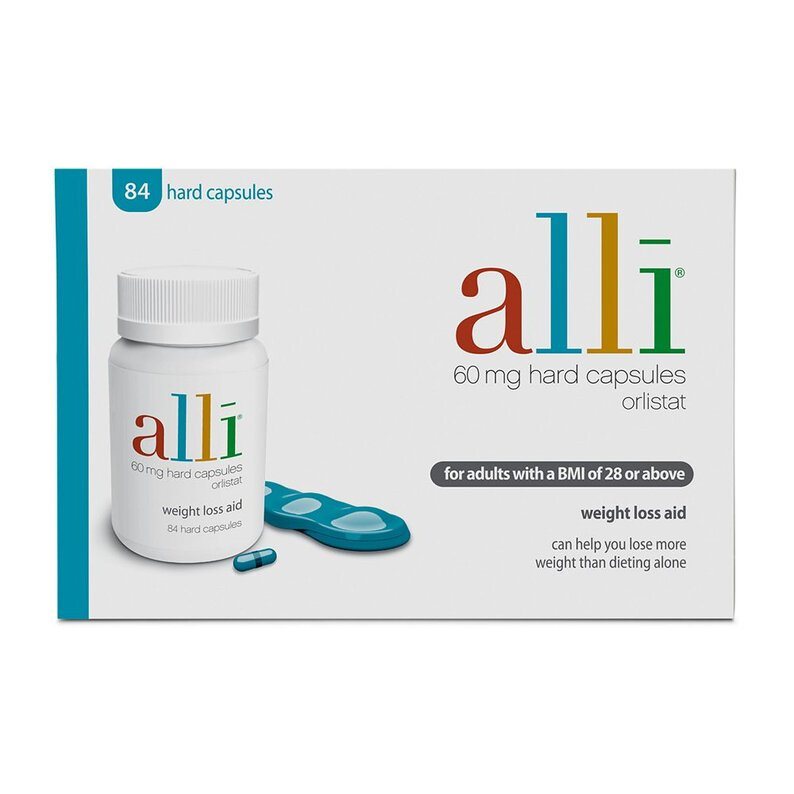
Alli contains orlistat 60 mg, a lipase inhibitor used as an aid to weight management in overweight adults (BMI of 28 or above) in conjunction with a reduced-calorie, lower-fat diet.
It is available without prescription from pharmacies and is intended for adults aged 18 and over.
Orlistat works in the gastrointestinal tract by inhibiting pancreatic and gastric lipases, the enzymes that break down dietary fat (triglycerides) into absorbable fatty acids and monoglycerides.
By blocking approximately 25 per cent of dietary fat from being absorbed, the undigested fat passes through the gut and is excreted in the stool.
This creates a calorie deficit that, combined with dietary changes, supports gradual weight loss.
Clinical studies have shown that orlistat 60 mg, used alongside a reduced-calorie diet, produces modestly greater weight loss than diet alone.
Alli is not a substitute for healthy eating and exercise but rather a tool that reinforces dietary adherence by providing immediate, tangible feedback if fat intake exceeds recommended levels.
Usage & Dosage
Take one Alli capsule with water immediately before, during, or up to one hour after each main meal, up to a maximum of three capsules daily.
If you skip a meal or eat a meal containing no fat, do not take the capsule.
Your daily fat intake should be distributed roughly equally across your three main meals, with no more than about 15 grams of fat per meal.
Follow a nutritionally balanced, reduced-calorie diet in which approximately 30 per cent of calories come from fat.
A multivitamin supplement taken at bedtime is recommended, as orlistat may reduce the absorption of fat-soluble vitamins (A, D, E, and K).
If you do not lose weight after 12 weeks, consult your pharmacist or doctor.
One 60 mg capsule three times daily with each main meal containing fat. Do not exceed three capsules in 24 hours. If a meal is missed or contains no fat, omit the corresponding capsule.
Treatment should be discontinued after 12 weeks if less than 5 per cent of initial body weight has been lost. No dose adjustment is required for elderly patients.
Orlistat is not recommended in patients with chronic malabsorption syndrome or cholestasis.
Side Effects
Gastrointestinal side effects are the most commonly reported and directly relate to the mechanism of action.
They include oily or fatty stools, oily spotting on underwear, urgent or increased bowel movements, flatulence with oily discharge, and faecal incontinence.
These effects are more pronounced if dietary fat intake exceeds the recommended amount, and they serve as a self-regulating incentive to maintain a lower-fat diet.
These effects typically diminish over time as patients adjust their fat intake. Headache, upper respiratory infection, and hypoglycaemia (in patients with type 2 diabetes) have also been reported.
Rare adverse effects include allergic reactions, hepatitis, pancreatitis, oxalate nephropathy, and cholelithiasis.
Seek medical attention if you develop severe abdominal pain, jaundice, or dark urine.
Warnings & Precautions
Orlistat may reduce the absorption of fat-soluble vitamins and some medications, including oral contraceptives, levothyroxine, ciclosporin, and certain anticoagulants.
Take a daily multivitamin supplement at bedtime to compensate for reduced vitamin absorption. If you take levothyroxine, separate the doses by at least four hours.
If you are on warfarin, your INR should be monitored more frequently. Orlistat is not suitable during pregnancy or breastfeeding.
Patients with a history of kidney stones or hyperoxaluria should use orlistat with caution.
Contraindications
Alli is contraindicated in patients with chronic malabsorption syndrome, cholestasis, known hypersensitivity to orlistat or any excipient, and during pregnancy and breastfeeding.
It should not be used by patients taking ciclosporin, as orlistat significantly reduces ciclosporin absorption. It is not suitable for children or adolescents under 18 years of age.