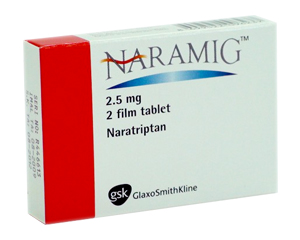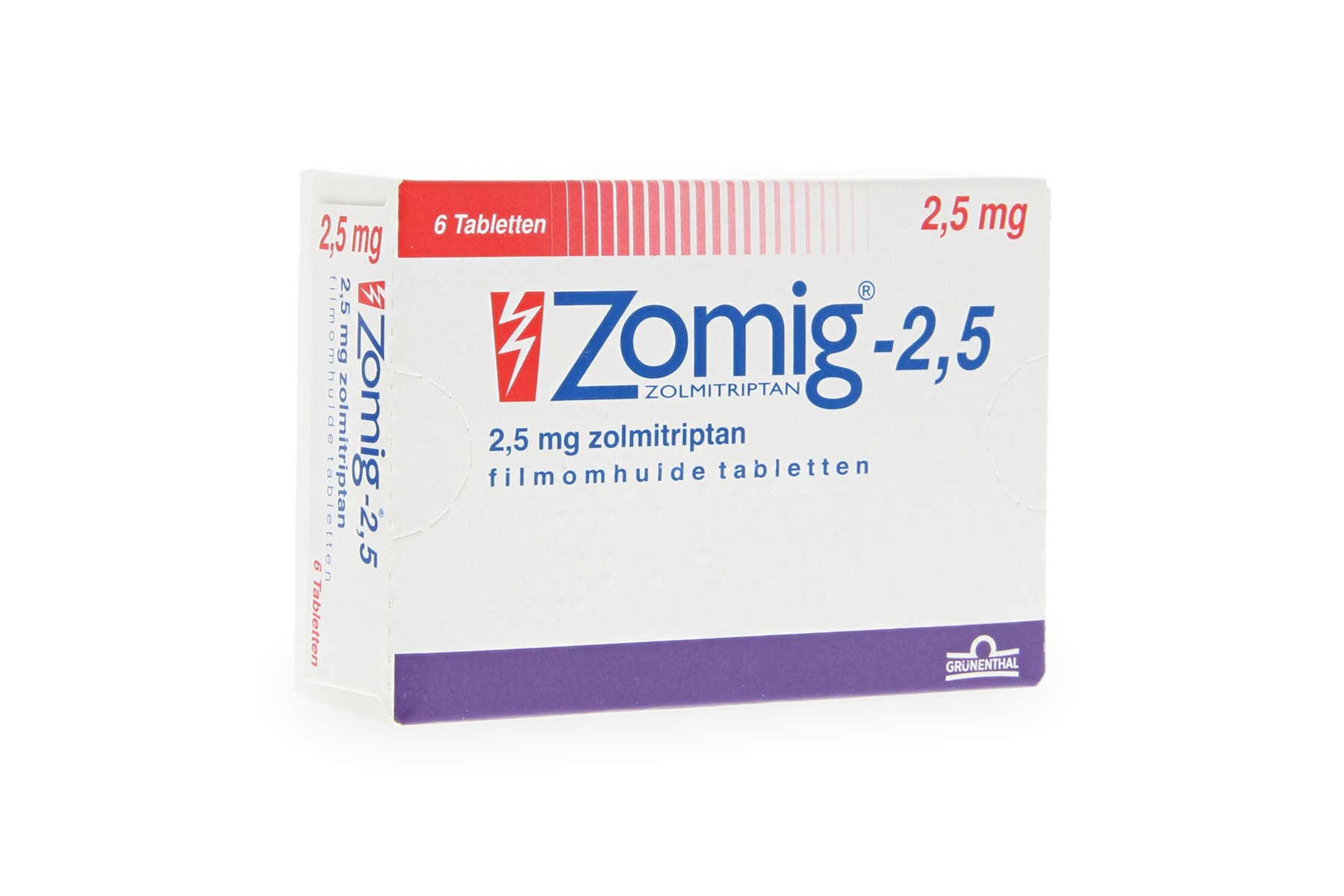
Zomig
Incl. online consultation, medicine and discreet delivery
View Options
The medical information on this site is provided for educational purposes. It does not replace a face-to-face consultation with your GP or specialist. Always follow the advice of your prescribing doctor and read the patient information leaflet supplied with your medication.
Choose Your Medicine
Select dosage and quantity
Online Consultation
Reviewed by a qualified physician
Fast, Discreet Delivery
Delivered to your door
Medical Information
About This Medicine
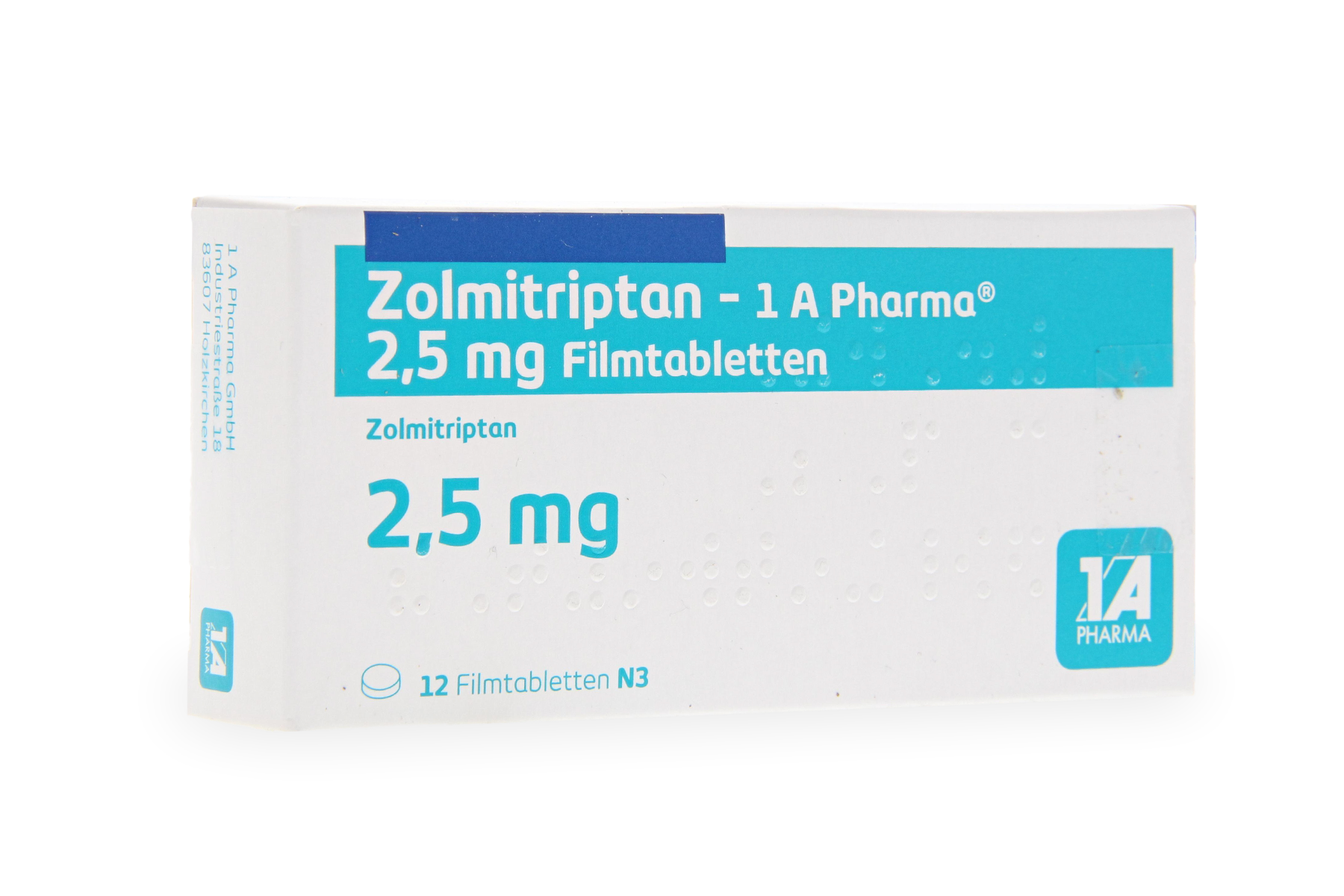
Zomig is the brand name for zolmitriptan, a selective serotonin (5-HT1B/1D) receptor agonist used for the acute treatment of migraine attacks, with or without aura.
It is not intended for the prophylactic treatment of migraine or the management of hemiplegic or basilar migraine.
Zolmitriptan works by stimulating serotonin receptors in the cranial blood vessels, causing vasoconstriction of dilated intracranial arteries that contribute to migraine pain.
It also inhibits the release of pro-inflammatory neuropeptides from trigeminal nerve endings and reduces pain signal transmission in the brainstem trigeminal pathways.
These combined actions address the underlying neurovascular mechanisms of migraine.
Zomig is available as conventional tablets, orodispersible tablets that dissolve on the tongue, and as a nasal spray.
The choice of formulation may depend on patient preference and the presence of nausea or vomiting, which can impair absorption of oral medications during a migraine attack.
Usage & Dosage
Take Zomig at the first sign of migraine headache. Swallow the conventional tablet whole with water, or place the orodispersible tablet on the tongue and allow it to dissolve before swallowing.
The nasal spray is administered into one nostril. If your migraine returns after initial relief, a second dose may be taken after at least 2 hours.
Do not take Zomig during the aura phase before the headache begins, as efficacy has not been established for this use.
The recommended starting dose is 2.5 mg. If the headache is not relieved after 2 hours, a second dose of 2.5 mg may be taken. The maximum dose in any 24-hour period is 10 mg.
For the nasal spray, the recommended dose is 5 mg into one nostril, with a maximum of 10 mg in 24 hours.
If there is no response to the first dose, a second dose should not be taken for the same attack. Dose reduction may be necessary in patients with moderate to severe hepatic impairment.
Side Effects
Common (1 in 10 to 1 in 100): abnormal sensations including tingling, warmth, heaviness, pressure, or tightness in the throat, neck, limbs, and chest; dizziness, drowsiness, headache, nausea, dry mouth, muscle weakness.
Uncommon (1 in 100 to 1 in 1,000): palpitations, tachycardia, abdominal pain. Rare (1 in 1,000 to 1 in 10,000): myocardial infarction, coronary artery vasospasm, hypersensitivity reactions.
Very rare (less than 1 in 10,000): gastrointestinal ischaemia. Chest tightness or pressure is usually benign but should be investigated if severe or persistent.
Warnings & Precautions
Zomig should not be used in patients with uncontrolled hypertension, ischaemic heart disease, peripheral vascular disease, or a history of cerebrovascular events.
Triptan-associated chest symptoms should be evaluated for coronary artery disease in patients with cardiovascular risk factors.
Overuse of triptans (on 10 or more days per month) may lead to medication-overuse headache. Do not use within 24 hours of another triptan or ergotamine.
Concomitant use with SSRIs or SNRIs may rarely cause serotonin syndrome; patients should be monitored for symptoms such as agitation, tremor, and hyperthermia.
Contraindications
Zomig is contraindicated in patients with ischaemic heart disease, coronary artery vasospasm (Prinzmetal angina), uncontrolled hypertension, history of stroke or transient ischaemic attack, peripheral vascular disease, and Wolff-Parkinson-White syndrome or arrhythmias associated with other accessory cardiac conduction pathways.
It must not be used concurrently with ergotamine-containing preparations or other triptans, or within 2 weeks of discontinuing an MAO-A inhibitor.