Maxalt
Incl. online consultation, medicine and discreet delivery
View Options
The medical information on this site is provided for educational purposes. It does not replace a face-to-face consultation with your GP or specialist. Always follow the advice of your prescribing doctor and read the patient information leaflet supplied with your medication.
Choose Your Medicine
Select dosage and quantity
Online Consultation
Reviewed by a qualified physician
Fast, Discreet Delivery
Delivered to your door
Medical Information
About This Medicine
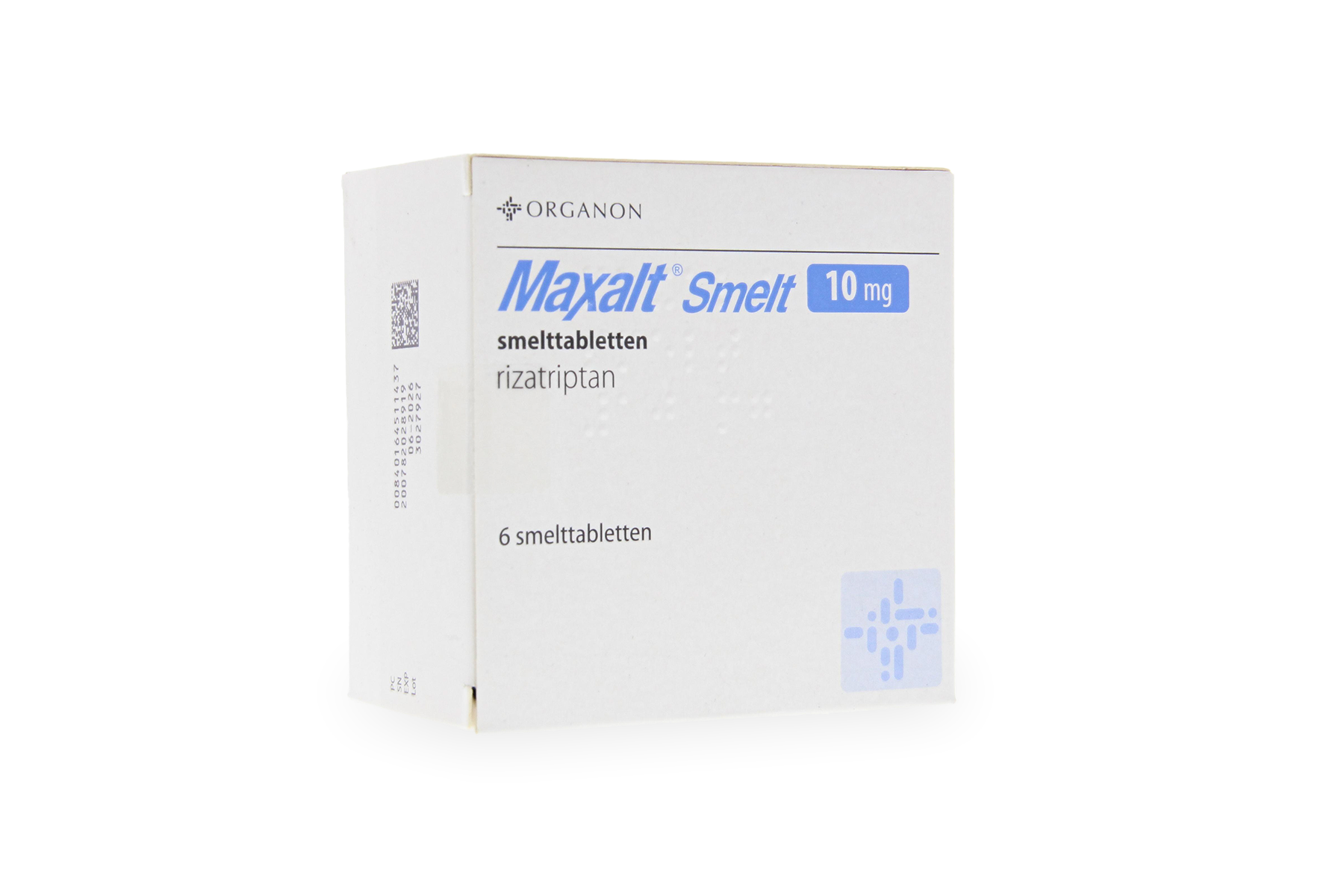
Maxalt contains rizatriptan, a selective serotonin (5-HT1B/1D) receptor agonist used for the acute treatment of migraine attacks with or without aura.
It belongs to the triptan class of medications, which are considered the gold-standard abortive therapy for moderate to severe migraine.
Rizatriptan works by stimulating serotonin receptors on intracranial blood vessels, causing vasoconstriction of dilated meningeal arteries that contribute to migraine headache.
It also inhibits the release of vasoactive neuropeptides from trigeminal nerve endings and reduces the transmission of pain signals in the brainstem trigeminal nucleus.
These combined actions address the underlying neurovascular mechanisms of migraine.
Maxalt is valued for its rapid onset of action, with many patients experiencing meaningful pain relief within 30 minutes.
It is available as a conventional tablet and as an orodispersible wafer (Maxalt-MLT), which dissolves on the tongue and can be taken without water, making it particularly convenient during episodes of nausea and vomiting that frequently accompany migraine.
Usage & Dosage
Take one Maxalt tablet or wafer at the onset of the headache phase of a migraine.
The tablet should be swallowed with water, while the wafer should be placed on the tongue and allowed to dissolve before swallowing.
If the migraine improves but then returns, a second dose may be taken at least two hours after the first. Do not exceed two doses in 24 hours.
Maxalt is intended for the acute treatment of migraine only; it should not be used prophylactically. If the first dose provides no relief at all, do not take a second dose for the same attack.
The recommended dose is 10 mg per attack. For patients taking propranolol concurrently, the dose should be reduced to 5 mg per attack, with a maximum of 10 mg in 24 hours.
If the migraine recurs after initial relief, a second 10 mg dose may be taken after at least 2 hours. Maximum dose: 20 mg in 24 hours (or 10 mg if taking propranolol).
Not recommended in children under 18 years.
Side Effects
Common (1 in 10 to 1 in 100): dizziness, somnolence, paraesthesia, headache (non-migraine), nausea, dry mouth, fatigue, chest tightness or pressure, flushing, palpitations, throat tightness, abdominal discomfort.
Uncommon (1 in 100 to 1 in 1,000): tachycardia, facial oedema, blurred vision, diarrhoea, dyspepsia, myalgia, neck pain, tremor, insomnia, pruritus.
Rare (1 in 1,000 to 1 in 10,000): myocardial ischaemia, coronary artery vasospasm, stroke, anaphylaxis, serotonin syndrome (when combined with serotonergic drugs).
Triptan sensations (chest pressure, heaviness) are usually benign but should be reported.
Warnings & Precautions
Maxalt should only be used when a clear diagnosis of migraine has been established. Do not use for hemiplegic or basilar migraine.
Assess cardiovascular risk before prescribing triptans; patients with uncontrolled hypertension, coronary artery disease, or significant cardiovascular risk factors should not use Maxalt.
Avoid concurrent use with ergotamine-containing medications (allow at least 6 hours between them) and with other triptans.
Monitor for signs of serotonin syndrome if co-prescribed with SSRIs, SNRIs, or other serotonergic agents.
Contraindications
Maxalt is contraindicated in patients with a history of myocardial infarction, coronary artery disease, coronary vasospasm (Prinzmetal's angina), peripheral vascular disease, cerebrovascular disease, uncontrolled hypertension, severe hepatic impairment, concurrent use of ergotamines or other triptans within 24 hours, concurrent MAO inhibitor use or use within 14 days, and hypersensitivity to rizatriptan or any excipient.