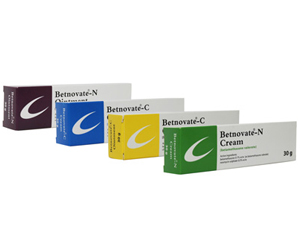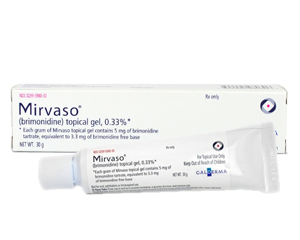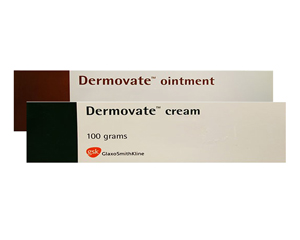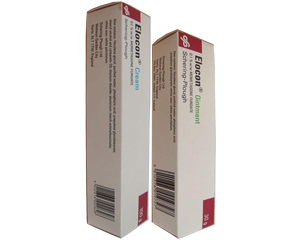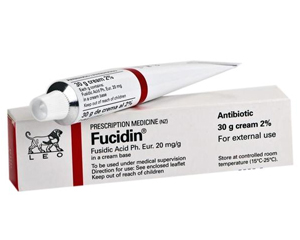
Fucidin
Incl. online consultation, medicine and discreet delivery
View Options
The medical information on this site is provided for educational purposes. It does not replace a face-to-face consultation with your GP or specialist. Always follow the advice of your prescribing doctor and read the patient information leaflet supplied with your medication.
Choose Your Medicine
Select dosage and quantity
Online Consultation
Reviewed by a qualified physician
Fast, Discreet Delivery
Delivered to your door
Medical Information
About This Medicine
Fucidin contains fusidic acid, a narrow-spectrum antibiotic with potent activity against Staphylococcus aureus, including many methicillin-resistant strains (MRSA).
It is available as a cream, ointment, and oral formulation and is primarily used to treat skin and soft-tissue infections.
Fusidic acid inhibits bacterial protein synthesis by blocking elongation factor G (EF-G) on the ribosome.
This bacteriostatic mechanism is distinct from other antibiotic classes, making fusidic acid useful when staphylococci are resistant to first-line agents.
Topical vs Oral Use
Topical Fucidin cream or ointment is prescribed for localised skin infections such as impetigo, infected eczema, infected wounds, and folliculitis.
It delivers high local drug concentrations with minimal systemic absorption.
Oral fusidic acid (Fucidin tablets or suspension) is reserved for deeper or more widespread staphylococcal infections, including bone and joint infections, and is usually prescribed in combination with another antibiotic to reduce the emergence of resistance.
Usage & Dosage
Topical Application
Clean and dry the affected area. Apply a thin layer of Fucidin cream or ointment to the infected skin two to three times daily.
You may cover the area with a sterile dressing if advised by your prescriber. Wash your hands before and after application.
Treatment Duration
Topical courses should not normally exceed 10 days. Prolonged use increases the risk of fusidic acid resistance developing.
If the infection has not resolved within 7 to 10 days, seek a clinical review.
Oral Tablets
Swallow tablets whole with a glass of water. Take with food to improve absorption and reduce nausea. Follow the dose and duration prescribed - do not stop early even if symptoms improve.
Topical (Cream or Ointment)
- Apply a thin layer to the affected area 2-3 times daily
- Usual course: 7-10 days
- Do not exceed 10 days without review
Oral (Adults)
- 500 mg three times daily; may increase to 1 g three times daily for severe infections
- Usually combined with a second antistaphylococcal agent
Oral (Children)
- Suspension dosed by body weight as directed by the prescriber
Renal and Hepatic Impairment
No dose adjustment for topical use. Oral fusidic acid should be used with caution in liver disease, as it is hepatically metabolised and may compete with bilirubin for excretion.
Side Effects
Topical - Common (up to 1 in 10 patients)
- Mild burning or stinging at the application site
- Local skin irritation, redness, or itching
Topical - Uncommon (up to 1 in 100 patients)
- Allergic contact dermatitis
- Worsening of eczema
Oral - Common (up to 1 in 10 patients)
- Nausea and gastrointestinal discomfort
- Abdominal pain
- Diarrhoea
Oral - Uncommon (up to 1 in 100 patients)
- Elevated liver enzymes
- Jaundice (usually reversible upon stopping the medication)
Oral - Rare (up to 1 in 1,000 patients)
- Hepatotoxicity, particularly with high doses or prolonged courses
- Blood dyscrasias (thrombocytopenia, agranulocytosis)
Liver function should be monitored during prolonged oral courses.
Warnings & Precautions
Antimicrobial Resistance
Resistance to fusidic acid develops readily when the drug is used alone or for prolonged courses. Limit topical use to a maximum of 10 days.
Oral fusidic acid should always be combined with a second agent.
Liver Function
Oral fusidic acid can cause dose-related jaundice and raised liver enzymes. This is more likely with higher doses and in patients with pre-existing hepatic impairment.
Monitor liver function before and during treatment.
Interactions
Oral fusidic acid interacts with statins. Concurrent use with statins must be avoided because of the risk of rhabdomyolysis.
If fusidic acid is essential, stop the statin for the duration of antibiotic treatment.
Pregnancy and Breastfeeding
Topical fusidic acid is unlikely to cause systemic effects and is considered low risk in pregnancy. Oral use should only proceed when the benefit clearly outweighs the risk.
Contraindications
Do not use Fucidin if you have a known allergy to fusidic acid, sodium fusidate, or any excipient in the formulation.
Oral fusidic acid is contraindicated in combination with statins (HMG-CoA reductase inhibitors) due to the risk of rhabdomyolysis.
Topical Fucidin should not be applied to the eyes.
The cream formulation contains cetyl alcohol and may irritate sensitive skin; the ointment (lanolin-based) should be avoided in lanolin-allergic patients.