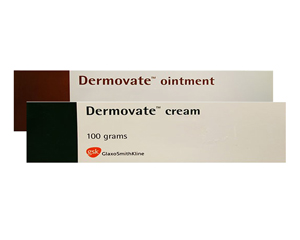
Dermovate
Incl. online consultation, medicine and discreet delivery
View Options
The medical information on this site is provided for educational purposes. It does not replace a face-to-face consultation with your GP or specialist. Always follow the advice of your prescribing doctor and read the patient information leaflet supplied with your medication.
Choose Your Medicine
Select dosage and quantity
Online Consultation
Reviewed by a qualified physician
Fast, Discreet Delivery
Delivered to your door
Medical Information
About This Medicine
Dermovate contains clobetasol propionate, a very potent (Group IV / super-potent) topical corticosteroid prescribed for the short-term treatment of severe, resistant inflammatory skin conditions that have not responded to less potent corticosteroids.
Indications include severe eczema, psoriasis (excluding widespread plaque psoriasis), lichen planus, discoid lupus erythematosus, and other dermatoses requiring a potent anti-inflammatory effect.
Clobetasol propionate exerts its anti-inflammatory, antipruritic, and vasoconstrictive effects by binding to intracellular glucocorticoid receptors, which suppress the transcription of pro-inflammatory mediators including cytokines, chemokines, and arachidonic acid metabolites.
This reduces swelling, redness, itching, and the underlying immune-mediated inflammatory process.
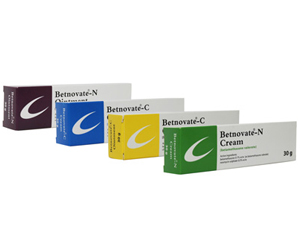
Dermovate is available as a cream, ointment, and scalp application. Owing to its very high potency, treatment is limited to short courses and small areas of skin.
Prolonged or inappropriate use can lead to serious local and systemic adverse effects, and Dermovate should always be used under specialist or experienced prescriber supervision.
Usage & Dosage
Apply a thin layer of Dermovate to the affected area once or twice daily, gently rubbing it in until absorbed.
Use the smallest effective amount for the shortest duration necessary to control symptoms. Treatment should not normally exceed four weeks.
Do not apply to the face, groin, or axillae unless specifically instructed by a dermatologist.
Do not use Dermovate under occlusive dressings unless directed, as this increases absorption and the risk of side effects. Wash hands after application unless treating the hands.
Apply thinly once or twice daily. The maximum recommended dose is 50 g per week. Treatment courses should not exceed four consecutive weeks.
If no improvement is seen within two weeks, reassess the diagnosis. When the condition improves, step down to a less potent corticosteroid as maintenance therapy.
For the scalp application, apply a small amount directly to the affected area of the scalp once or twice daily.
Side Effects
Common (1 in 10 to 1 in 100): application site burning, pruritus, skin atrophy, striae, telangiectasia (with prolonged use).
Uncommon (1 in 100 to 1 in 1,000): contact dermatitis, skin depigmentation, hypertrichosis, folliculitis, acneiform eruption.
Rare (1 in 1,000 to 1 in 10,000): hypothalamic-pituitary-adrenal (HPA) axis suppression, Cushing's syndrome (with extensive or prolonged use), glaucoma, cataract (if applied near the eyes), pustular psoriasis (upon withdrawal).
Local side effects are more likely with prolonged use, occlusion, or application to thin-skinned areas.
Warnings & Precautions
Do not use Dermovate on the face for more than five days. Avoid prolonged use on any body site, as skin atrophy, striae, and telangiectasia may develop and can be irreversible.
Abrupt discontinuation after prolonged use may cause rebound flares; taper to a less potent preparation.
Systemic absorption may occur with extensive use, leading to adrenal suppression, particularly in children and when used under occlusive dressings.
Infected skin lesions require appropriate antimicrobial treatment before or alongside Dermovate.
Contraindications
Dermovate is contraindicated in rosacea, acne vulgaris, perioral dermatitis, perianal and genital pruritus, primary viral skin infections (herpes simplex, varicella), primary bacterial skin infections, fungal skin infections, widespread plaque psoriasis, and hypersensitivity to clobetasol propionate or any excipient.
It must not be used in children under one year of age.