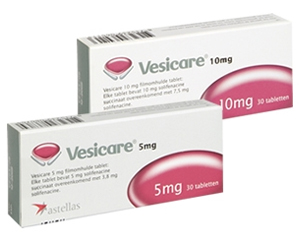
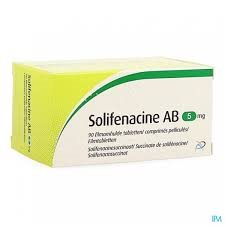
Solifenacin
Incl. online consultation, medicine and discreet delivery
View Options
The medical information on this site is provided for educational purposes. It does not replace a face-to-face consultation with your GP or specialist. Always follow the advice of your prescribing doctor and read the patient information leaflet supplied with your medication.
Choose Your Medicine
Select dosage and quantity
Online Consultation
Reviewed by a qualified physician
Fast, Discreet Delivery
Delivered to your door
Medical Information
About This Medicine
Solifenacin is an antimuscarinic agent prescribed for the symptomatic treatment of overactive bladder (OAB), a condition characterised by urinary urgency, increased daytime frequency, and nocturia, with or without urge incontinence.
It belongs to the competitive muscarinic receptor antagonist class and acts selectively on M3 receptors in the detrusor muscle of the bladder wall.
By blocking acetylcholine at these receptors, solifenacin reduces involuntary detrusor contractions that cause the sudden urge to urinate.
Clinical trials have demonstrated significant reductions in the number of urgency episodes, incontinence episodes, and overall micturition frequency compared with placebo.
The drug reaches peak plasma concentration within three to eight hours and has a terminal half-life of approximately 45 to 68 hours, which supports once-daily dosing.
Solifenacin is generally well tolerated and can meaningfully improve quality of life for patients who find their bladder symptoms distressing or socially limiting.
It is usually considered after conservative measures such as bladder training have been tried.
Usage & Dosage
Take one tablet once daily, swallowed whole with water.
It may be taken with or without food, at a time that suits your routine, though keeping to the same time each day helps maintain steady blood levels. Do not crush or chew the tablet.
If you miss a dose, skip it and take the next one at the usual time; do not double up. Allow several weeks before judging effectiveness, as symptom improvement is often gradual.
Continue any bladder training exercises your clinician has recommended alongside the medication.
The standard starting dose is 5 mg once daily. If symptoms are not adequately controlled after four weeks and the medication is well tolerated, the dose may be increased to 10 mg once daily.
In patients with moderate hepatic impairment or severe renal impairment, the maximum dose is 5 mg.
No dose adjustment is needed for mild to moderate renal impairment or for elderly patients, although careful monitoring is advised.
Side Effects
Common (affecting more than 1 in 10 patients): dry mouth. Common (1 in 10 to 1 in 100): constipation, nausea, dyspepsia, blurred vision.
Uncommon (1 in 100 to 1 in 1,000): urinary tract infection, drowsiness, dry eyes, gastro-oesophageal reflux, dry throat.
Rare: urinary retention, severe constipation or faecal impaction, and cognitive impairment in susceptible individuals.
Most anticholinergic side effects are dose-related and may improve with dose reduction. Report any difficulty passing urine or significant constipation promptly.
Warnings & Precautions
Use with caution in patients with clinically significant bladder outflow obstruction, as there is a risk of urinary retention.
Avoid or use with care in patients with severe gastrointestinal obstructive disorders, myasthenia gravis, or narrow-angle glaucoma.
Solifenacin can impair cognitive function, particularly in elderly patients already at risk; consider this before prescribing in frail older adults.
QT prolongation has been reported at supratherapeutic doses.
Concomitant use with potent CYP3A4 inhibitors such as ketoconazole increases solifenacin exposure; the dose should not exceed 5 mg in these patients.
Contraindications
Contraindicated in patients with urinary retention, severe gastrointestinal conditions including toxic megacolon, uncontrolled narrow-angle glaucoma, myasthenia gravis, severe hepatic impairment (Child-Pugh C), severe renal impairment requiring dialysis, and known hypersensitivity to solifenacin succinate or any excipient.
Do not use concomitantly with potent CYP3A4 inhibitors in patients with severe renal or moderate hepatic impairment.