Salofalk
Incl. online consultation, medicine and discreet delivery
View Options
The medical information on this site is provided for educational purposes. It does not replace a face-to-face consultation with your GP or specialist. Always follow the advice of your prescribing doctor and read the patient information leaflet supplied with your medication.
Choose Your Medicine
Select dosage and quantity
Online Consultation
Reviewed by a qualified physician
Fast, Discreet Delivery
Delivered to your door
Medical Information
About This Medicine
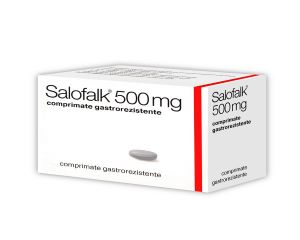
Salofalk contains mesalazine (also known as 5-aminosalicylic acid or 5-ASA), an anti-inflammatory agent used in the management of ulcerative colitis and Crohn's disease affecting the colon and ileum.
It is prescribed both for the treatment of acute flares and for long-term maintenance to prevent relapse.
Mesalazine acts locally on the intestinal lining, where it inhibits the production of pro-inflammatory prostaglandins and leukotrienes.
It also scavenges oxygen-derived free radicals that contribute to mucosal damage.
Because the drug works topically rather than systemically, it is generally well tolerated with fewer side effects than oral corticosteroids or immunosuppressants.
Salofalk is available as gastro-resistant tablets, granules, suppositories, and rectal foam. The formulation chosen depends on the location of disease activity.
Tablets and granules are coated to resist stomach acid and release mesalazine in the terminal ileum and colon. Suppositories and foam enemas deliver the drug directly to the rectum and sigmoid colon.
Usage & Dosage
Swallow Salofalk gastro-resistant tablets whole with a glass of water. Do not crush, break, or chew them, as the coating ensures the drug reaches the lower gut.
Granules may be placed on the tongue and swallowed with water without chewing. Take the tablets or granules with or shortly after food for best results.
For rectal formulations, use the suppository or foam preferably at bedtime after emptying the bowel. Retain the dose for as long as possible. Wash your hands before and after use.
Treatment duration and formulation will be guided by the site and severity of your disease; do not stop the medication without discussing it with your gastroenterologist, as this increases the risk of relapse.
For active ulcerative colitis, the usual adult oral dose is 1.5 g to 4 g daily in divided doses, depending on the severity of the flare. For maintenance of remission, 1.5 g to 2 g daily is standard.
Rectal suppositories are typically 500 mg to 1 g at bedtime. Rectal foam is usually one application once or twice daily. Children are dosed according to body weight under specialist guidance.
No dose adjustment is needed for mild hepatic or renal impairment, but mesalazine should be used with caution in moderate impairment and avoided in severe renal failure.
Side Effects
Common side effects (1 in 10 to 1 in 100) include headache, nausea, abdominal pain, diarrhoea, and flatulence. These are often mild and settle within the first few weeks of treatment.
Uncommon effects include skin rash, joint pain, and elevated liver enzymes.
Rarely, mesalazine may cause a paradoxical worsening of colitis symptoms, which can be difficult to distinguish from a disease flare; if symptoms worsen shortly after starting or increasing the dose, contact your doctor.
Serious but rare adverse effects include blood dyscrasias (low white cell or platelet counts), pancreatitis, pericarditis, myocarditis, and nephrotoxicity (interstitial nephritis).
Regular blood and kidney function monitoring is advised, particularly in the first year of treatment and in patients with pre-existing renal impairment.
Warnings & Precautions
Kidney function and a full blood count should be checked before starting mesalazine and monitored periodically during treatment, especially in the first year.
Report any unexplained bruising, bleeding, sore throat, or fever, as these may indicate a blood disorder. Patients with a known salicylate hypersensitivity should not take mesalazine.
Caution is required in patients with asthma, as rare bronchospasm has been reported. If you develop chest pain, breathlessness, or palpitations, seek medical advice promptly.
Contraindications
Salofalk is contraindicated in patients with known hypersensitivity to mesalazine, any other salicylate, or any of the excipients.
It must not be used in severe renal impairment (GFR below 20 mL/min) or severe hepatic impairment. Patients with a history of mesalazine-induced blood dyscrasias or myocarditis should avoid the drug.
Use in children under two years is generally not recommended without specialist supervision.