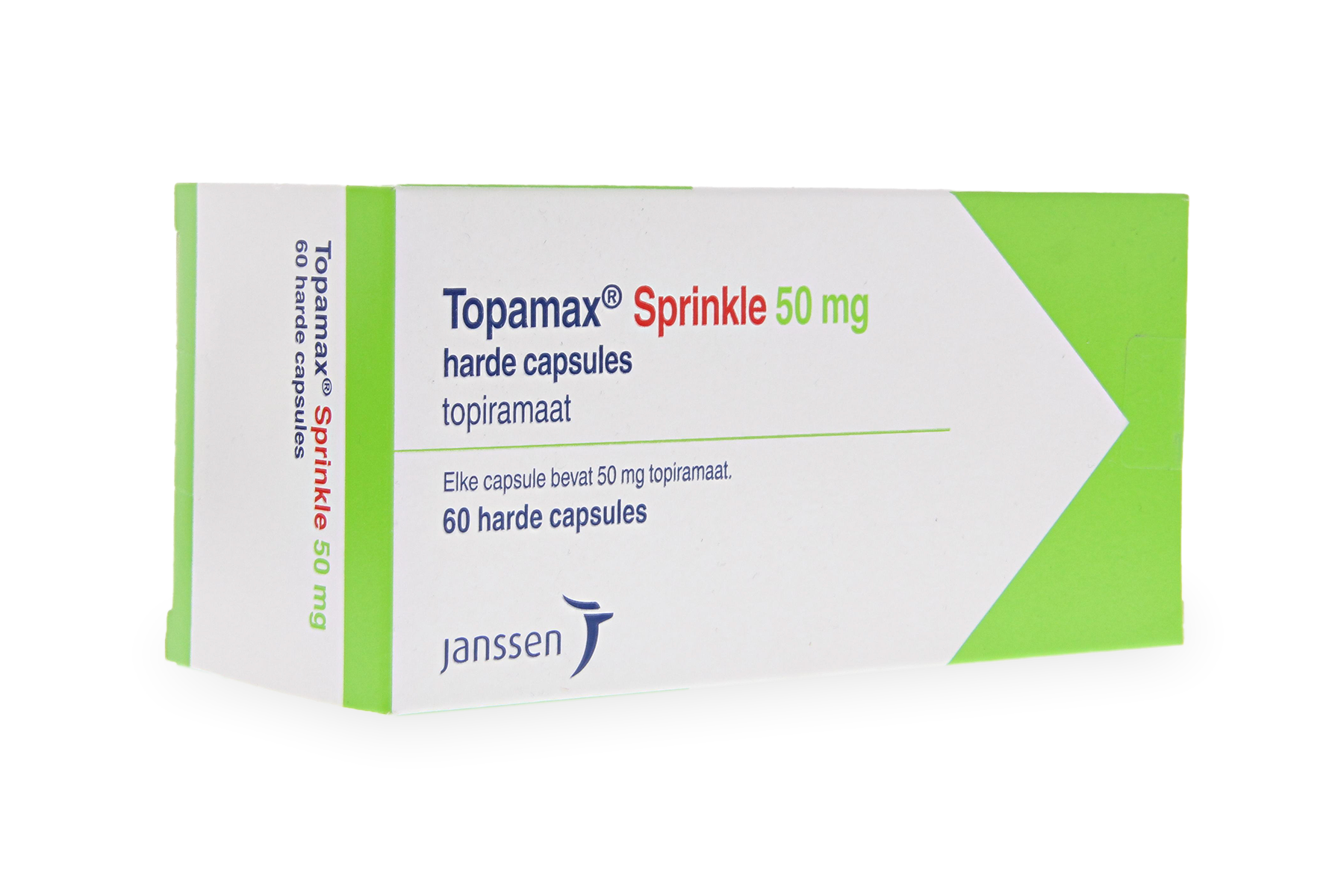
Topamax
Incl. online consultation, medicine and discreet delivery
View Options
The medical information on this site is provided for educational purposes. It does not replace a face-to-face consultation with your GP or specialist. Always follow the advice of your prescribing doctor and read the patient information leaflet supplied with your medication.
Choose Your Medicine
Select dosage and quantity
Online Consultation
Reviewed by a qualified physician
Fast, Discreet Delivery
Delivered to your door
Medical Information
About This Medicine
Topamax contains topiramate, an anticonvulsant prescribed for the prevention of epileptic seizures and the prophylaxis of migraine headaches.
It is used as monotherapy or as adjunctive treatment in adults and children with partial-onset seizures, primary generalised tonic-clonic seizures, and seizures associated with Lennox-Gastaut syndrome.
Topiramate exerts its effects through several mechanisms. It blocks voltage-gated sodium channels, reducing the abnormal neuronal firing that triggers seizures.
It also enhances the activity of gamma-aminobutyric acid (GABA) at certain receptor subtypes, which dampens excessive brain excitability.
Additionally, topiramate weakly inhibits carbonic anhydrase enzymes, though this action contributes more to its side-effect profile than to its therapeutic benefit.
For migraine prevention, Topamax reduces the frequency and severity of attacks in adults who experience four or more migraine days per month. It does not treat an acute migraine once it has started.
Most patients notice a meaningful reduction in migraine frequency within the first month, with the full preventive benefit developing over two to three months of regular use.
Usage & Dosage
Take Topamax by mouth with a full glass of water. It may be taken with or without food. Swallow tablets whole; do not crush or chew them, as this may leave a bitter taste and affect absorption.
If you are prescribed the sprinkle capsule formulation, you may open the capsule and sprinkle the contents on a small amount of soft food, then swallow immediately without chewing.
Your doctor will start you on a low dose and increase it gradually over several weeks. This slow titration reduces the likelihood of side effects, particularly cognitive difficulties and tingling.
Do not adjust the dose yourself. Take the medication at the same times each day, and do not stop it abruptly, as sudden withdrawal may provoke seizures.
For epilepsy in adults, treatment usually begins at 25 mg once daily at night, increasing by 25 to 50 mg at weekly or fortnightly intervals.
The usual maintenance dose is 100 to 200 mg twice daily, though some patients require up to 400 mg twice daily.
For migraine prophylaxis, the target dose is typically 50 mg twice daily, reached over four weeks. Children are dosed by body weight, starting at 0.5 to 1 mg/kg at night.
Dose reductions are necessary in moderate to severe kidney impairment.
Side Effects
Common side effects (affecting more than 1 in 10 patients) include tingling in the hands and feet (paraesthesia), drowsiness, fatigue, dizziness, and difficulty concentrating or finding words.
Nausea, diarrhoea, and reduced appetite with associated weight loss are also frequently reported.
Uncommon effects (1 in 100 to 1 in 1,000) include mood changes, depressed mood, agitation, kidney stones, and changes in taste perception.
The risk of kidney stones increases because topiramate inhibits carbonic anhydrase; maintaining good fluid intake reduces this risk.
Rare but serious effects include acute myopia with secondary angle-closure glaucoma, which typically presents in the first month of treatment with sudden eye pain and blurred vision.
Metabolic acidosis may develop, particularly in patients with kidney disease.
Oligohydrosis (decreased sweating) can occur in children and may lead to dangerous overheating during physical activity in warm conditions.
Suicidal thoughts have been reported with all antiepileptic drugs; report any mood changes to your doctor promptly.
Warnings & Precautions
Drink plenty of fluids throughout the day, as topiramate increases the risk of kidney stones. Avoid excessive heat exposure, especially in children, because the medication can reduce sweating.
Women of childbearing potential must use highly effective contraception, as topiramate carries a significant risk of cleft lip and cleft palate if taken during the first trimester of pregnancy.
Note that topiramate may reduce the efficacy of combined hormonal contraceptives; discuss suitable methods with your prescriber. Report sudden visual disturbances, eye pain, or redness immediately.
Contraindications
Topamax is contraindicated in patients with a known hypersensitivity to topiramate or any excipient in the formulation.
It must not be used for migraine prophylaxis during pregnancy or in women of childbearing potential who are not using highly effective contraception.
Caution is required in patients with hepatic impairment, a history of nephrolithiasis, or metabolic acidosis.
Concurrent use with other carbonic anhydrase inhibitors such as acetazolamide should be avoided.