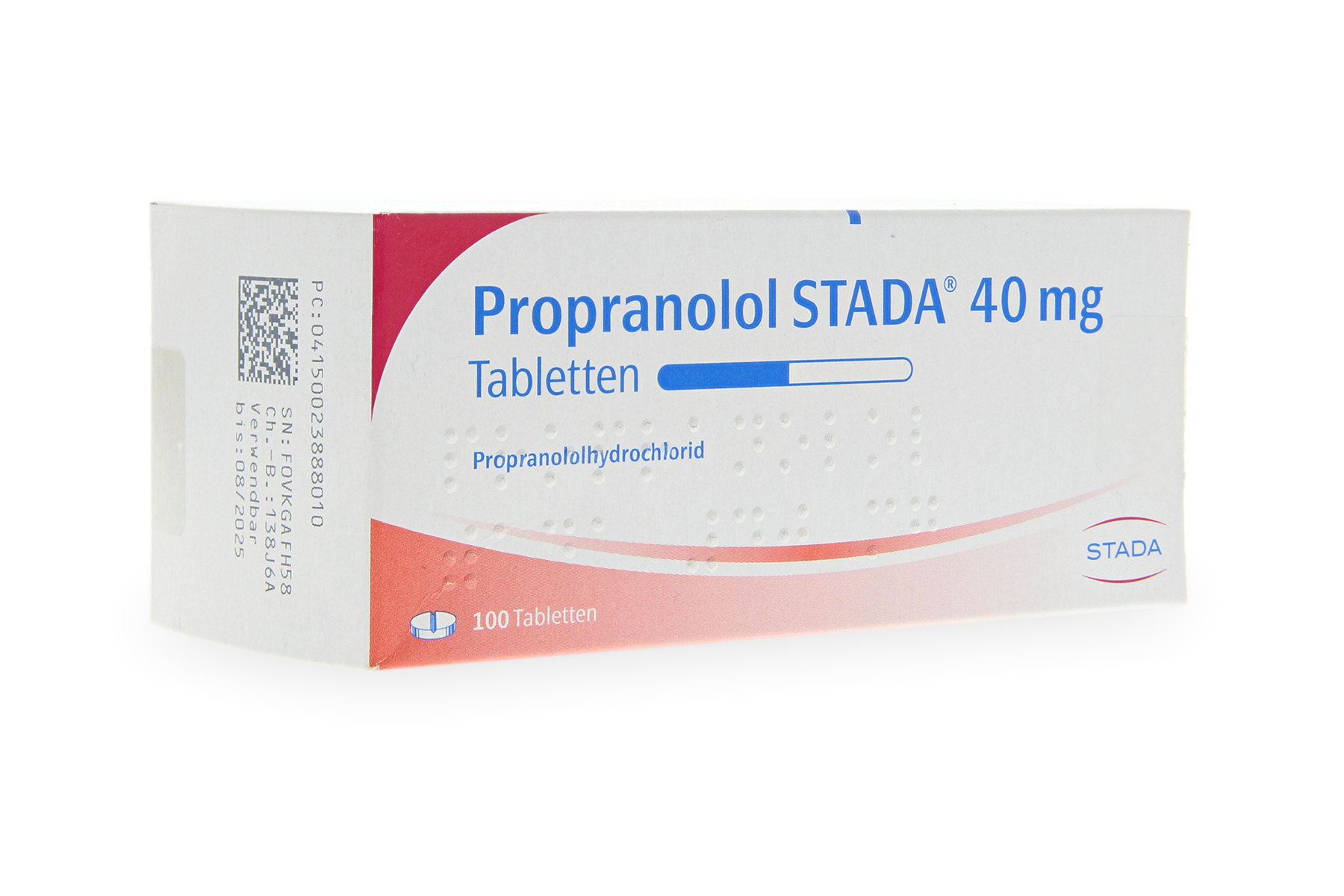
Propranolol
Incl. online consultation, medicine and discreet delivery
View Options
The medical information on this site is provided for educational purposes. It does not replace a face-to-face consultation with your GP or specialist. Always follow the advice of your prescribing doctor and read the patient information leaflet supplied with your medication.
Choose Your Medicine
Select dosage and quantity
Online Consultation
Reviewed by a qualified physician
Fast, Discreet Delivery
Delivered to your door
Medical Information
About This Medicine
Propranolol is a non-selective beta-adrenergic receptor blocker, widely used in medicine for decades.
It works by blocking both beta-1 receptors in the heart and beta-2 receptors in the peripheral vasculature and bronchial smooth muscle.
This dual blockade reduces heart rate, contractility, and myocardial oxygen demand, lowering blood pressure and dampening the physical symptoms of stress.
Propranolol is prescribed for a broad range of conditions, including high blood pressure (hypertension), angina pectoris, cardiac arrhythmias, essential tremor, and migraine prophylaxis.
It also helps manage the symptomatic control of thyrotoxicosis, anxiety-related tachycardia, and phaeochromocytoma (as an adjunct with an alpha-blocker).
Its non-selective nature means it may not be suitable for patients with asthma or chronic obstructive pulmonary disease (COPD) due to the risk of bronchospasm.
Propranolol is available in immediate-release tablets, typically taken two to three times daily, and modified-release capsules, taken once daily.
The modified-release formulation offers convenience and improved adherence for long-term conditions.
Propranolol is a prescription-only medicine, issued by an EU-authorised doctor after an online consultation.
Usage & Dosage
Take propranolol at the same time each day, with or shortly after food, to improve absorption and reduce gastrointestinal discomfort. Swallow tablets or capsules whole with water.
Do not crush or chew modified-release capsules. For situational anxiety, such as performance anxiety, a single dose of 10 mg to 40 mg can be taken approximately 30 to 60 minutes before the event.
Never stop taking propranolol suddenly, as abrupt withdrawal can cause rebound hypertension, worsening angina, or even a myocardial infarction in susceptible individuals.
If discontinuation is needed, your prescriber will gradually reduce the dose over one to two weeks.
This gradual reduction is crucial, especially for patients with coronary artery disease or heart failure.
Propranolol dosage varies significantly by indication and is individualised.
For hypertension, the initial dose is typically 80 mg twice daily (or 80 mg modified-release once daily), increasing as needed to a maximum of 320 mg daily.
For angina pectoris, the dose is usually 40 mg two to three times daily, or 80 mg to 320 mg daily in divided doses, aiming for a heart rate of 55-60 beats per minute during moderate exertion.
For migraine prophylaxis, effective doses range from 40 mg two to three times daily (or 80 mg to 160 mg modified-release once daily), with a maximum daily dose of 240 mg.
For essential tremor, the dose starts at 40 mg twice daily, increasing up to 160 mg daily. For anxiety, 40 mg can be taken one to three times daily.
For cardiac arrhythmias, 10 mg to 40 mg three to four times daily is common with immediate-release formulations.
In thyrotoxicosis, 10 mg to 40 mg three to four times daily helps control symptoms. Doses should be adjusted in patients with hepatic impairment due to extensive liver metabolism.
For elderly patients, treatment should start with lower doses, such as 40 mg twice daily, and be carefully monitored for bradycardia and hypotension.
Renal impairment usually does not require significant dose adjustment.
Side Effects
Common side effects of propranolol include fatigue, cold extremities, bradycardia (slow heart rate), dizziness, nausea, diarrhoea, sleep disturbances including vivid dreams, and impotence.
These symptoms are usually mild and may lessen over time as your body adjusts to the medication.
Uncommon side effects include bronchospasm (particularly in patients with underlying airways disease), worsening of peripheral vascular disease, hypoglycaemia (especially in fasting patients or those on insulin), depression, confusion, and visual disturbances.
Beta-blockers may mask the warning signs of hypoglycaemia, notably tachycardia.
Rare side effects include heart block, exacerbation of psoriasis, alopecia (hair loss), and thrombocytopenia (low platelet count).
If you experience any severe or persistent side effects, contact your prescriber immediately.
Warnings & Precautions
Do not stop propranolol abruptly. Propranolol should be used with extreme caution, if at all, in patients with asthma or severe COPD, as beta-2 blockade may precipitate bronchospasm.
It can mask the symptoms of hypoglycaemia in diabetic patients, particularly tachycardia, so blood glucose levels should be monitored closely.
Use with caution in patients with first-degree heart block, peripheral vascular disease, Raynaud's phenomenon, or hepatic impairment.
Inform your anaesthetist if you are taking propranolol before any surgery. Alcohol can enhance the blood pressure-lowering effect of propranolol and may cause dizziness.
Always inform your prescriber about all other medications you are taking, including over-the-counter medicines and eye drops containing beta-blockers.
Contraindications
Propranolol is contraindicated in patients with uncontrolled heart failure, cardiogenic shock, second or third-degree heart block, sick sinus syndrome, severe bradycardia (heart rate below 50 beats per minute at rest), and untreated phaeochromocytoma (unless combined with an alpha-blocker).
It is also contraindicated in metabolic acidosis, severe hypotension, severe peripheral arterial disease, and asthma or a history of bronchospasm.
Hypersensitivity to propranolol or any excipient is also a contraindication.
Severe Raynaud's syndrome or Prinzmetal's angina may also be contraindications, as propranolol can worsen circulation or vasospasm.
Propranolol must not be stopped suddenly, especially in patients with coronary heart disease, due to the risk of rebound effects such as acute angina pectoris or myocardial infarction.
Caution is advised in patients with psoriasis due to possible exacerbation.
Frequently Asked Questions
Can I take propranolol for anxiety?
Why must I not stop propranolol suddenly?
Does propranolol cause weight gain?
Can I exercise while taking propranolol?
Is propranolol safe during pregnancy?
Does propranolol affect my blood sugar levels if I have diabetes?
Can I drink alcohol with propranolol?
Related articles: Propranolol
Propranolol side effects: what you need to know
Propranolol often causes tiredness, cold hands and feet, dizziness and sleep problems. These effects come from the way it blocks beta-adrenergic receptors. Serious side effects include bronchospasm (sudden airway narrowing) and very slow heart rate. Most side effects depend on the dose. They can often be eased by adjusting the dose.
OverviewPropranolol for anxiety: how it works and when it helps
Propranolol is a beta-blocker. It calms the physical signs of anxiety, such as tremor, palpitations and sweating. It works well for performance anxiety and short bursts of stress. It does not treat the mental side of anxiety. It is not a first-line treatment for generalised anxiety disorder.