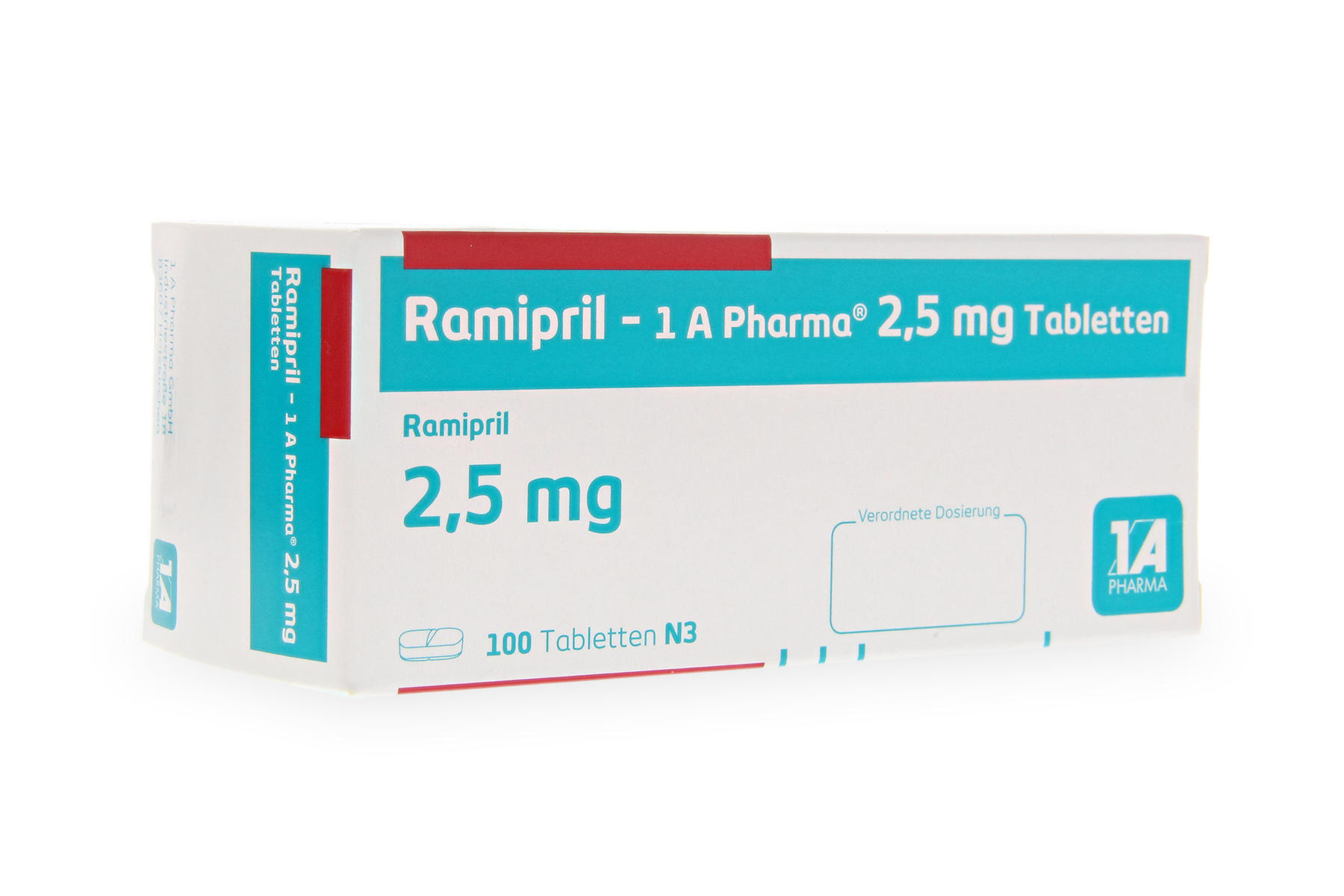
Ramipril
Incl. online consultation, medicine and discreet delivery
View Options
The medical information on this site is provided for educational purposes. It does not replace a face-to-face consultation with your GP or specialist. Always follow the advice of your prescribing doctor and read the patient information leaflet supplied with your medication.
Choose Your Medicine
Select dosage and quantity
Online Consultation
Reviewed by a qualified physician
Fast, Discreet Delivery
Delivered to your door
Medical Information
About This Medicine
Ramipril is an ACE inhibitor and the most widely prescribed blood pressure medicine in the UK. It works on the renin-angiotensin-aldosterone system, the body's main way of controlling blood pressure.
Ramipril stops the body changing angiotensin I into angiotensin II.
This makes your blood vessels relax and widen, and your body makes less of a hormone called aldosterone, which lowers the work your heart has to do.
Ramipril is a prodrug, so the liver turns it into its active form, ramiprilat.
Doctors prescribe it for high blood pressure, heart failure (after a heart attack and long term), kidney damage (with or without diabetes), and to lower heart and blood vessel risk in high-risk patients.
The HOPE trial showed that ramipril 10 mg a day cut the combined risk of death from heart disease, stroke, and heart attack by 22% in high-risk patients.
This makes it one of the best-tested ACE inhibitors for protecting the heart.
NICE recommends it as a first choice for people under 55 with high blood pressure (not of African or Caribbean descent), for heart failure with a weak pumping action, and for diabetic kidney damage that leaks protein into the urine.
Most people take it once a day.
Usage & Dosage
Take ramipril once a day, at the same time each day, with or without food. Swallow capsules whole with water.
For heart failure, your doctor may ask you to take it twice a day while the dose is raised.
The first dose is often taken at bedtime to lower the risk of your blood pressure dropping too much, which matters most if you take water tablets (diuretics) or have heart failure.
Keep taking ramipril even when you feel well, and do not stop without medical advice. Drink enough fluids.
Tell your doctor straight away if you get a lasting dry cough, swelling of the face, or trouble breathing. Before any operation, tell the anaesthetist that you take an ACE inhibitor.
Hypertension: Start at 1.25-2.5 mg once a day. Usual ongoing dose: 2.5-5 mg once a day. Maximum: 10 mg once a day.
Heart failure (after a heart attack): Start at 2.5 mg twice a day, raised to 5 mg twice a day.
Long-term heart failure: Start at 1.25 mg once a day. Double the dose every 1-2 weeks. Target: 5 mg twice a day (or 10 mg once a day).
Heart and blood vessel prevention (HOPE plan): Start at 2.5 mg once a day. Raise to 10 mg once a day over 3 weeks.
Kidney damage (nephropathy): Start at 1.25 mg once a day, raised to 5 mg once a day.
If your kidneys do not work well (eGFR <60), start at 1.25 mg and raise the dose slowly. Check creatinine and potassium at each dose change.
Side Effects
Side effects are grouped by how often they happen, based on the SmPC.
Common (≥1/100 to <1/10): Dry cough (5-15%), headache, dizziness, tiredness, low blood pressure (including after the first dose), feeling sick, diarrhoea, being sick, rash, high potassium, and a rise in creatinine.
The creatinine rise is usually short-lived and most likely at the start.
Uncommon (≥1/1,000 to <1/100): Angioedema (sudden swelling) at 0.1-0.
5%, fainting, chest pain, a fast or thumping heartbeat, changes in taste, tummy pain, indigestion, dry mouth, aching muscles, muscle cramps, itching, sensitivity to sunlight, vertigo, and low mood.
Rare (≥1/10,000 to <1/1,000): Hepatitis, jaundice, liver injury from blocked bile flow, pancreatitis, Stevens-Johnson syndrome, pemphigus, vasculitis, neutropenia and agranulocytosis (low white blood cell counts), anaemia (mainly with kidney problems), and Raynaud's phenomenon.
The dry cough is the most common reason people stop ACE inhibitors, and it is a class effect. Angioedema can show up as swelling of the face, lips, tongue, or throat (larynx).
It needs medical help right away.
Warnings & Precautions
All warnings for ACE inhibitors apply to ramipril. To lower the risk of a big drop in blood pressure after the first dose, start at a low dose and consider taking it at bedtime.
Angioedema (sudden swelling) can happen at any time during treatment, and the risk is higher in people of African descent.
Check kidney function and potassium within 1-2 weeks of starting and after any dose change.
Do not block the renin-angiotensin-aldosterone system in more than one way (do not combine an ACE inhibitor with an ARB or with aliskiren). Ramipril must never be used in pregnancy.
If you find out you are pregnant, stop it at once and switch to another blood pressure medicine.
While on ACE inhibitors, some people may have a severe allergic-type reaction during desensitisation therapy (for example, for wasp or bee venom) or during LDL apheresis with dextran sulphate membranes.
The MHRA advises checking a full blood count in people with collagen vascular disease (for example, SLE or scleroderma) because of the risk of neutropenia (low white cell counts).
Contraindications
Do not take ramipril if any of these apply: you are allergic to ramipril, to other ACE inhibitors, or to any ingredient; you have had angioedema before (inherited, with no known cause, or caused by an ACE inhibitor); you have narrowing of the arteries to both kidneys, or to a single kidney; you are in the second or third trimester of pregnancy; you have serious narrowing of the aortic or mitral heart valve, or a thickened heart muscle (hypertrophic cardiomyopathy); or you take aliskiren and have diabetes or an eGFR <60 mL/min/1.
73m².
Frequently Asked Questions
Is ramipril the same as enalapril?
Can I take ramipril if I have diabetes?
Why do I need blood tests on ramipril?
What should I do if I develop a swollen face or tongue?
Can I drink alcohol with ramipril?
Related articles: Ramipril
Ramipril side effects: what you need to know
Ramipril is an ACE inhibitor used to treat high blood pressure and heart failure. Common side effects include a persistent dry cough, dizziness, and headaches. Serious but rare side effects such as angioedema require immediate medical attention. Most side effects settle within the first few weeks of treatment.
nhs-infoRamipril: NHS prescribing information and patient guide
Ramipril is an ACE inhibitor prescribed on the NHS for high blood pressure, heart failure, and kidney protection in diabetes. The usual maintenance dose is 2.5 mg to 10 mg once daily. It is one of the most commonly prescribed blood pressure medicines in the UK, with over 10 million prescriptions dispensed annually.