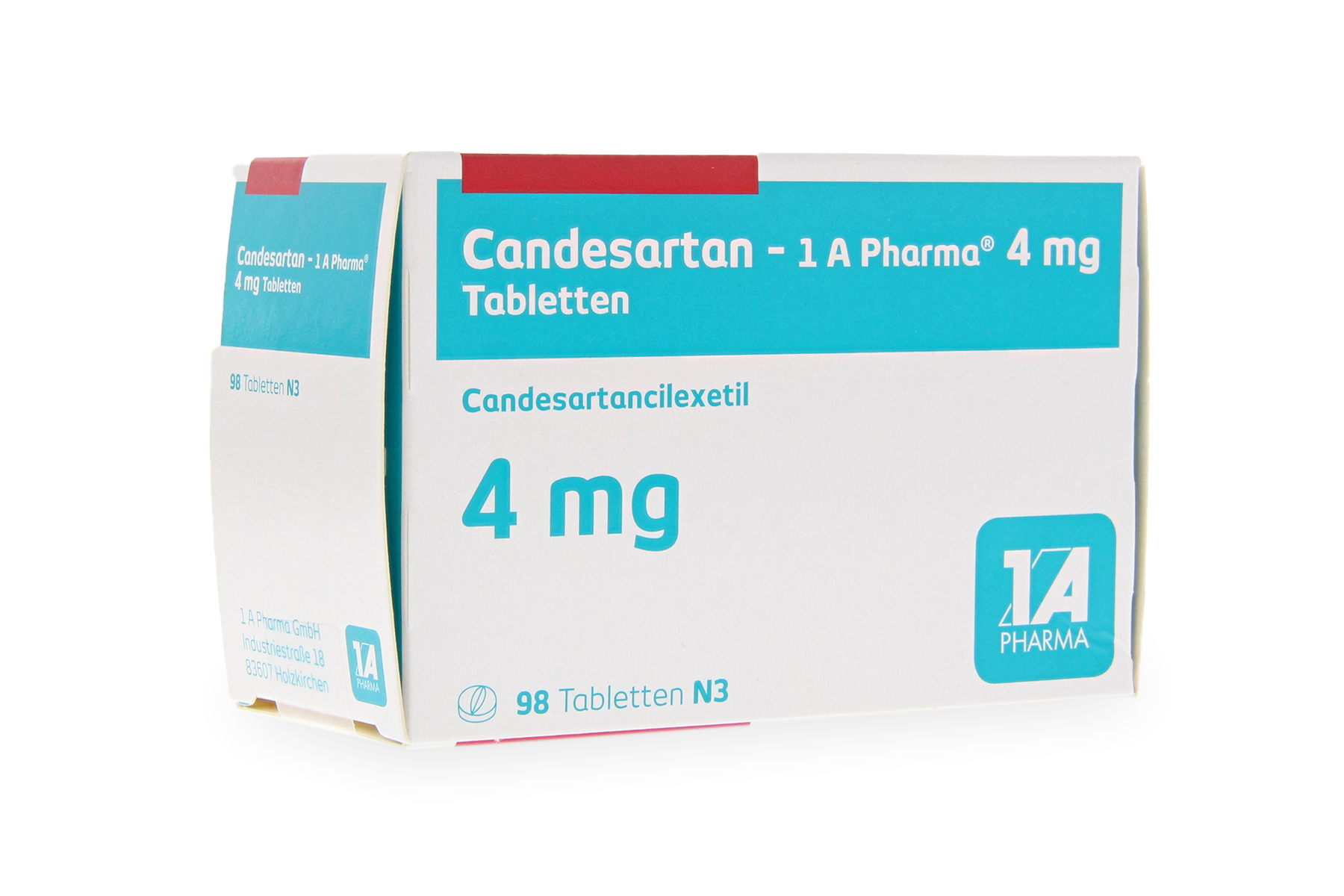
Candesartan
Incl. online consultation, medicine and discreet delivery
View Options
The medical information on this site is provided for educational purposes. It does not replace a face-to-face consultation with your GP or specialist. Always follow the advice of your prescribing doctor and read the patient information leaflet supplied with your medication.
Choose Your Medicine
Select dosage and quantity
Online Consultation
Reviewed by a qualified physician
Fast, Discreet Delivery
Delivered to your door
Medical Information
About This Medicine
Candesartan is an angiotensin II receptor blocker (ARB). It works by blocking the AT1 receptor, which is a docking point for the hormone angiotensin II.
Angiotensin II normally narrows your blood vessels, holds on to sodium, and triggers the hormone aldosterone.
By blocking it, candesartan relaxes and widens your blood vessels, lowers your blood pressure, and helps your body release sodium.
Over time it can also shrink a thickened heart muscle (left ventricular hypertrophy). Doctors prescribe candesartan for high blood pressure (essential hypertension).
They also use it for a type of weak heart pump called heart failure with reduced ejection fraction (HFrEF), in people who cannot tolerate ACE inhibitors.
The CHARM trial programme showed that candesartan cut deaths from heart and blood vessel disease. It also reduced hospital stays for heart failure across many types of patients.
NICE recommends ARBs as a first-line option instead of ACE inhibitors for high blood pressure.
This applies in particular to people of African or Caribbean descent at any age, and to all patients over 55 years when calcium channel blockers are not tolerated.
NICE also recommends ARBs for heart failure when ACE inhibitors are not tolerated. Candesartan is given as a prodrug, candesartan cilexetil.
Your body quickly turns it into the active form as it is absorbed. The full blood pressure effect builds up within 4 weeks of starting.
Usage & Dosage
Take one tablet once daily, at the same time each day. You can take it with or without food. Swallow the tablet whole with water.
Keep taking candesartan even when you feel well, because high blood pressure often has no symptoms. Do not stop suddenly without medical advice.
Drink enough fluids, especially in hot weather, during illness, or with exercise. Losing too much fluid can make your blood pressure drop too low.
If you feel dizzy or light-headed when you stand up, get up slowly from sitting or lying down.
Tell your prescriber straight away if you have a lasting dry cough, facial swelling, or trouble breathing. These can be signs of a rare reaction called angioedema.
Hypertension: Start at 8 mg once daily. The usual maintenance dose is 8-16 mg once daily. The maximum is 32 mg once daily.
If you have lost a lot of body fluid (for example, on high-dose water tablets), start at 4 mg to lower the risk of your blood pressure dropping too far.
Heart failure: Start at 4 mg once daily. Double the dose every 2 weeks as you tolerate it. The target dose is 32 mg once daily.
With mild-to-moderate liver problems, start at 2 mg and raise the dose slowly and carefully. Doctors do not recommend candesartan if you have severe liver problems.
With kidney problems, you do not need a different dose if your eGFR is 15 or above, but your potassium and creatinine should be checked closely. There is limited experience with an eGFR below 15.
Side Effects
Side effects are grouped by how often they happen, based on the SmPC.
Common (1 in 100 to 1 in 10 people): Dizziness, headache, low blood pressure (mainly in heart failure patients while the dose is being raised), high potassium, and reduced kidney function (a rise in creatinine).
The kidney effect is more likely in heart failure, when both kidney arteries are narrowed, or when candesartan is combined with other RAAS inhibitors.
Uncommon (1 in 1,000 to 1 in 100 people): Back pain, nausea, raised liver enzymes, and low sodium.
Very rare (fewer than 1 in 10,000 people): Angioedema, hepatitis, and low levels of white blood cells (leucopenia, neutropenia, agranulocytosis), as well as rash, hives (urticaria), and itching.
High potassium is the most important side effect and needs regular checks. The risk is higher in people with diabetes or kidney problems.
It is also higher in those taking potassium-sparing water tablets, potassium supplements, or other RAAS inhibitors.
Warnings & Precautions
Have your kidney function and blood potassium checked within 1-2 weeks of starting, and after each dose increase.
This matters most in heart failure, kidney problems, or when you also take a water tablet. Do not combine candesartan with an ACE inhibitor or with aliskiren unless advised.
This double RAAS blockade raises the risk of low blood pressure, high potassium, and kidney problems, and is generally not recommended (ONTARGET trial data).
Candesartan can harm an unborn baby and must not be used in pregnancy.
In the second and third trimesters it can cause low amniotic fluid (oligohydramnios), kidney failure, and poor skull development; first trimester data also suggest a risk.
Stop the medicine straight away if pregnancy is confirmed. People with narrowing of both kidney arteries can develop sudden kidney failure, so candesartan should not be used in this group.
Tell your anaesthetist that you take candesartan before any surgery, as your blood pressure may fall under general anaesthesia.
Contraindications
Do not take candesartan if you are allergic to candesartan or any other ingredient in the tablet.
Do not take it in the second and third trimester of pregnancy, or if you have severe liver problems and/or cholestasis (blocked bile flow).
Do not use it together with aliskiren if you have diabetes or kidney problems (eGFR below 60 mL/min/1.73m²).
Candesartan should also not be started if you have narrowing of both kidney arteries, or narrowing of the artery to your only working kidney.
Frequently Asked Questions
Can I take candesartan if I had a cough on an ACE inhibitor?
Does candesartan cause high potassium?
How quickly does candesartan lower blood pressure?
Can I drink alcohol with candesartan?
Is candesartan safe for the kidneys?
Related articles: Candesartan
Candesartan side effects: what you should know
Candesartan is an ARB used for high blood pressure and heart failure. It is well tolerated, with dizziness, headache and high potassium being the most commonly reported side effects. Serious effects such as angioedema and acute kidney injury are rare. It does not usually cause the dry cough associated with ACE inhibitors.
nhs-infoCandesartan: NHS information and prescribing guide
Candesartan is an ARB prescribed on the NHS for high blood pressure and heart failure. It is well tolerated, effective for 24-hour blood pressure control and has strong evidence in heart failure. This guide covers uses, dosing, side effects, interactions and monitoring.
OverviewCandesartan and weight gain: what the evidence actually shows
Weight gain is not listed among the common side effects of candesartan, and angiotensin receptor blockers as a class are considered weight neutral. Rapid weight gain over days usually points to fluid retention, which needs medical review - especially in heart failure. Gradual gain is more often explained by other medicines or lifestyle factors than by candesartan itself.