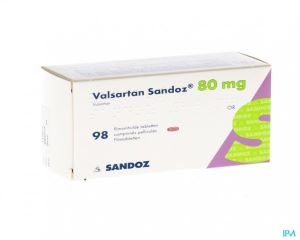
Valsartan
Incl. online consultation, medicine and discreet delivery
View Options
The medical information on this site is provided for educational purposes. It does not replace a face-to-face consultation with your GP or specialist. Always follow the advice of your prescribing doctor and read the patient information leaflet supplied with your medication.
Choose Your Medicine
Select dosage and quantity
Online Consultation
Reviewed by a qualified physician
Fast, Discreet Delivery
Delivered to your door
Medical Information
About This Medicine
Valsartan is an angiotensin II receptor blocker (ARB) prescribed for the treatment of essential hypertension, heart failure, and to improve survival following myocardial infarction in clinically stable patients with left ventricular dysfunction or failure.
It is one of the most commonly used ARBs in cardiovascular medicine.
Valsartan works by selectively blocking the binding of angiotensin II to the AT1 receptor in vascular smooth muscle and the adrenal gland.
Angiotensin II is a potent vasoconstrictor that also stimulates aldosterone secretion, leading to sodium and water retention.
By blocking its action, valsartan produces vasodilation, reduces peripheral resistance, lowers blood pressure, and decreases the cardiac workload.
Valsartan is well tolerated and does not produce the dry cough that is a recognised side effect of ACE inhibitors, which act on the same renin-angiotensin system by a different mechanism.
This makes valsartan a valuable alternative for patients who cannot tolerate ACE inhibitors due to cough or angioedema.
Usage & Dosage
Take valsartan once daily, with or without food, at the same time each day. Swallow the tablet whole with a glass of water.
Do not stop taking valsartan suddenly without consulting your prescriber, as abrupt discontinuation may cause a rebound increase in blood pressure.
If you miss a dose, take it as soon as you remember unless it is close to the time of your next dose. Do not double up to compensate for a missed dose.
For hypertension: the usual starting dose is 80 mg once daily, which may be increased to 160 mg and up to a maximum of 320 mg once daily depending on blood pressure response.
For heart failure: start at 40 mg twice daily, titrated up to 160 mg twice daily as tolerated.
For post-myocardial infarction: therapy may be initiated as early as 12 hours after the event, starting at 20 mg twice daily and increasing over weeks.
Dose reduction is necessary in patients with severe renal impairment.
Side Effects
Common (1 in 10 to 1 in 100): dizziness, postural hypotension, hyperkalaemia, reduced renal function.
Uncommon (1 in 100 to 1 in 1,000): fatigue, headache, abdominal pain, cough, nausea, diarrhoea, myalgia, back pain, vertigo, elevated serum creatinine.
Rare (1 in 1,000 to 1 in 10,000): angioedema, rash, pruritus, vasculitis, thrombocytopenia, impaired renal function, elevated liver enzymes.
Valsartan is generally well tolerated and the side-effect profile compares favourably with placebo in most clinical trials.
Warnings & Precautions
Monitor renal function and serum potassium, particularly in patients with heart failure, renal artery stenosis, or those receiving potassium-sparing diuretics, potassium supplements, or other agents that raise potassium levels.
Patients with severe sodium or volume depletion should have this corrected before starting valsartan, or treatment should be initiated at a lower dose under close supervision.
Avoid use with aliskiren in patients with diabetes or moderate to severe renal impairment. Use with caution in patients with hepatic impairment.
Contraindications
Valsartan is contraindicated in pregnancy (it should be stopped immediately if pregnancy is confirmed, as it can cause foetal harm including renal failure and death).
It must not be used in patients with severe hepatic impairment, biliary cirrhosis, or cholestasis. Do not use concurrently with aliskiren in diabetic patients.
Hypersensitivity to valsartan or any excipient is a contraindication.