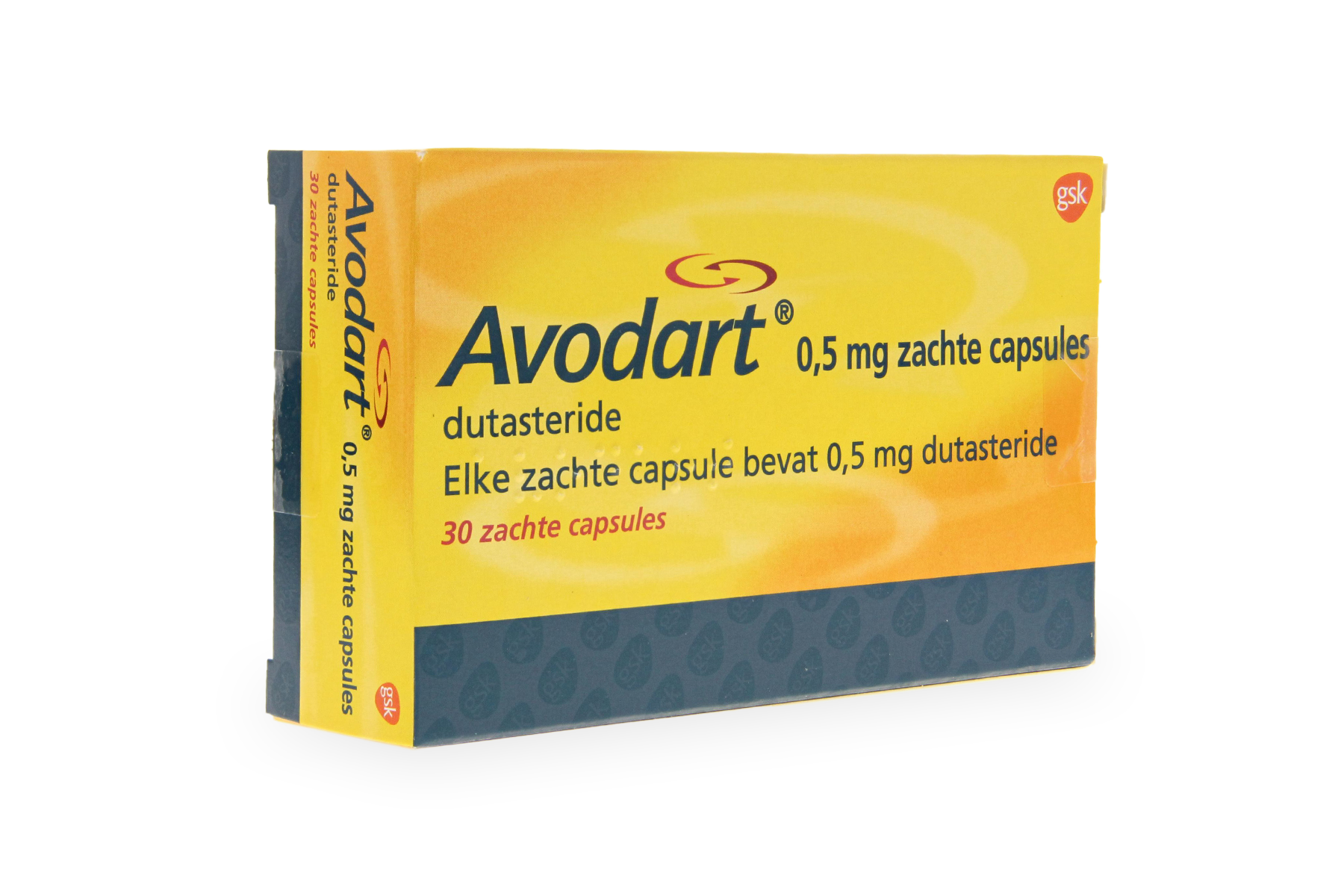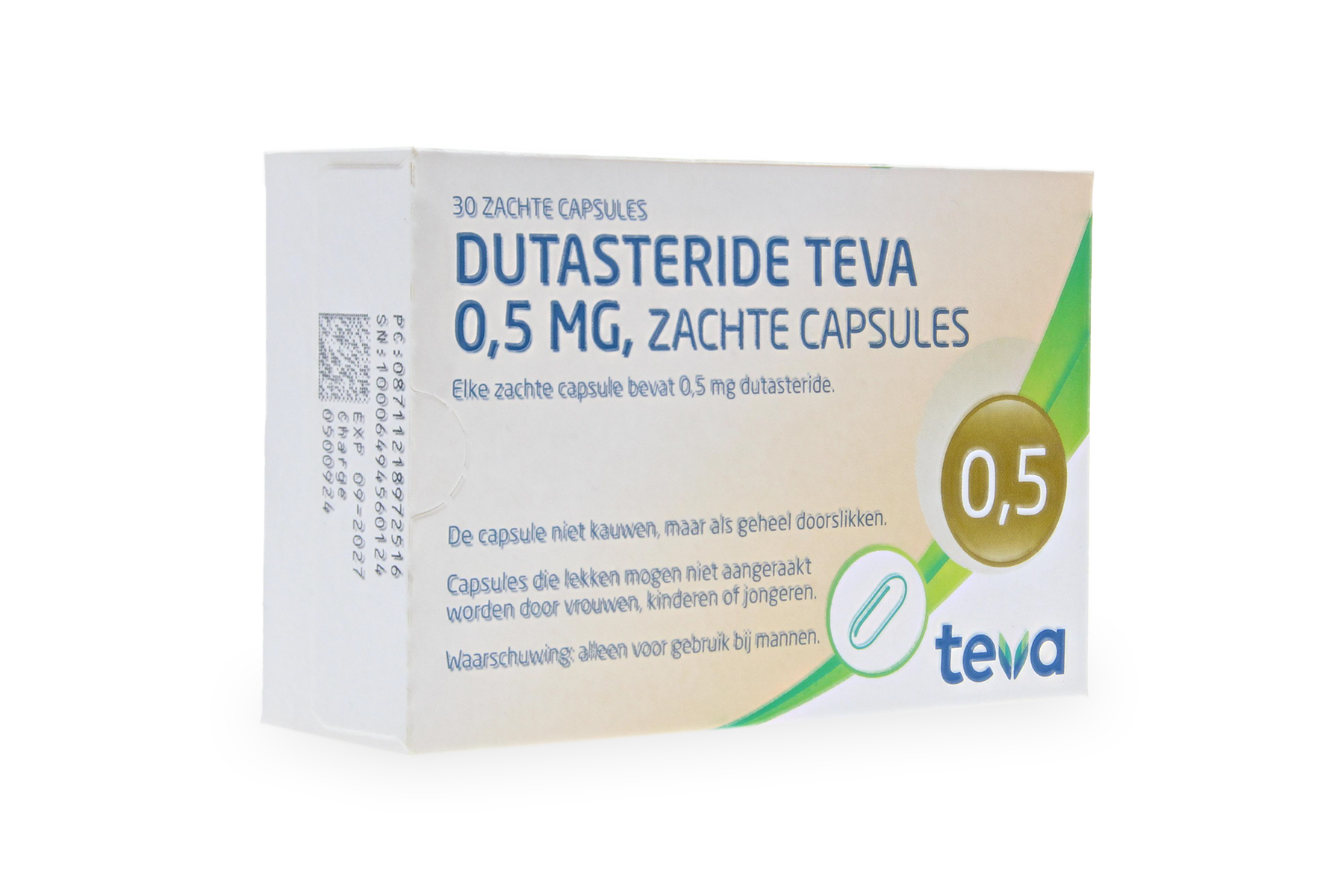
Dutasteride
Incl. online consultation, medicine and discreet delivery
View Options
The medical information on this site is provided for educational purposes. It does not replace a face-to-face consultation with your GP or specialist. Always follow the advice of your prescribing doctor and read the patient information leaflet supplied with your medication.
Choose Your Medicine
Select dosage and quantity
Online Consultation
Reviewed by a qualified physician
Fast, Discreet Delivery
Delivered to your door
Medical Information
About This Medicine
Dutasteride is a dual 5-alpha-reductase inhibitor prescribed for the treatment of moderate to severe benign prostatic hyperplasia (BPH) in men with an enlarged prostate.
By reducing the size of the prostate gland, dutasteride alleviates lower urinary tract symptoms such as difficulty starting urination, weak stream, frequent urination, and the sensation of incomplete bladder emptying.
Dutasteride works by inhibiting both type I and type II isoforms of the enzyme 5-alpha-reductase, which converts testosterone to dihydrotestosterone (DHT).
DHT is the principal androgen responsible for prostate growth.
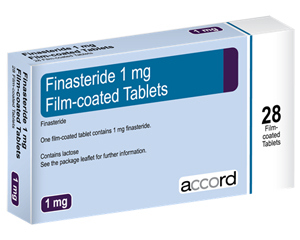
By blocking both isoforms, dutasteride achieves a greater reduction in serum DHT (approximately 90%) compared with finasteride, which inhibits only the type II isoform.
The therapeutic benefit of dutasteride develops gradually over several months as the prostate gland shrinks.
Clinical trials have shown that dutasteride reduces prostate volume by approximately 25% over two years, reduces the risk of acute urinary retention, and decreases the likelihood of requiring surgical intervention.
It is often prescribed in combination with an alpha-blocker such as tamsulosin for enhanced symptom control.
Usage & Dosage
Take one capsule once daily, with or without food, at approximately the same time each day.
Swallow the capsule whole; do not chew, crush, or open it, as the contents may irritate the oropharyngeal mucosa.
Treatment is long-term, and it may take three to six months before a noticeable improvement in urinary symptoms occurs. Continue taking dutasteride as prescribed, even if symptoms improve.
Women who are pregnant or may become pregnant must not handle damaged or leaking dutasteride capsules due to the risk of foetal harm.
The recommended dose is 500 micrograms (0.5 mg) once daily. No dose adjustment is required in elderly patients or in patients with renal impairment.
Dutasteride has not been studied in patients with hepatic impairment and should be used with caution in this group.
It may be taken in combination with tamsulosin 400 micrograms once daily for enhanced efficacy in men with moderate to severe BPH.
Side Effects
Common (1 in 10 to 1 in 100): impotence, decreased libido, ejaculation disorders (including reduced semen volume), gynaecomastia, breast tenderness.
Uncommon (1 in 100 to 1 in 1,000): depressed mood, alopecia, hypertrichosis, allergic reactions including rash and pruritus.
Rare (1 in 1,000 to 1 in 10,000): angioedema, testicular pain and swelling. Sexual side effects are most common in the first year of treatment and tend to diminish with continued use.
Dutasteride reduces serum PSA levels by approximately 50%, which must be accounted for in prostate cancer screening.
Warnings & Precautions
Dutasteride reduces PSA levels by approximately 50% within six months. Clinicians interpreting PSA results must double the measured value to estimate the true PSA.
Any confirmed rise in PSA during dutasteride therapy warrants further investigation.
Women of childbearing potential must not handle damaged capsules or have contact with semen from men taking dutasteride, as it is teratogenic in male foetuses.
Dutasteride has a very long elimination half-life (approximately five weeks); residual effects may persist for months after discontinuation.
Contraindications
Dutasteride is contraindicated in women, children, and adolescents.
It must not be used in patients with severe hepatic impairment or hypersensitivity to dutasteride, other 5-alpha-reductase inhibitors, or any excipient. It is not indicated for use in women.
Pregnant women must not handle broken or leaking capsules due to the risk of harm to a male foetus.